| |  | | | We Won the War, but We're Losing the Peace; Hezbollah on the Rise; Egypt's Troubles By Winfield Myers ● Nov 12, 2025 Smart Brevity® count: 7.5 mins...2045 words Returning with his family to live in Israel after years in the U.S., Gregg Roman writes that he was shaken by "a slow, dangerous return to the October 6 mentality," as if the massacre was just a "bad dream." Addressing this crisis demands a "national renewal plan that starts from the ground up." Jonathan Spyer observes that the Lebanese Armed Forces' limited efforts to disarm Hezbollah, coupled with the terrorist group's rearming, mean the time may come when Israel will have to "escalate the current levels of action against Hezbollah or accept the organization's steady reconstruction." Lazar Berman sees the situation similarly, arguing that, absent Lebanese action, the IDF must act. Amine Ayoub—in one of two articles—offers a grim analysis of Egypt's stability, which he says is "cracking" from the corrupt "military-led state capitalism" that prevents "the creation of an economy that can generate sufficient employment." Michael Rubin dissects antisemitism at the "irredeemable" United Nations, and Raymond Ibrahim reports on a Coptic Egyptian school girl's resistance to the state's growing Islamization. | | We Won the War, but We're Losing the Peace  By: Gregg Roman Returning to Israel after 13 years, Gregg Roman was struck by the exhaustion of public servants, overburdened military reserves, and the quiet shutdown of small businesses. Why it matters: Israel's challenges extend beyond physical infrastructure to the very foundations of national security and social cohesion. National security threat: The mass exodus of 125,000 Israelis since 2022 isn't merely a trend; it's a direct threat to national security, weakening the country's human capital and defense capabilities. Social cohesion fracture: Bureaucratic failures and a visible divide between those who serve and those who evade responsibility fuel public disillusionment. Call for action: Treat small businesses and soldiers as economic partners in resilience. A word to expatriates: Your departure is not betrayal. Sometimes it was a rational decision. But your return is a moral choice. The country needs you—your standards, your knowledge, and the hard questions you bring. To read the full article, click here. | | As Hezbollah Rearms and Lebanon's Government Stalls, Israel Looks to Its North 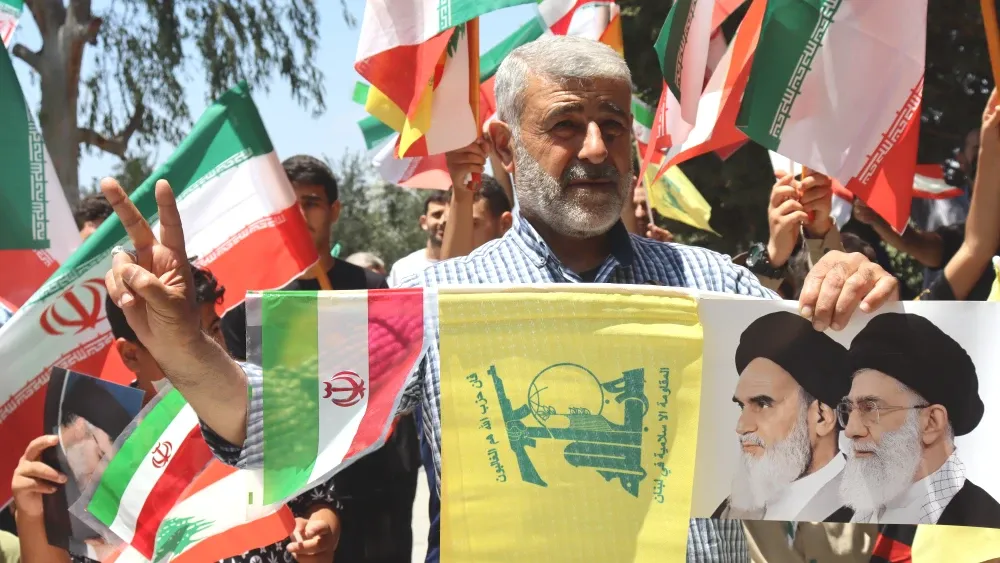 By: Jonathan Spyer On Monday, Israeli drone strikes killed two Hezbollah operatives in southern Lebanon, marking a continuation in its efforts to curb Hezbollah's resurgence. Why it matters: Since the 2024 ceasefire, Israel has eliminated over 300 Hezbollah members, aiming to prevent the group's rearmament and reorganization. Security dynamics: Despite military successes, including the destruction of 80 percent of Hezbollah's missile capacity, Israel faces the dilemma of either intensifying military action or accepting Hezbollah's slow reconstruction. Strategic options: Israel's current approach relies heavily on intelligence and air power to address the threat. However, escalating actions may become necessary if Hezbollah continues to rebuild. The bottom line: While U.S.-led initiatives offer diplomatic avenues, the reality on the ground underscores Israel's need to independently secure its borders and maintain pressure on Hezbollah. To read the full article, click here. | | ICYMI: Israel Insider with Ashley Perry  Gaza's war has accelerated a regional power shift, weakening Iran's proxy network and exposing a new rivalry between the Turkey–Qatar alliance, aligned with the Muslim Brotherhood, and the moderate bloc led by Saudi Arabia and the United Arab Emirates. Both sides are vying for influence over Gaza's reconstruction, a prospect Israel rejects for Ankara and Doha. The conflict has also stalled Saudi–Israeli normalization, which Hamas's October 7 attack sought to derail, though an upcoming President Trump–Mohammed bin Salman meeting could revive the process under terms deemphasizing Palestinian statehood. Domestically, Trump's call to pardon Netanyahu and the resignation of senior adviser Ron Dermer signal political turbulence as Israel moves toward new elections. Ashley Perry is an advisor to the Middle East Forum's Israel office. He served as adviser to Israel's minister of foreign affairs and deputy prime minister in 2009-15, and has also worked with Israel's Ministers of Intelligence, Agriculture and Rural Development, Energy, Water and Infrastructure, Defense, Tourism, Internal Security, and Immigrant Absorption and as an advisor to The Negev Forum. Originally from the U.K., he moved to Israel in 2001. He holds a B.A. from University College London and an M.A. from Reichman University (IDC Herzliya). To watch the full podcast, click here. | | Alarmed by Hezbollah Rearming, Israel Presses Beirut to Act Before the IDF Has To 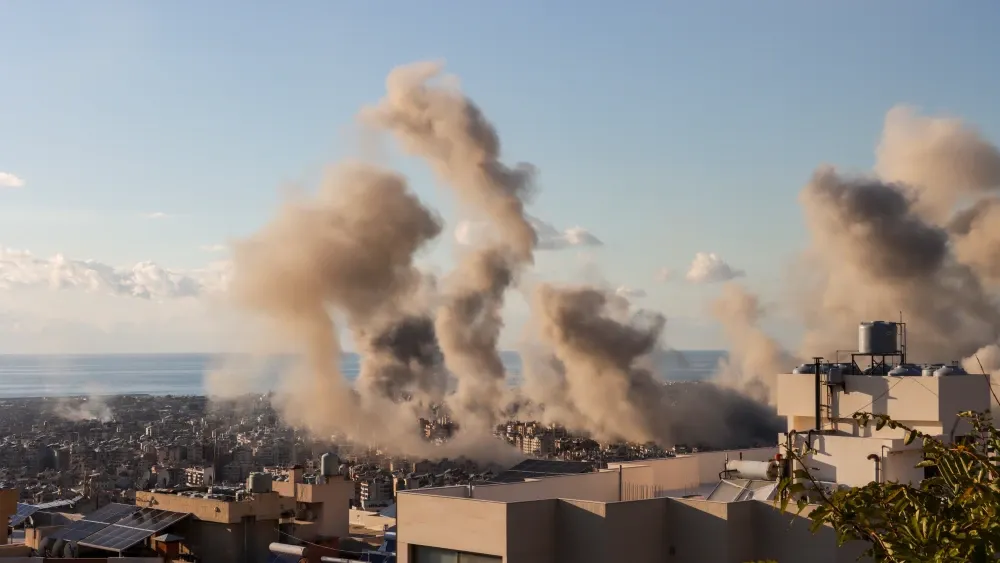 By: Lazar Berman A year after Israel's ceasefire with Hezbollah, another IDF operation seems inevitable as Hezbollah continues to rearm. Why it matters: The U.S.- and France-brokered ceasefire required Hezbollah to disarm, but the group has persisted in rebuilding its forces, prompting Israeli action. Strategic developments: Recent IDF airstrikes targeted southern Lebanon and the Beqaa Valley, hinting at broader operations if the Lebanese Armed Forces fail to disarm Hezbollah. Diplomatic pressures: The U.S. and Israel see the eroding deterrent effects of previous conflicts, urging Lebanon to enforce the ceasefire terms to prevent war. The bottom line: With the Lebanese government's slow disarmament efforts and Hezbollah's continued arms buildup, Israel is poised for significant military action unless decisive steps are taken. Read the full article at the Times of Israel. | | Why Israel Must Have Veto Power Over Foreign Forces in Gaza 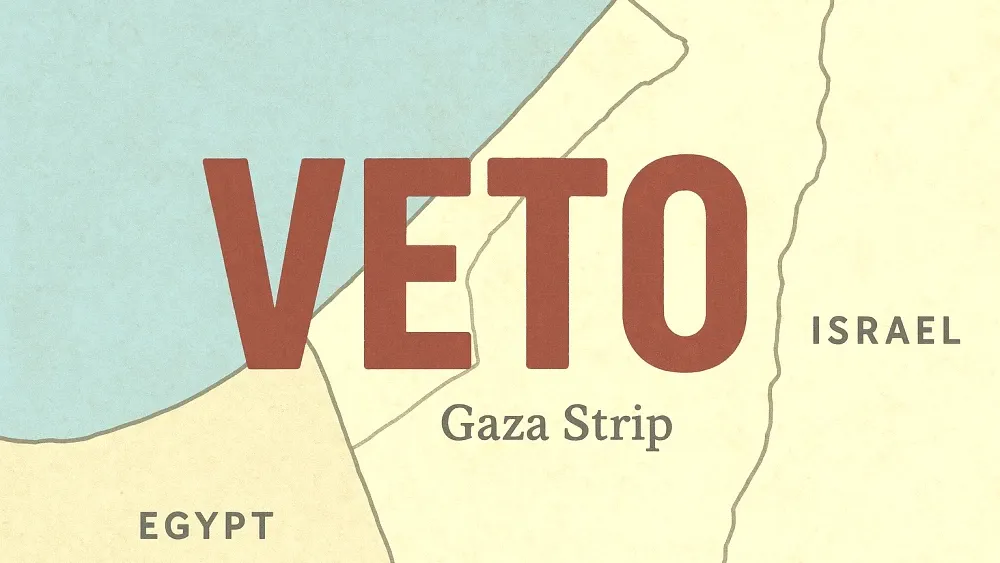 By: Amine Ayoub In November 2025, the U.S. proposed a U.N. resolution for an international stabilization force in Gaza, prompting Israeli concerns. Why it matters: The plan suggests a two-year mission with responsibilities ranging from border security to training a Palestinian police force, but Israel argues it must retain control over its security decisions. Strategic concerns: Israel highlights three reasons to oppose the deployment of a multinational force without its consent: -
Trust issues: The neutrality of contributing nations is questionable, especially those with anti-Israel rhetoric or ties to Islamist movements. -
Historical failures: Past peacekeeping missions lacked enforcement authority and legitimacy, risking a security gray zone. -
Vague operational details: The U.S. draft lacks clarity on command structures and intelligence-sharing, essential for effective security. The bottom line: If the U.N. or any external actor seeks to help Gaza recover, they must do so on terms that respect Israel's fundamental right to defend itself. That requires clear, enforceable safeguards, contributors acceptable to Israel, and a command structure that eliminates intelligence gaps rather than creating them. To read the full article, click here. | | The Cornerstone Is Cracking: Why Egypt's Internal Decay Threatens the Middle East's Longest Peace  By: Amine Ayoub The 1979 Peace Treaty between Egypt and Israel, once a cornerstone of Middle East stability, faces unprecedented internal threats from within Egypt. Why it matters: The internal fragility of Egypt, driven by economic and social crises, is dissolving the "cold peace" with Israel into strategic dissonance. -
Regional crises, like the Gaza War and Houthi attacks, have accelerated Egypt's structural decay, translating into geopolitical instability. Economic collapse: Egypt's fiscal crisis, driven by military-led state capitalism and unsustainable debt, undermines economic stability. Youth disillusionment: Egypt's young population faces widespread economic despair, fueling political disillusionment and aggressive foreign policy. Strategic implications: Egypt's military buildup in Sinai and suspension of security coordination with Israel elevates the risk of conflict. The bottom line: The internal decay of the Egyptian state is transforming the Mideast's longest peace into a conventional hostility. If the cornerstone of the region is allowed to crumble, the stability of the entire region will collapse with it. To read the full article, click here. | | Christian Girl in Egypt Harassed for Refusing Hijab — 'They Looked at Me as if I Were Naked'  By: Raymond Ibrahim In Minya, Egypt, Maryam, a Christian teen, defied school norms by refusing to wear a hijab, facing immediate backlash from educators and peers. Why it matters: Maryam's experience exposes the systemic religious discrimination in Egypt, where Copts are pressured to conform to Islamic norms, despite constitutional promises of religious freedom. -
Her principal publicly shamed her, insisting on hijab compliance, while peers mocked her as an infidel, illustrating the deep-rooted societal biases against Christians. Cultural tensions: Schools pressure Christian students to adopt Islamic practices, with teachers and classmates ostracizing those who resist. -
Maryam's relatives, reflecting broader societal pressures, urged her to comply for her safety, highlighting the pervasive climate of fear. Broader implications: Under President el-Sisi, ongoing Islamization sees Christians marginalized, with Maryam's stand revealing the courage required to maintain one's identity. -
Minya, a hotspot for religious intolerance, further illustrates the precarious position of Christians, facing threats for non-conformity. The bottom line: Maryam's plea for dignity and freedom underscores the plight of Egypt's Copts, who remain strangers in their own land despite their ancient roots. Her story is a powerful testament to the enduring struggle for religious freedom in Egypt. To read the full article, click here. | | Is the United Nations Antisemitic? Here's Proof 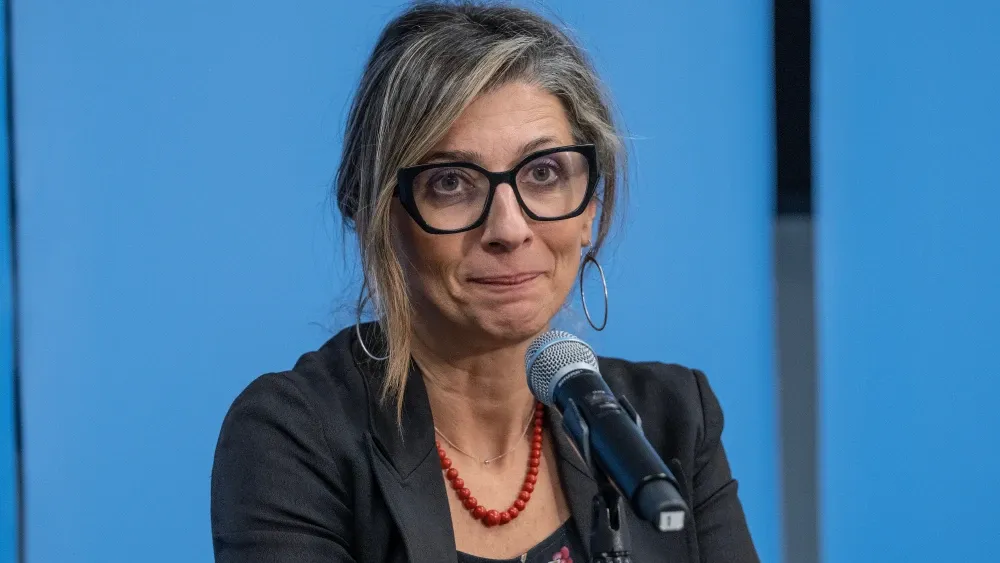 By: Michael Rubin Democrats observe with satisfaction as the Heritage Foundation faces turmoil over its leadership's ties to Tucker Carlson and his interview with Nick Fuentes, a known antisemitic white nationalist. Why it matters: Heritage has seen resignations from board members and scholars, including Chris DeMuth and Stephen Moore, over its handling of antisemitism, demonstrating a commitment to principle over position. Over half the members of Heritage's Task Force on Antisemitism resigned. -
Meanwhile, the U.N.'s continued support for Francesca Albanese, the U.N. Special Rapporteur on the Occupied Palestinian Territories, despite her virulent antisemitic statements, proves the organization's entrenched antisemitism. U.N.'s antisemitic stance: Albanese's blatant antisemitism and defense of Hamas continue unchecked, revealing the U.N.'s bias against Israel. Institutional failure: Heritage's internal resilience contrasts sharply with the U.N.'s institutional failure to address its antisemitic actions. The bottom line: Heritage's leadership deserves scorn, but its staff showed the rot did not permeate the whole institution. Unfortunately, the silence of U.N. staff in the wake of repeated Albanese scandals suggests that the U.N. as an institution may be irredeemable. To read the full article, click here. | | | | | Thank you for relying on the Middle East Forum to keep you informed about the vital issues we cover. If you enjoyed this issue of the MEF Dispatch, please forward it to a friend. We invite you to use the comments feature to let us know your thoughts on this issue of the Dispatch. Sincerely, Winfield Myers
Managing Editor, Middle East Forum
Director, Campus Watch | | | | Was this edition useful?  

Your email will be recorded and shared with the sender |        MEF, an activist think tank, deals with the Middle East, Islamism, U.S. foreign policy, and related topics, urging bold measures to protect Americans and their allies. Pursuing its goals via intellectual and operational means, the Forum recurrently has policy ideas adopted by the U.S. government.
Copyright © 2024 Middle East Forum, All rights reserved.
Our mailing address is:
Middle East Forum
1650 Market Street, Suite 3600
Philadelphia, PA 19103 | | | | | Powered by 
| | This email was sent by Middle East Forum via Axios HQ | | | |


0 коммент.:
Отправить комментарий