| |  | | | Tehran Running Dry; Turkish Brazenness in the East Med By Winfield Myers ● Nov 10, 2025 Smart Brevity® count: 7.5 mins...2045 words The Middle East Forum's latest report, "The Thirst of a Nation: Iran's Water-Driven Trajectory Toward State Failure and a Blueprint for Recovery," details the country's impending collapse from an unprecedented—and man-made—water crisis for which the Islamic Revolutionary Guard Corps bears primary culpability. Written by Guy Goldstein and Rebecca Bar-Sef, the report includes a blueprint for recovery centered on an International Water Recovery Consortium consisting of Israel, Australia, the Netherlands, Singapore, and the Gulf states. Elizabeth Samson describes Turkey's expansionism via its "Blue Homeland" doctrine, which seeks to expand Turkey's power via a vast area "stretching across the Black Sea, the Sea of Marmara, the Aegean, and the Eastern Mediterranean." In a second piece, she critiques the U.S.'s double standard on what constitutes "occupation," which for the State Dept. includes the West Bank (which is "contested" rather than "occupied"), but not Turkish-occupied northern Cyprus—seized by the Turks in 1974. We also include a summary of Michael Rubin's recent MEF Podcast discussion of the India-Middle East Economic Corridor, Shay Khatiri on the Iranian regime's diminishing ability to intimidate its subjects, and articles by Babak Taghvaee and Tom Gantert. | | Tehran Running Dry: MEF Report Details Iran's Terminal Water Crisis 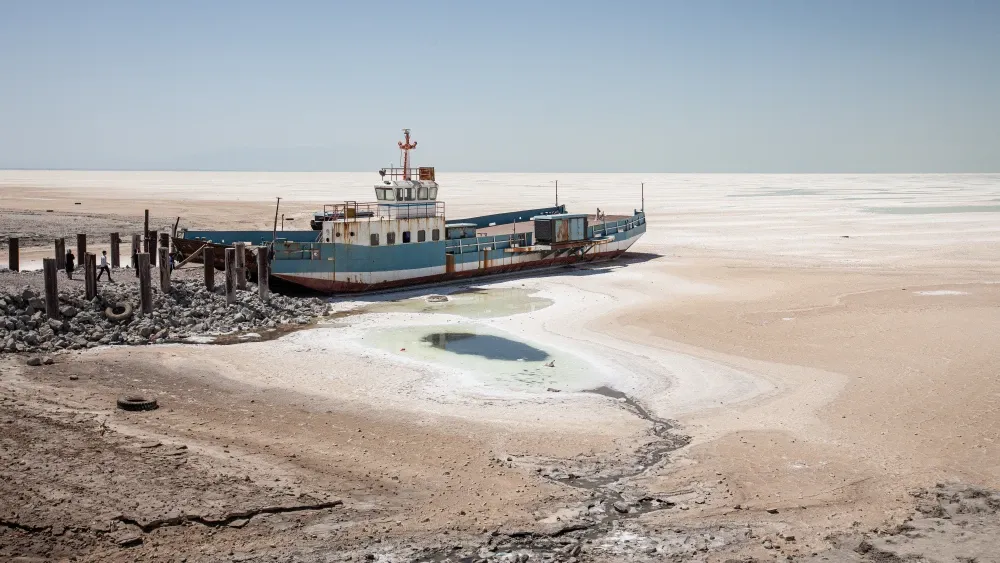 By: Guy Goldstein and Rebecca Bar-Sef The Middle East Forum has released "The Thirst of a Nation: Iran's Water-Driven Trajectory Toward State Failure and a Blueprint for Recovery," a report warning of Iran's impending state failure due to a severe water crisis. Tehran faces imminent "Day Zero" conditions, necessitating urgent international intervention. Why it matters: Iran's water crisis, brought on by the Islamic Revolutionary Guard Corps (IRGC)'s corruption and mismanagement, threatens to trigger 1.35 million excess deaths and displace up to 18 million people within a decade. By the numbers: Water reserves at Karaj Dam, crucial for Tehran, have dropped 75 percent year-over-year, while national electricity deficits hit twenty-five thousand megawatts, crippling water infrastructure. What's next: The report calls for a "Shadow" Iran Water Recovery Task Force by the U.S., EU, and G7 to manage the impending humanitarian crisis and engage stakeholders on potential state collapse. -
An International Water Recovery Consortium is proposed, requiring a political transition in Iran for effective implementation. -
The Consortium aims to leverage global expertise from Israel, Australia, Singapore, and the Netherlands, with financing support from Gulf states, to address water management, governance, and infrastructure challenges. To read the full report, click here; read the press release here. | | The Aftermath of Sarlak's Murder Shows Islamic Republic Intimidation Now Backfires 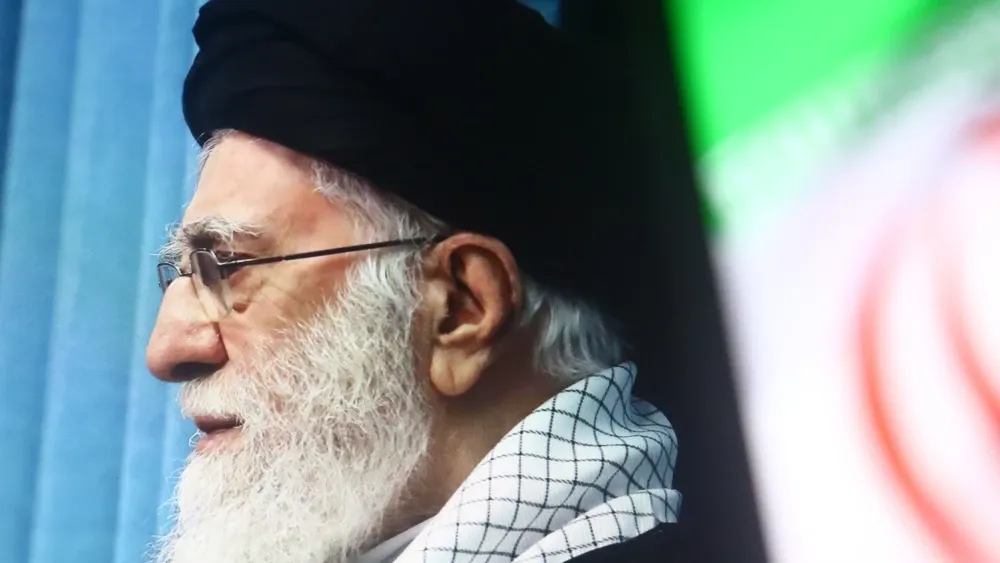 By: Shay Khatiri On November 1, 2025, Omid Sarlak, a 27-year-old Iranian monarchist, posted an Instagram story of himself burning Supreme Leader Ali Khamenei's picture. A day later, he was found dead in his car, the authorities say by suicide, but his family accuses the Islamic Revolutionary Guard Corps of murder. Why it matters: Sarlak's death underscores the growing defiance among Iranians against the regime and highlights the regime's vulnerability to protests similar to the 2022 Woman, Life, Freedom movement. -
Ahmad Khatami, a hardline cleric, labeled insulting the supreme leader as moharebeh, meriting the death penalty. -
State-connected outlets warn of foreign conspiracies, reflecting fear of another uprising. Driving the news: During Sarlak's funeral, attendees defiantly chanted "Death to Khamenei," despite heavy security presence. What's next: The diaspora plays a crucial role in amplifying protest movements, as evidenced by former actor Hamid Farrokh-Nezhad's Instagram challenge to burn Khamenei's pictures. -
Many Iranians, some covering their faces but many not, have accepted the challenge, sending videos to opposition networks for international coverage. The stakes: The regime fears internal dissent more than the protests, as security forces hesitate to engage with protesters. -
The aftermath of Sarlak's death exposes the diaspora's distance from the homeland and the lack of organizational savvy, which has yet to take the protest movement beyond street chants and online fads. -
Iranians are a revolutionary people, but they still lack a revolutionary leader and structure. To read the full article, click here. | | ICYMI: Turkey's Role in the Gaza Ceasefire with Sinan Ciddi 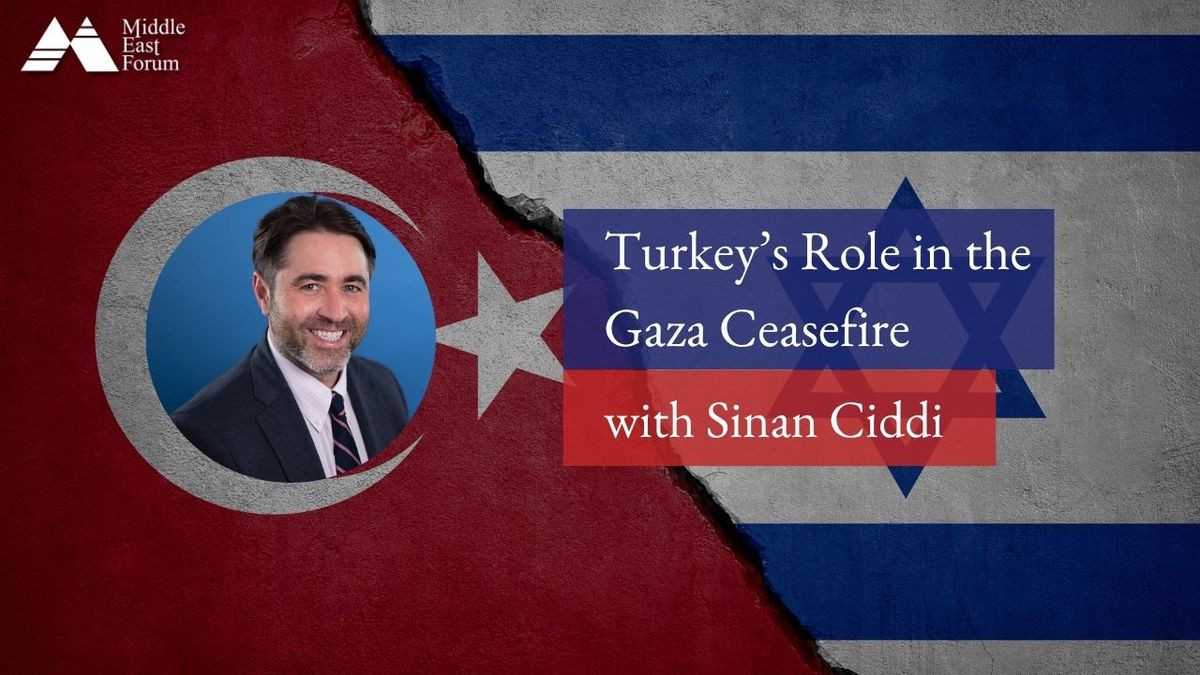 Turkey's central role in brokering the Gaza ceasefire has sparked concern that Ankara's ambitions reach far beyond mediation. Turkey exploited its ties with Hamas—hosting its leaders, funding operations, and offering political cover—to push the group toward a truce. President Recep Tayyip Erdoğan now seeks to place Turkish troops in an international stabilization force, a proposal rejected by Israel, Egypt, and Gulf states that see Ankara as Hamas's patron. Yet the Trump administration appears open to Turkish involvement, drawn by Erdoğan's promises to shoulder regional burdens and aid in Ukraine. Critics warn that Turkish forces in Gaza could provoke a wider conflict, even with Israel, and reflect Erdoğan's broader neo-Ottoman drive for regional dominance. Sinan Ciddi is a senior fellow at the Foundation for Defense of Democracies and director of its Turkey program. He has over two decades of research experience focused on Turkish domestic politics and foreign policy, with bylines in Foreign Policy, Foreign Affairs, Politico, Newsweek, The National Interest, and 19FortyFive. He frequently provides commentary on various media outlets, including BBC, CNN International, DW News, France 24, the Greek Current Podcast, and CBS's John Batchelor Show. Sinan is also an associate professor of national security studies at Marine Corps University and an adjunct professor at Georgetown University's School of Foreign Service. He is the author of Kemalism in Turkish Politics: The Republican People's Party: Secularism and Nationalism (Routledge, January 2009). Sinan obtained his Ph.D. from the School of Oriental and African Studies, University of London, in 2007 in the field of political science. To watch the entire podcast, click here. | | Michael Rubin: After Gaza, Will the India-Middle East Economic Corridor Get Back on Track?  By: Marilyn Stern In a recent MEF Podcast, Michael Rubin of the Middle East Forum highlighted the strategic significance of the India-Middle East Economic Corridor (IMEC), unveiled at the 2023 G20 summit. This corridor bypasses adversaries like Pakistan, Iran, Turkey, and Russia, linking India to Europe via the UAE, Saudi Arabia, Jordan, and Israel. Why it matters: IMEC offers a strategic alternative to routes controlled by adversaries of Western democracy, potentially undercutting Iran's and Turkey's economies. The stakes: Turkey and Iran risk losing billions from IMEC's bypass strategy. -
Ankara's attempts to influence Gaza and control territorial waters threaten regional stability. -
The U.S. must support international law to secure Israel and Greece's maritime rights against Turkish claims. What's next: Greece and Cyprus will play pivotal roles in setting the EU agenda in 2026 and 2027, aligning with IMEC's goals. -
Strengthening ties between India and Israel, both facing common security threats from Pakistan, is essential. -
IMEC could also limit China's influence in the Mediterranean by repositioning strategic ports toward pro-Western alliances. To read the full summary and watch the podcast, click here. | | Will NATO Counter the Brazenness of Turkey's Blue Homeland Doctrine? 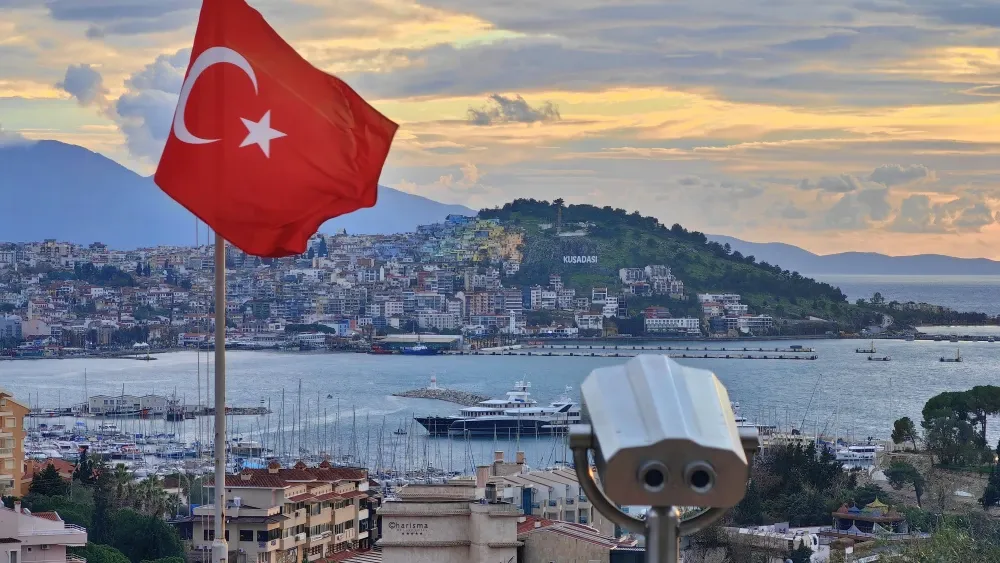 By: Elizabeth Samson Turkish and Greek delegations held confidence-building talks in Ankara on October 23, 2025. Despite positive remarks, Turkey's Blue Homeland doctrine continues to strain trust between the NATO allies. Why it matters: Blue Homeland envisions Turkey as a maritime power with expansive territorial claims, threatening regional stability and NATO cohesion. -
The doctrine justifies Turkey's unilateral maritime zones, challenging agreements between Cyprus, Egypt, and Israel. The stakes: Turkey's assertive posture risks transforming the Eastern Mediterranean into a conflict zone, undermining collective defense. What's next: Greek Prime Minister Kyriakos Mitsotakis proposed reviving an Eastern Mediterranean Forum to negotiate maritime agreements based on international law. Long-term impact: Blue Homeland's integration into Turkey's education system signifies a lasting ideological project. -
If Turkey continues to operationalize Blue Homeland, challenges to Greece and Cyprus will persist, NATO's internal unity will fray, and the Eastern Mediterranean will remain a flashpoint for confrontation. -
Allowing one member to pursue expansionist doctrines that destabilize allies and undermine international law risks setting a precedent no alliance can afford. To read the full article, click here. | | America's Double Standard on Occupation Undermines Its Credibility 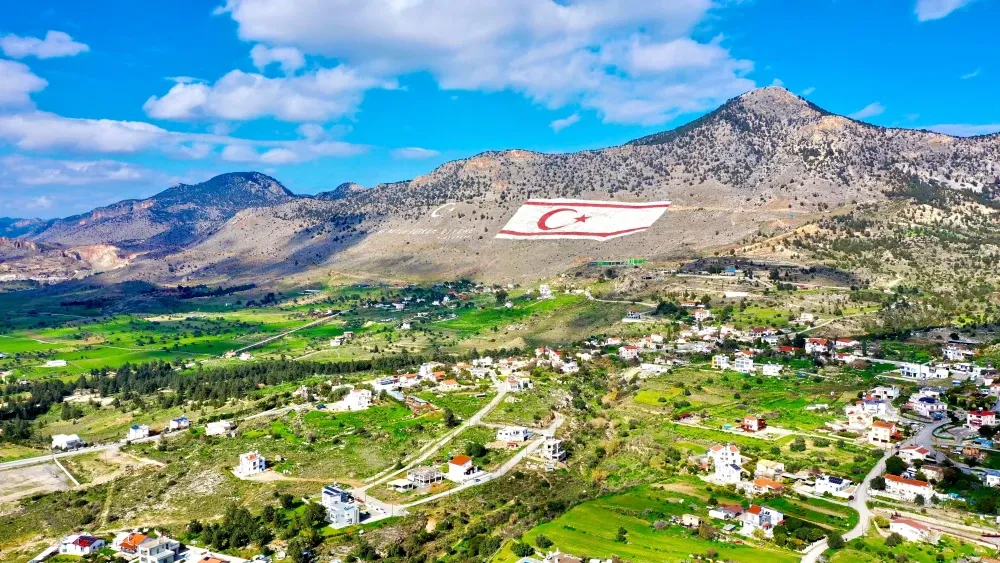 By: Elizabeth Samson In 1974, Turkey invaded Cyprus, claiming one-third of the island. Despite international recognition of Cyprus's sovereignty, the U.S. avoids calling the northern region "occupied," opting for neutral terms. This contrasts with its labeling of the West Bank as "occupied," despite legal ambiguities. Why it matters: Language shapes legal and diplomatic realities, influencing perceptions and policy. -
By not acknowledging Northern Cyprus as occupied, the U.S. weakens international norms and undermines Greek Cypriot claims. -
The double standard suggests U.S. terminology is driven by political alliances rather than legal principles. The stakes: Misapplied terms foster false hopes and prolonged conflict. -
Cypriots face diminished leverage in negotiations, while Palestinians encounter rhetorical obstacles. -
U.S. credibility is at risk, as selective language undermines diplomatic integrity. What's next: The U.S. should align its language with legal realities. Call to action: Precise terminology enhances credibility and offers hope to those living under contested sovereignty. To read the full article, click here. | | Britain's Typhoon Deal with Turkey Endangers NATO Allies 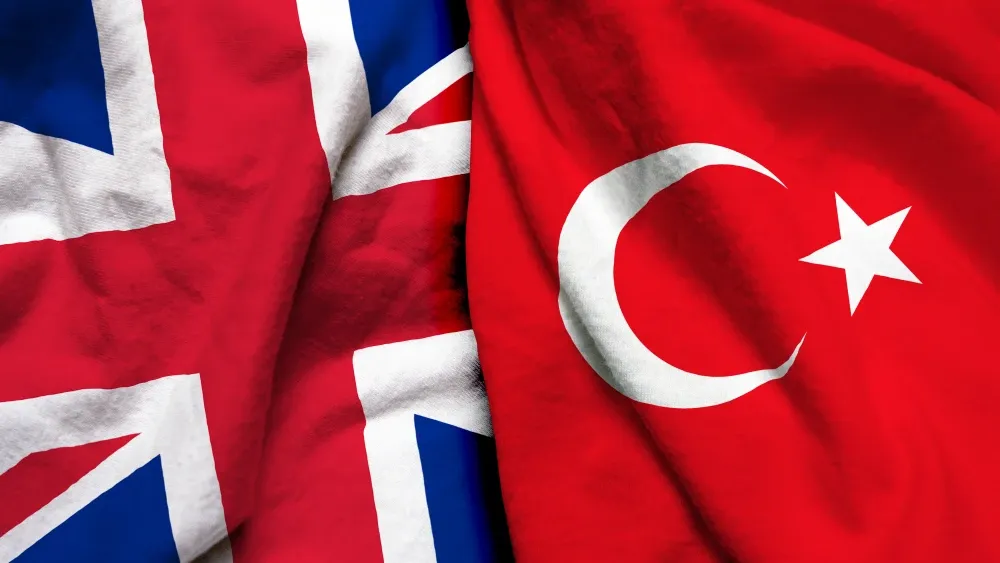 By: Babak Taghvaee The U.K. has agreed to sell $10.7 billion worth of Eurofighter Typhoons to Turkey, claiming it's a win for NATO security. In reality, it empowers a regime that threatens NATO allies and dreams of conflict with Israel. Why it matters: Turkey's purchase of Typhoons could reignite tensions with Greece and Cyprus, undermining NATO cohesion. -
Ankara's history of S-400 purchases and territorial disputes contradicts its image as a "vital NATO ally." -
Britain's decision shows how alliance stability collapses when economic expediency eclipses strategic judgment. -
The Typhoon sale may keep British assembly lines alive, but it risks igniting the Aegean—a price neither the United States nor Europe can afford to ignore. The stakes: The Typhoon's combat capabilities rely on U.S. subsystems, giving Washington leverage. What's next: Washington should audit U.S. technology in the Typhoon and restrict exports to Turkey. Call to action: Congress must demand transparency and prevent destabilization. To read the full article, click here. | | Dearborn Mayor Jokes About 'Jihad' Days Before FBI Raid of Suspected Jihadis 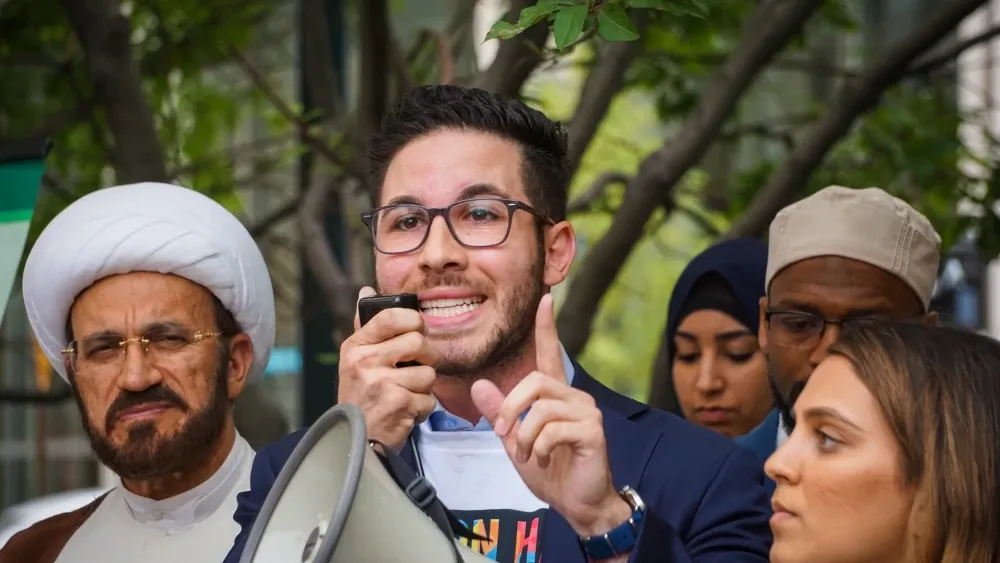 By: Tom Gantert In the wake of a Wall Street Journal op-ed labeling Dearborn as "Jihad Capital," Mayor Abdullah Hammoud's lighthearted video response contrasts sharply with the gravity of an ISIS-inspired terror plot uncovered by the FBI. Why it matters: The thwarted attack exposes severe national security risks and raises questions about local leadership's commitment to countering extremism. Leadership under scrutiny: Mayor Hammoud's flippant comment about "naming everyone Jihad" reveals a troubling lack of seriousness in addressing extremism concerns. The stakes: The presence of sympathies for groups like Hamas and Hezbollah in Dearborn underscores a critical national security challenge. -
Anthony Deegan has called out local leaders for their silence and reluctance to condemn terrorist organizations, highlighting a pervasive issue of extremist support. -
Muslims in Dearborn, he said, demonstrate support for organizations such as Hamas and Hezbollah during rallies. What's next: U.S. authorities must intensify efforts to engage communities and dismantle domestic terror networks. To read the full article, click here. | | Thank you for relying on the Middle East Forum for up-to-date analyses of the region. If you enjoyed this issue of the MEF Dispatch, please forward it to a friend. We invite you to use the comments feature to let us know your thoughts on the Dispatch and the issues we cover. Sincerely, Winfield Myers
Managing Editor, Middle East Forum
Director, Campus Watch | | | | Was this edition useful?  

Your email will be recorded and shared with the sender |        MEF, an activist think tank, deals with the Middle East, Islamism, U.S. foreign policy, and related topics, urging bold measures to protect Americans and their allies. Pursuing its goals via intellectual and operational means, the Forum recurrently has policy ideas adopted by the U.S. government.
Copyright © 2024 Middle East Forum, All rights reserved.
Our mailing address is:
Middle East Forum
1650 Market Street, Suite 3600
Philadelphia, PA 19103 | | | | | Powered by 
| | This email was sent by Middle East Forum via Axios HQ | | | |

0 коммент.:
Отправить комментарий