|
|
 |
|
Trump Has a Choice to Make on Iran By Winfield Myers ● Apr 27, 2026
Smart Brevity® count: 7 mins...1853 words
Jonathan Spyer writes that President Trump must decide how best to proceed against Iran: intensify and escalate the pressure, including the renewal of major military operations and the opening of the Strait of Hormuz by force. Or accept at a certain point a face-saving deal likely to leave the regime’s regional project intact. If the latter course is followed, he argues, it will no doubt be presented as victory. The Iranian regime’s long war for supremacy in the region will then continue.
Dalga Khatinoglu reports that, despite the claims of a U.S. blockade of the Strait of Hormuz, between April 13 and 19, 2026, at least 34 Iran-linked oil tankers passed through the Strait. Of these, 19 exited the Persian Gulf despite the blockade, while 15 entered from the Arabian Sea en route to Iran. This means the U.S., while signaling dominance, is exercising a selective and politically constrained strategy.
This issue also features articles by Mardo Soghom, Mohammad Taha Ali, Dexter Van Zile, Benjamin Baird, and Fernando Carvajal.
|
|
Trump Has a Choice to Make on Iran
By: Jonathan Spyer
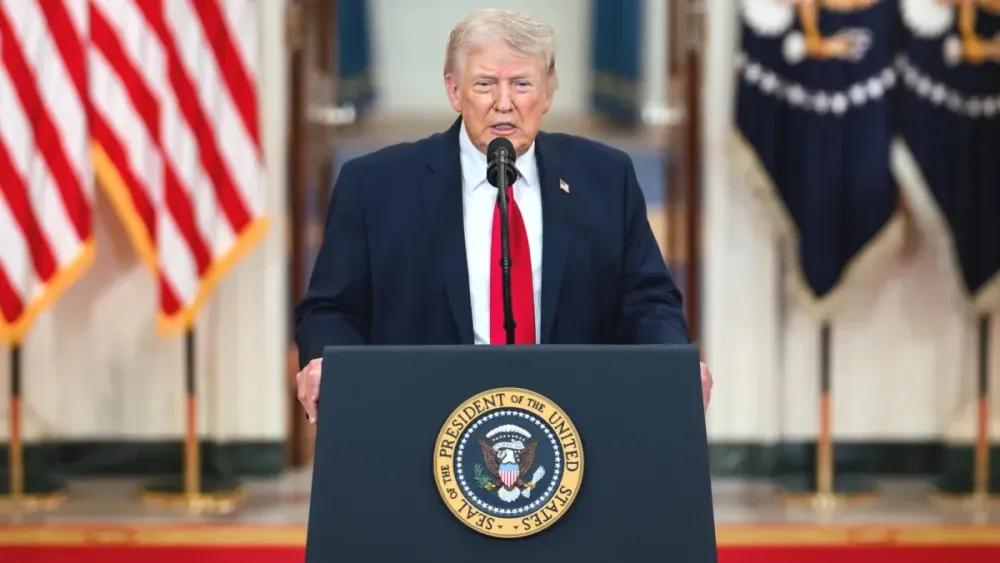
President Donald Trump cancelled a visit by envoys Steve Witkoff and Jared Kushner to Islamabad, following the departure of Iranian Foreign Minister Abbas Araghchi.
Trump’s viewpoint: Speaking to Fox News, Trump expressed no rush for diplomatic progress, claiming leverage over Iran.
Iran’s perspective: Iranian officials countered with confidence in their control over the Strait of Hormuz.
Strategic dynamics: The U.S. blockade has disrupted Iran’s oil exports, though Tehran’s resolve remains steadfast.
Trump’s choice: The U.S. must either intensify and escalate the pressure, including the renewal of major military operations and the opening of the Strait of Hormuz by force, or accept at a certain point a face-saving deal likely to leave the regime’s regional project intact.
If the latter course is followed, it will no doubt be presented as victory. The Iranian regime’s long war for supremacy in the region will then continue.
To read the full article, click here.
|
|
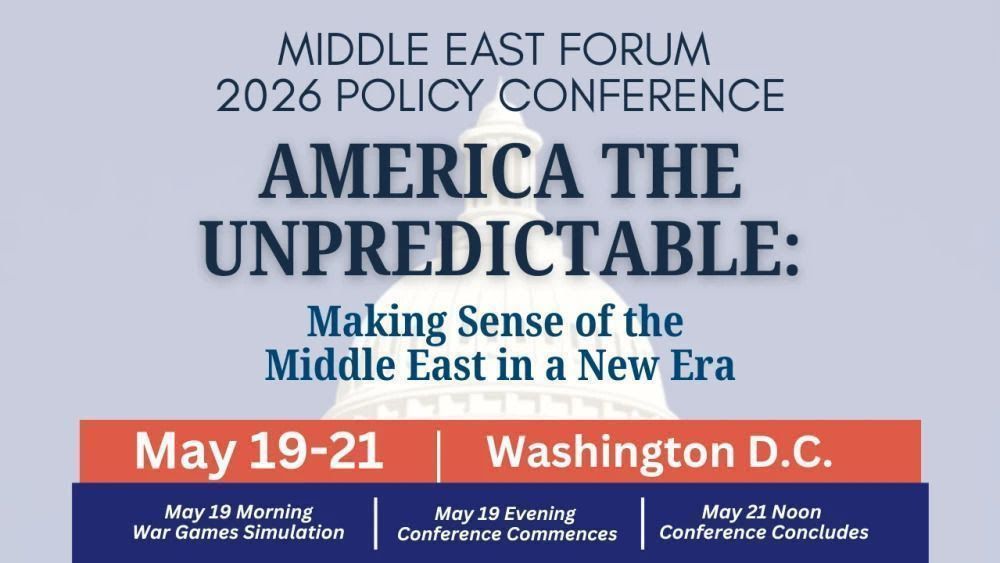
Secure Your Spot: The 2026 Middle East Forum Policy Conference
Join us in Washington, D.C., from May 19-21, 2026, for the Middle East Forum's exclusive Policy Conference as we navigate the turbulent aftermath of the Iran war and its regional shockwaves. This private gathering will tackle today's most pressing geopolitical challenges, featuring in-depth analyses of Turkey's shifting influence and the vital future of the U.S.-Israel relationship. We will also confront the rising threat of domestic Islamists, equipping attendees with the strategic insights needed to counter these interconnected issues.
Click here to secure your spot for America the Unpredictable and access our special hotel block before the May 1st RSVP deadline.
|
|
How Real Is the Naval Blockade of Iran?
By: Dalga Khatinoglu
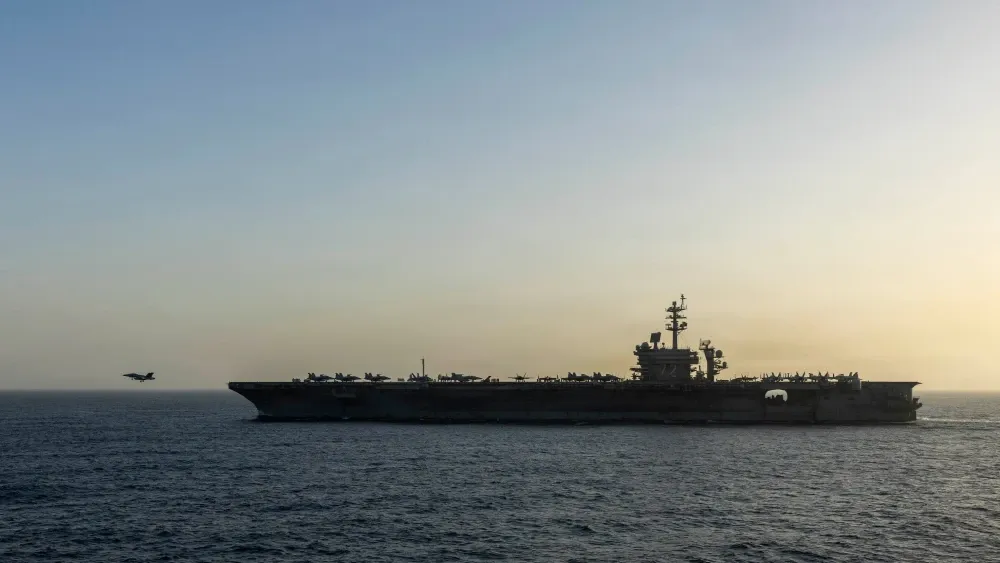
One week into the U.S.‘s declared naval blockade on Iran, data shows substantial Strait of Hormuz traffic, indicating a selective and politically restrained strategy.
Blockade approach: Despite U.S. Central Command’s (CENTCOM) warnings, 43 Iran-linked vessels entered the Strait, making up 60 percent of the traffic.
This choice reflects a calculated restraint rather than inefficiency, balancing geopolitical pressures. The U.S. and Iran engage in tit-for-tat measures, including vessel seizures amid rising oil prices.
Oil trade dynamics: Iran continues robust oil exports, with waivers allowing sales from 140 million barrels of floating storage.
Market stability: The U.S. strategy aims to avoid oil price spikes by maintaining some flow of Iranian oil.
To read the full article, click here.
|
|
Iran Feels Squeeze as Blockade, Failed Talks Take Toll
By: Mardo Soghom
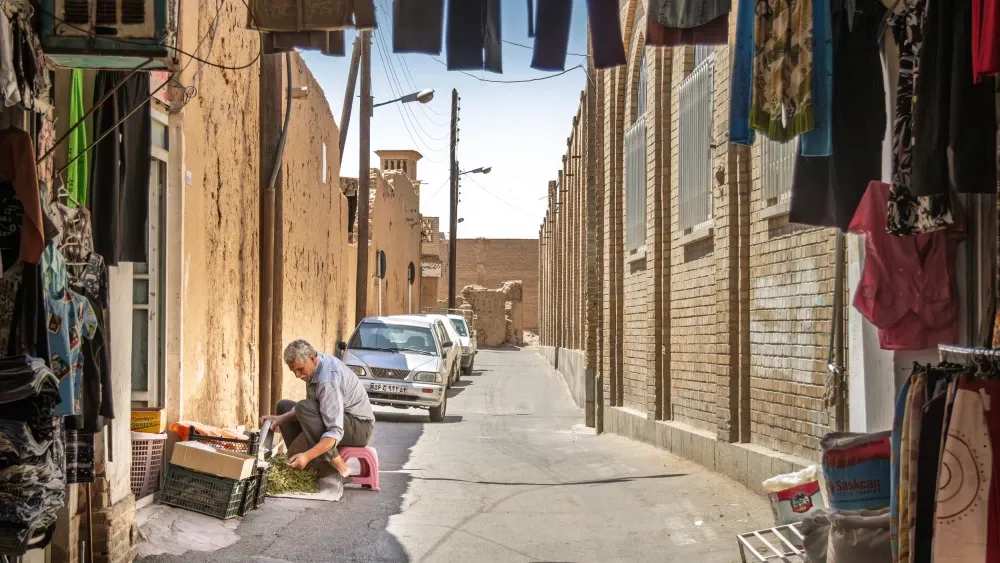
Following the collapse of talks with Washington, Iran faces economic, military, and political pressure, raising regime stability concerns.
Leadership message: Mojtaba Khamenei, through Telegram, accused the enemy of exploiting divisions to weaken Iran.
He urged vigilance against efforts to exaggerate the naval blockade and fuel discontent. Rumors abound that Mojtaba is injured or dead, and the Islamic Revolutionary Guard Corps is speaking on his behalf.
Economic strain: The U.S. naval blockade is exacerbating already high consumer prices, prompting Iran to subsidize essentials.
Diplomatic maneuvers: Iran’s Foreign Minister visited Oman to potentially negotiate the release of frozen funds amid regional tensions.
To read the full article, click here.
|
|
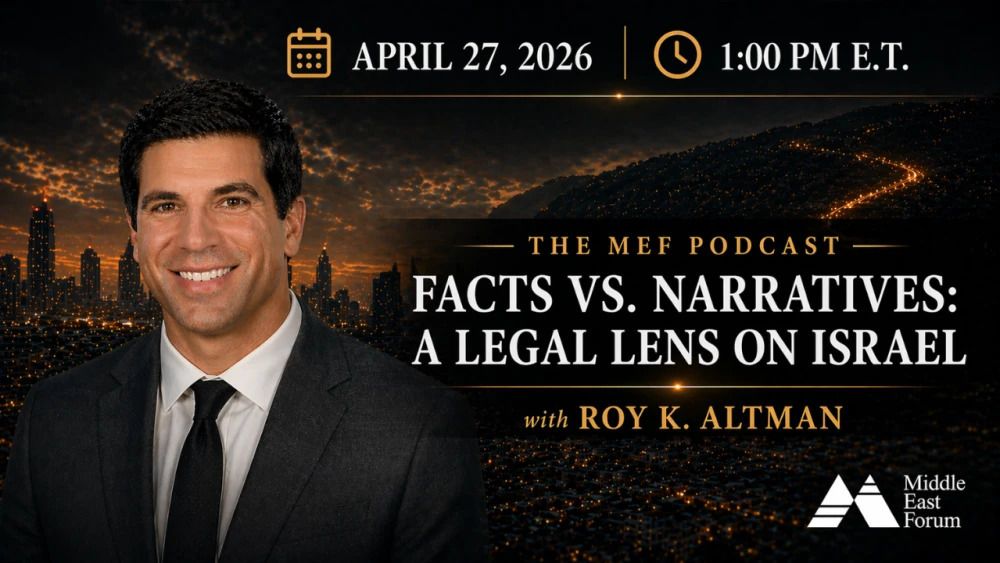
ICYMI: Facts vs. Narratives: A Legal Lens on Israel, with Roy K. Altman
Judge Roy Altman’s newly released book analyzes six major claims about Israel by applying legal methodology and evidence to counter emotionally driven narratives, particularly in response to reactions following the October 7 attacks. It calls for restoring critical thinking—especially among younger generations—by emphasizing structured evaluation of information, while situating anti-Israel rhetoric within broader geopolitical and informational struggles affecting the United States and its allies.
Roy K. Altman serves as a United States District Judge for the Southern District of Florida. Judge Altman is a graduate of Columbia University and Yale Law School. After clerking for the U.S. Court of Appeals and serving as a federal prosecutor, he became the youngest federal district court judge ever appointed in the Southern District of Florida.
To watch the full podcast, click here.
|
|
Iran’s Leadership Claims Unity While Revolutionary Guard Controls the State
By: Mardo Soghom
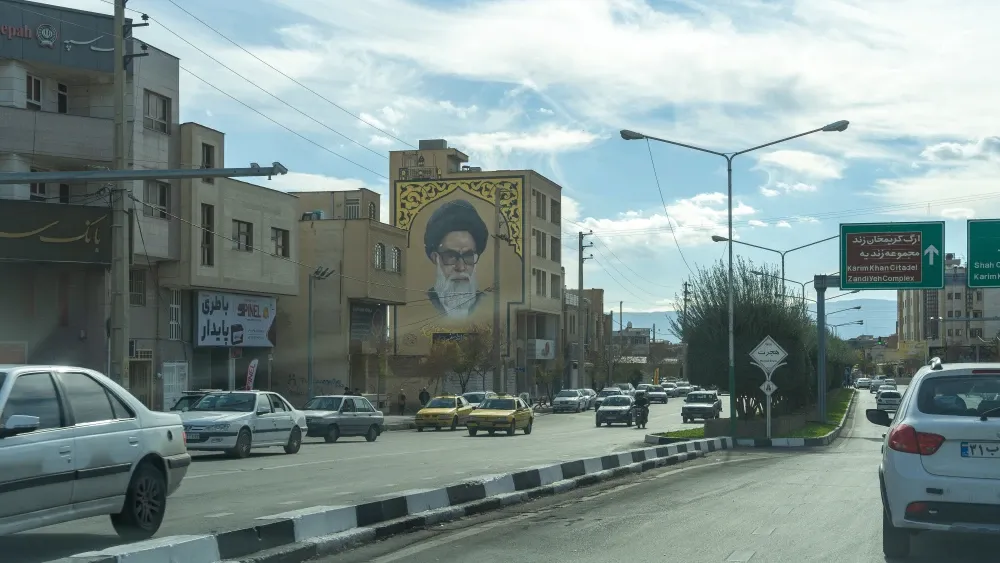
A social media post by President Donald Trump prompted Iran’s leadership to vehemently deny any internal division and stress unity under the unseen Supreme Leader Mojtaba Khamenei.
Leadership’s stance: Parliamentary Speaker Mohammad-Bagher Ghalibaf refuted Trump’s claims, emphasizing Iran’s unified revolutionary spirit.
Power dynamics: Despite potential internal rifts, ultimate authority lies with the Islamic Revolutionary Guard Corps.
Regime’s fragility: The Revolutionary Guard has reportedly mobilized foreign militia fighters to Tehran as leverage against potential protests.
To read the full article, click here.
|
|
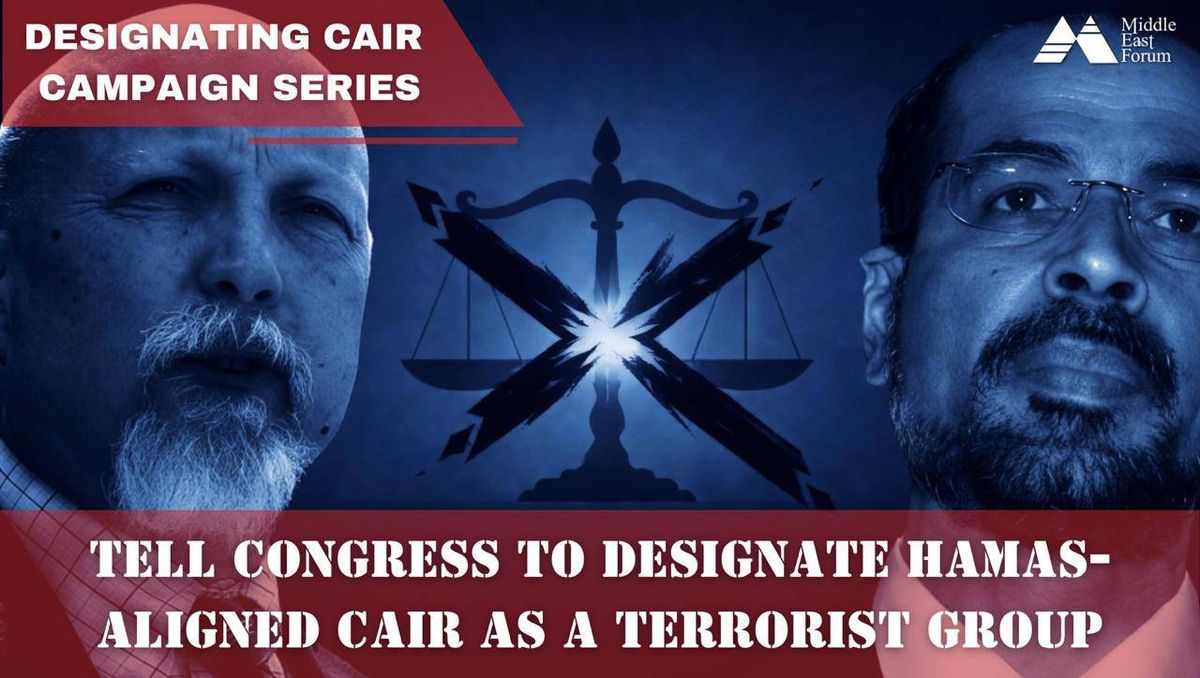
Tell Congress to Designate Hamas-Aligned CAIR as a Terrorist Group
Rep. Chip Roy (R-Texas) has introduced H.R. 8236 - the Designating Hamas Affiliates in America Act of 2026, directing the federal government to list the Council on American-Islamic Relations (CAIR) as a Specially Designated Global Terrorist entity. Backed by the Middle East Forum, this bill addresses CAIR’s history as an unindicted co-conspirator and alleged support network for Hamas, representing a shift from symbolic measures to mandatory federal action, including freezing assets and revoking 501(c)(3) status.
Urge your representatives to support this legislation—the strongest effort to date to designate CAIR, a terrorist-supporting front organization.
To urge your representative to take action, CLICK HERE.
|
|
Who Commands Belief in Iran?
By: Mohammad Taha Ali
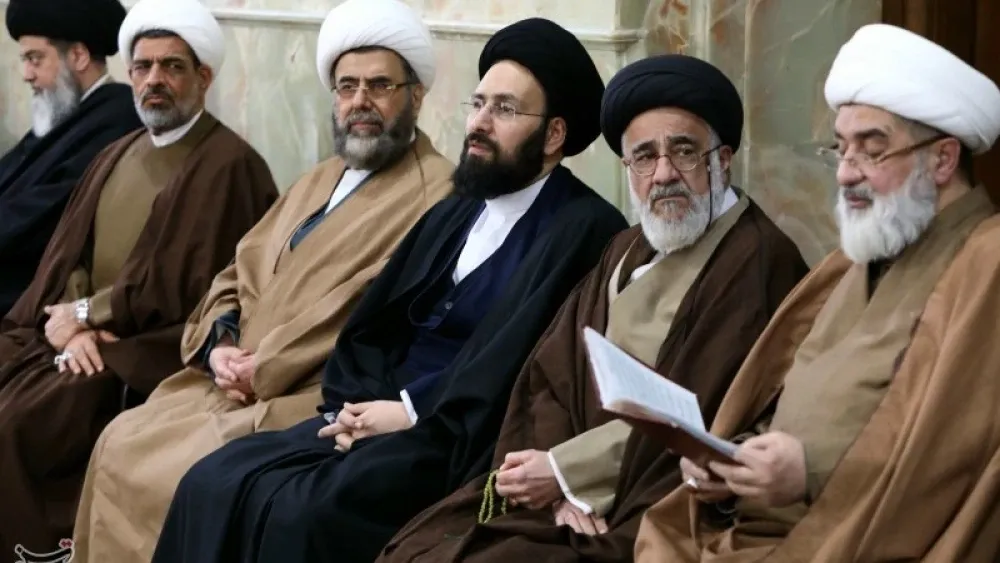
The khums system, a religious donation to a living marja’, the cleric they believe is most knowledgeable about laws and jurisprudence, plays a critical role in Iran’s clerical authority, influencing power dynamics beyond formal institutions.
Financial influence: Khums provides Shi’a clerics with funds to bolster their influence, independent of state structures.
Succession challenges: As Iran’s leadership seeks to promote Mojtaba Khamenei, his status as a marja’ is crucial for securing khums allegiance.
Authority paradox: The Islamic Republic’s institutional strength contrasts with its vulnerability in legitimacy, as khums payments reveal private judgments on clerical authority.
To read the full article, click here.
|
|
The Spirit of Henry Ford Descends on Dearborn Once Again

By: Dexter Van Zile
In Dearborn, Michigan, a wooden sculpture of a map in a coffee shop symbolically erases Israel, reflecting the city’s deep-rooted anti-Israel sentiment.
Public hostility: The Arab American National Museum lauds figures like the late journalist Helen Thomas, ignoring her antisemitic remarks, while local leaders honor Osama Siblani, a publisher supportive of Hezbollah, despite his incendiary anti-Israel rhetoric.
Historic parallels: Dearborn’s legacy of antisemitism dates back to Henry Ford, whose newspaper propagated anti-Jewish sentiment in the 1920s.
Modern implications: Recent events, including a jihadist attack on a synagogue, underscore the tangible threats fueled by this entrenched animus.
To read the full article, click here.
|
|
Finally a Legitimate Effort to Designate the Council on American-Islamic Relations as a Terrorist Group
By: Benjamin Baird
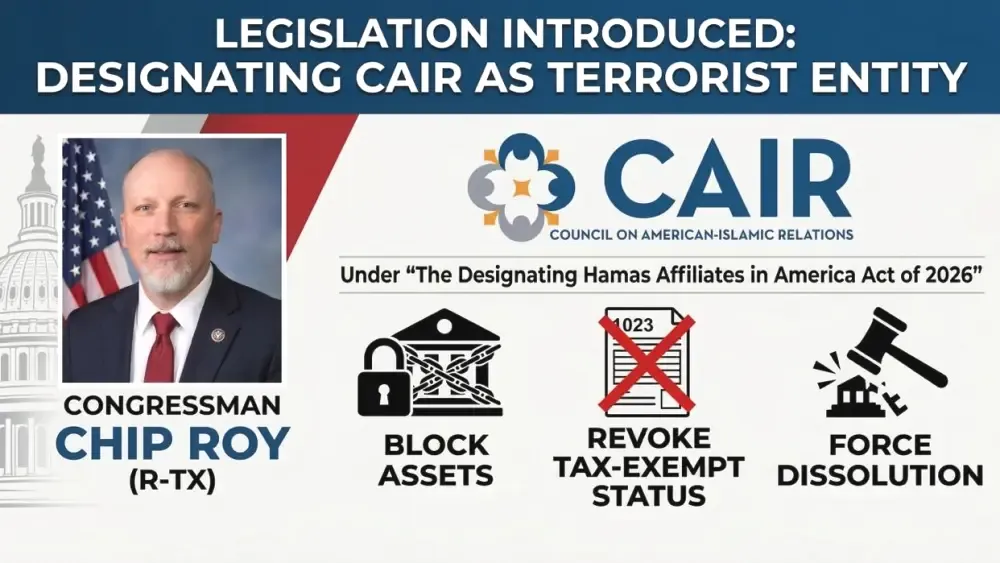
The Council on American-Islamic Relations (CAIR) faces potential designation as a terrorist entity under new legislation, challenging its longstanding legal standing.
Legislative push: Rep. Chip Roy introduced H.R. 8236, aiming to label CAIR as a “specially designated global terrorist” organization through the U.S. Treasury.
Legal challenges: Previous state-level efforts to sanction CAIR have faltered, highlighting the complexity of labeling domestic groups as terrorist entities.
Broader implications: The bill underscores ongoing scrutiny of CAIR’s activities and marks a significant effort to curb its influence in U.S. politics.
To read the full article, click here.
|
|
Arrest Exposes Southern California Iranian Links to Sudan’s Civil War
By: Fernando Carvajal
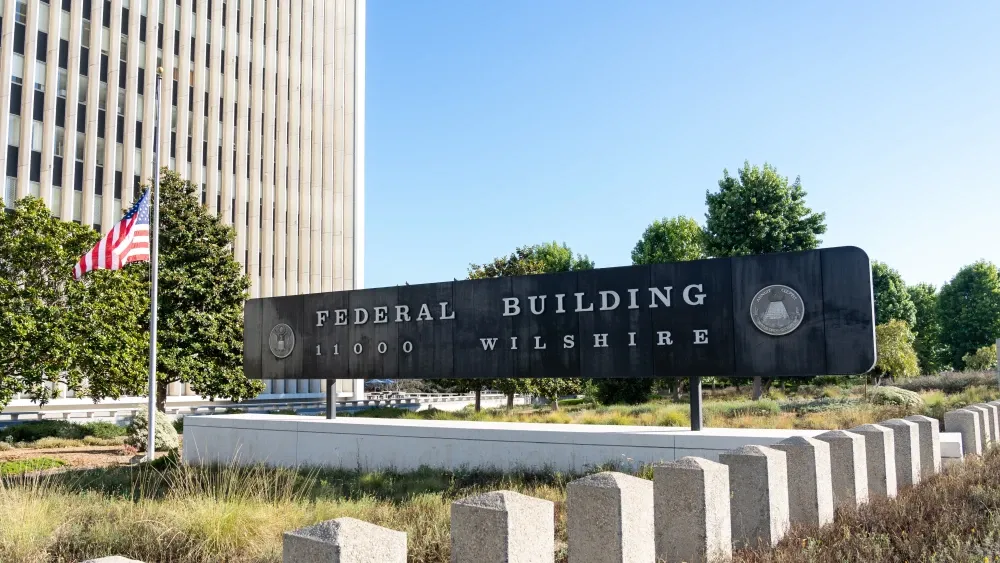
On April 19, 2026, the FBI arrested Shamim Mafi, an Iranian national, at Los Angeles International Airport, charging her with conspiring to violate the International Emergency Economic Powers Act.
Arrest details: Mafi is accused of acting as a proxy for Iranian intelligence and brokering arms sales to Sudan through an Oman-based company.
Broader implications: Mafi’s arrest follows the U.S. designation of Sudan’s Muslim Brotherhood wing as a terrorist organization.
Ongoing challenges: Despite Mafi’s arrest, pro-Iran operatives continue criminal activities like money laundering and political influence in Southern California.
To read the full article, click here.
|
|
We hope you enjoyed this issue of the MEF Dispatch. The Middle East Forum provides a steady stream of analyses and updates at https://www.meforum.org/. Please share your thoughts on this issue in the comments.
Thank you,
Winfield Myers
Managing Editor, Middle East Forum
Director, Campus Watch
|
|
|
Was this edition useful?  

Your email will be recorded and shared with the sender |
      
MEF, an activist think tank, deals with the Middle East, Islamism, U.S. foreign policy, and related topics, urging bold measures to protect Americans and their allies. Pursuing its goals via intellectual and operational means, the Forum recurrently has policy ideas adopted by the U.S. government.
Copyright © 2025 Middle East Forum, All rights reserved.
Our mailing address is:
Middle East Forum
1650 Market Street, Suite 3600
Philadelphia, PA 19103
|
|
|
|
Powered by 
|
This email was sent by Middle East Forum via Axios HQ |
|
|
|