|
|
 |
|
Iran Gambles the U.S. Won’t Resume Hostilities By Winfield Myers ● Apr 15, 2026
Smart Brevity® count: 6.5 mins...1707 words
Mardo Soghom warns that, even if Washington and Tehran reach a deal, Iran’s generals will not allow it to become a “normal” country. Instead, they will maintain tight political and economic control, waiting for the Trump era to end. Michael Rubin applauds President Trump’s blockade of Iran’s Persian Gulf ports, but writes that the U.S. must prevent Iran from using its Caspian Sea ports as a back door to evade the blockade. Shay Khatiri predicts the blockade will not be sufficient to bring down the regime in Tehran.
We also feature the work of Jose Lev Alvarez Gomez, Aymenn Jawad Al-Tamimi, and Abdullah Bozkurt.
|
|
Iran Gambles That the United States Won’t Resume Hostilities
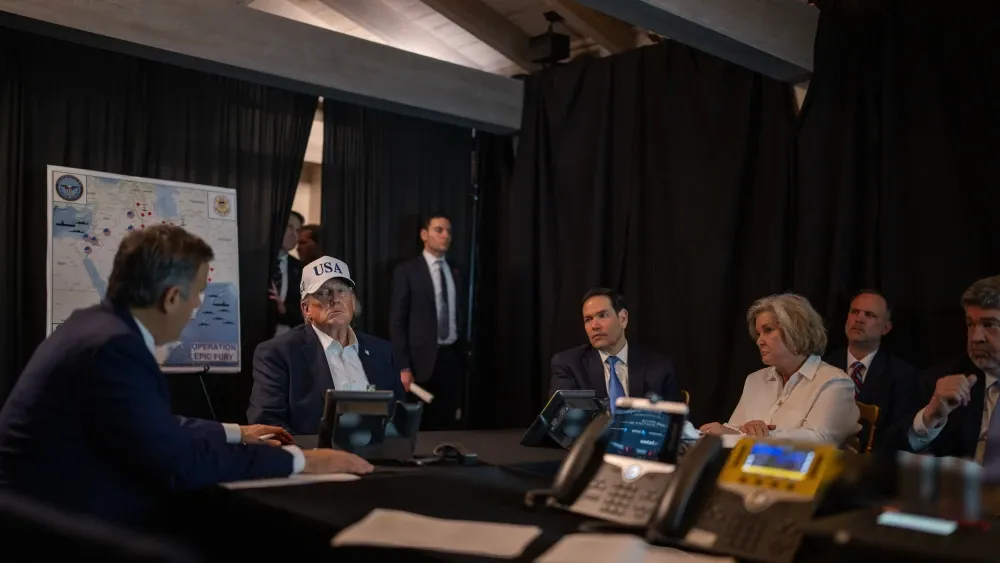
By: Mardo Soghom
President Donald Trump may anticipate a breakthrough in U.S.-Iran relations, suggesting an “amazing two days” ahead. However, Iran’s military issues a stark warning as tensions rise.
Why it matters: The U.S. blockade on Iranian ports threatens to escalate tensions into conflict.
Economic strain: The blockade is strangling Iran’s economy, causing a spike in unemployment and triple-digit food inflation.
Political stakes: While Trump touts a regime change, power remains with Iran’s Revolutionary Guard.
The real decision-makers, entrenched military leaders, continue to influence Iran’s stance, despite U.S. optimism.
To read the full article, click here.
|
|
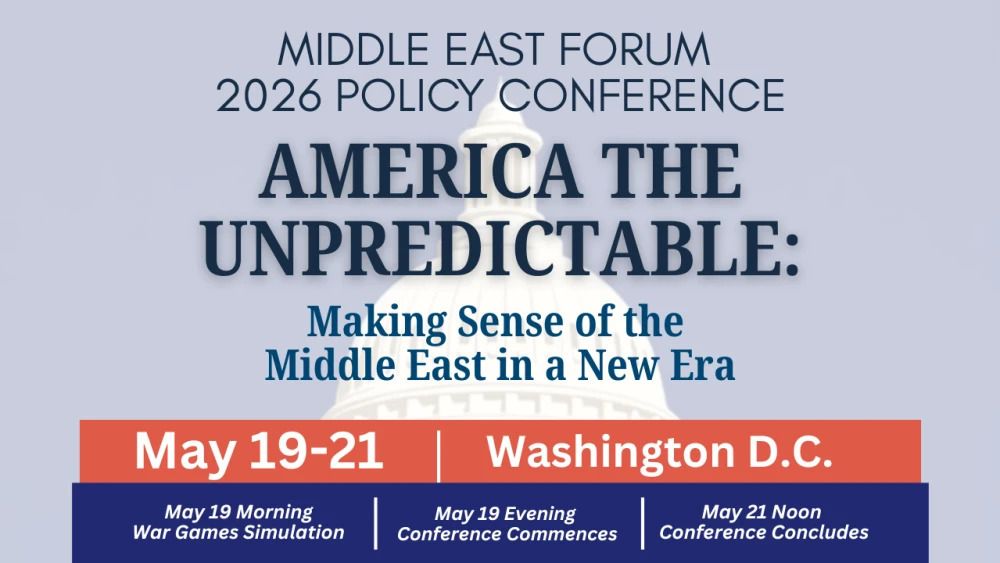
Secure Your Spot: The 2026 Middle East Forum Policy Conference
Join us in Washington, D.C., from May 19-21, 2026, for the Middle East Forum's exclusive Policy Conference as we navigate the turbulent aftermath of the Iran war and its regional shockwaves. This private gathering will tackle today's most pressing geopolitical challenges, featuring in-depth analyses of Turkey's shifting influence and the vital future of the U.S.-Israel relationship. We will also confront the rising threat of domestic Islamists, equipping attendees with the strategic insights needed to counter these interconnected issues.
Click here to secure your spot for America the Unpredictable and access our special hotel block before the May 1st RSVP deadline.
|
|
ICYMI: Israel Insider with Ashley Perry
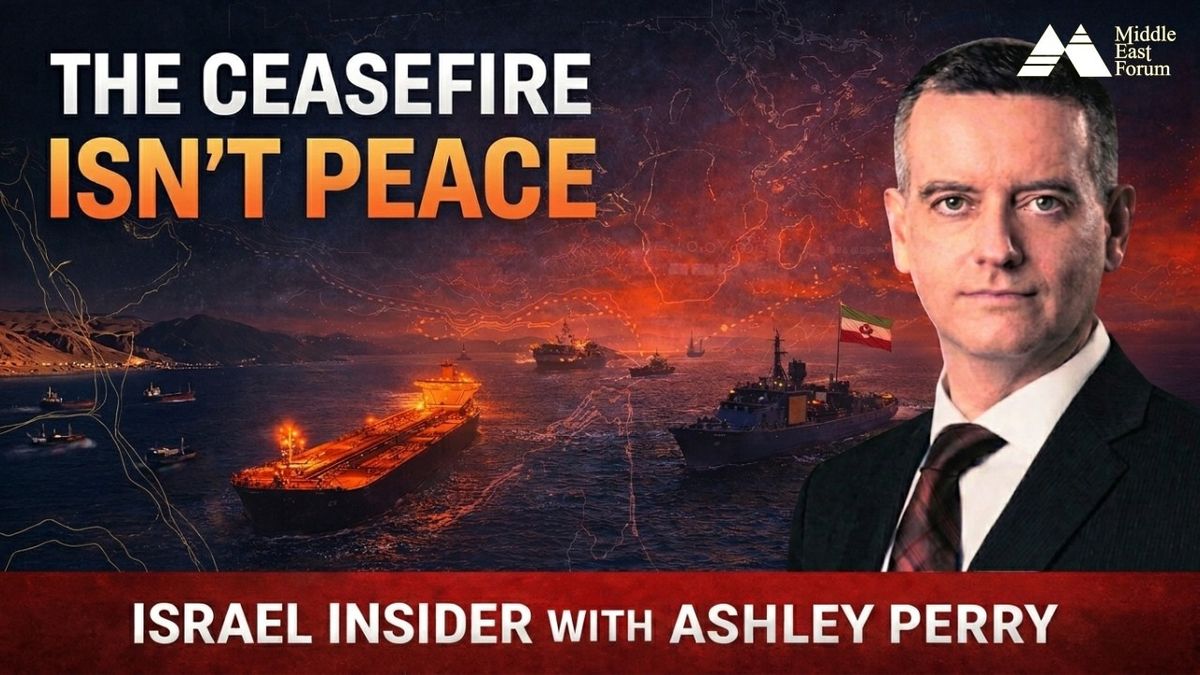
Events in Israel, Iran, and Lebanon are shifting rapidly, with conflicting signals from Iranian leadership and ongoing negotiations alongside threats. President Donald Trump drives decisions on ceasefires and military operations, pushing toward an end to hostilities with Iran while pressuring Israel to accept parallel developments in Lebanon despite ongoing battlefield gains. A U.S. blockade targeting Iran’s oil exports has increased leverage in nuclear negotiations, where key disputes include uranium enrichment limits, existing stockpiles, sanctions relief, and Iran’s regional proxy network.
Ashley Perry is an advisor to the Middle East Forum’s Israel office. He served as adviser to Israel’s minister of foreign affairs and deputy prime minister in 2009-15, and has also been an advisor to the Negev Forum. Originally from the United Kingdom, he moved to Israel in 2001. He holds a B.A. from University College London and an M.A. from Reichman University (IDC Herzliya).
To watch the entire podcast, click here.
|
|
Trump’s Iran Blockade Has a Back Door—Not the Gulf, but a Lake the Size of Germany That Russia and Iran Share
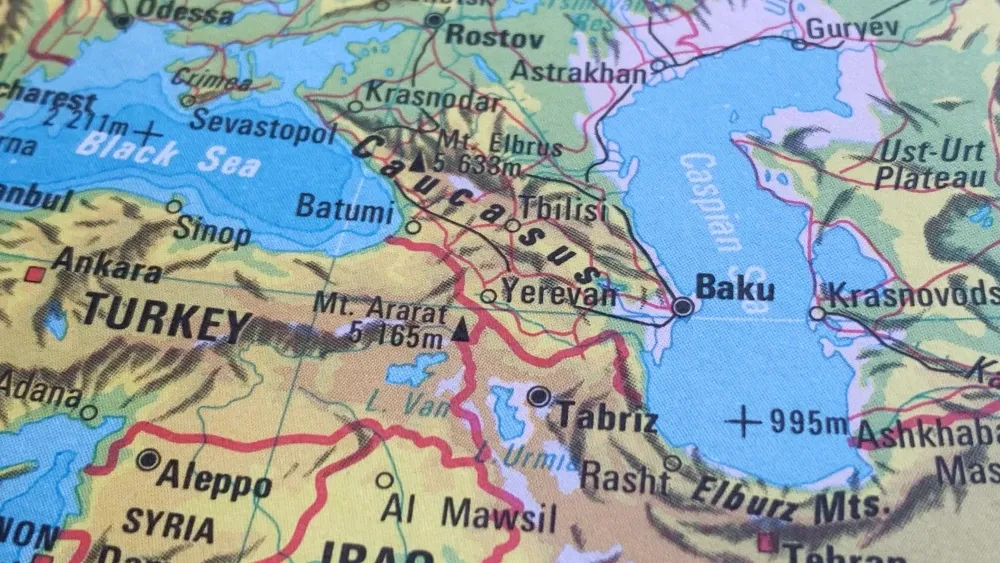
By: Michael Rubin
After negotiations failed, President Trump ordered a blockade on Iranian ports, sparking tensions across key waterways.
Why it matters: The blockade targets Iranian ports on the Persian Gulf and the Strait of Hormuz, critical for oil exports and imports, and could destabilize regional trade.
Caspian Sea challenge: Iran’s routes via the Caspian Sea pose a strategic loophole.
Strategic response: To close these gaps, the U.S. must use its air dominance to declare that any ship entering Iran’s territorial waters in the Caspian will be sunk.
Second, the U.S. should target truck traffic crossing the mountain pass from Chalus. Trump must also pressure Azerbaijan to align decisively against Iran, addressing both maritime and land-based threats.
To read the full article, click here.
|
|
No, a Blockade Will Not Be Enough to Bring Down Iran
By: Shay Khatiri
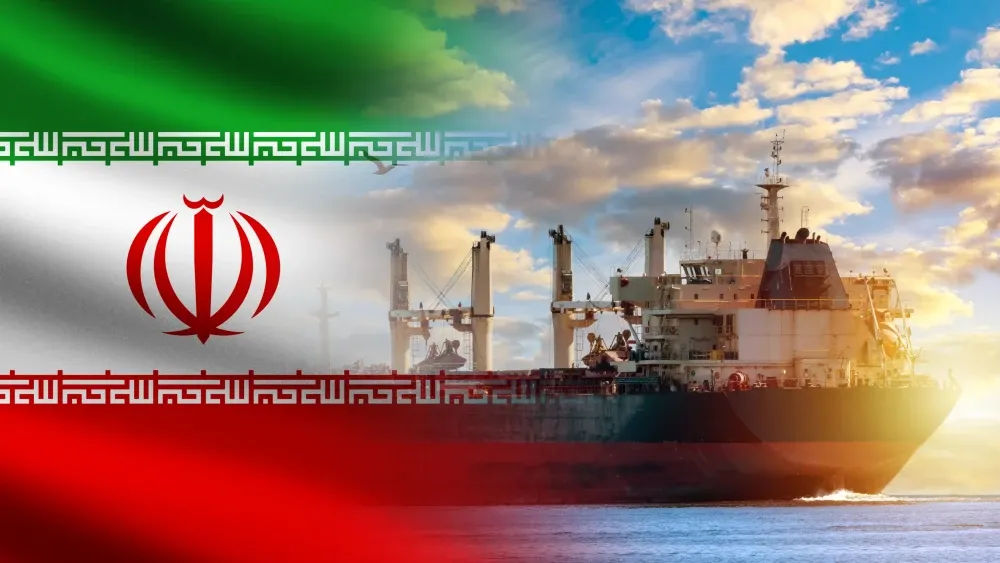
On April 13, 2026, President Donald Trump announced a blockade on the Strait of Hormuz, targeting Iranian ports. However, the move reveals a strategic misunderstanding of Iran’s priorities.
Why it matters: The blockade, intended as diplomatic leverage, faces logistical challenges due to U.S. naval commitments elsewhere.
Economic pressure not enough: U.S. reliance on economic pressure ignores Iran’s resilience and “resistance economy” ideology.
Broader implications: If the U.S. seeking a leverage to use against the regime in diplomacy, it must threaten the core of the regime, including the lives of its leadership.
To read the full article, click here.
|
|
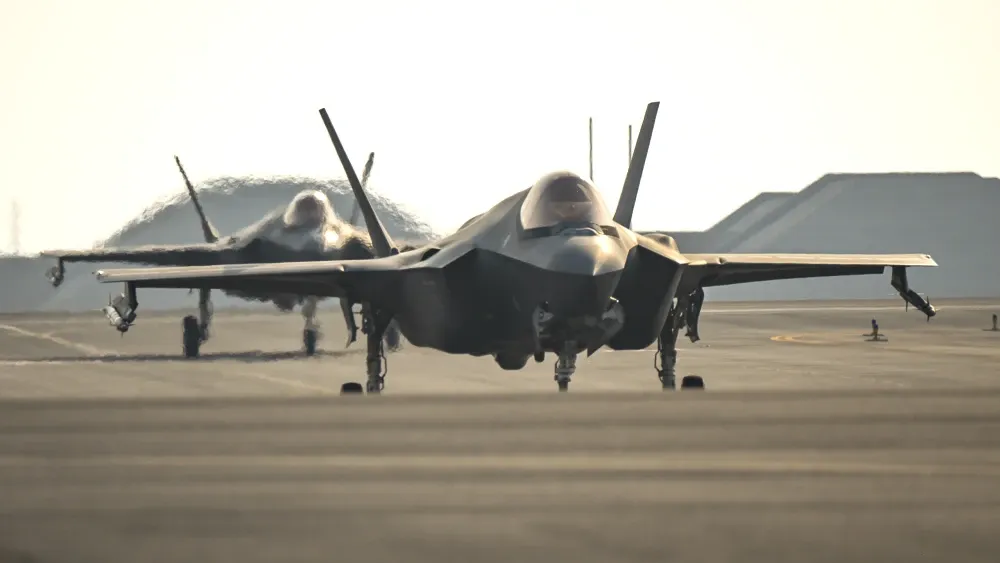
Time to Close U.S. Bases in the Middle East
By: Michael Rubin
As war looms with Iran, the Pentagon evacuated Al-Udeid Air Base in Qatar after 25 years, revealing the strategic pitfalls of past decisions.
Why it matters: U.S. basing decisions have shielded host nations like Qatar from accountability, despite their support for extremist groups.
Global implications: The reliance on Middle Eastern bases often constrains U.S. military actions.
Future of defense: The Pentagon must modernize its strategy, abandoning outdated bases for more flexible options.
To read the full article, click here.
|
|
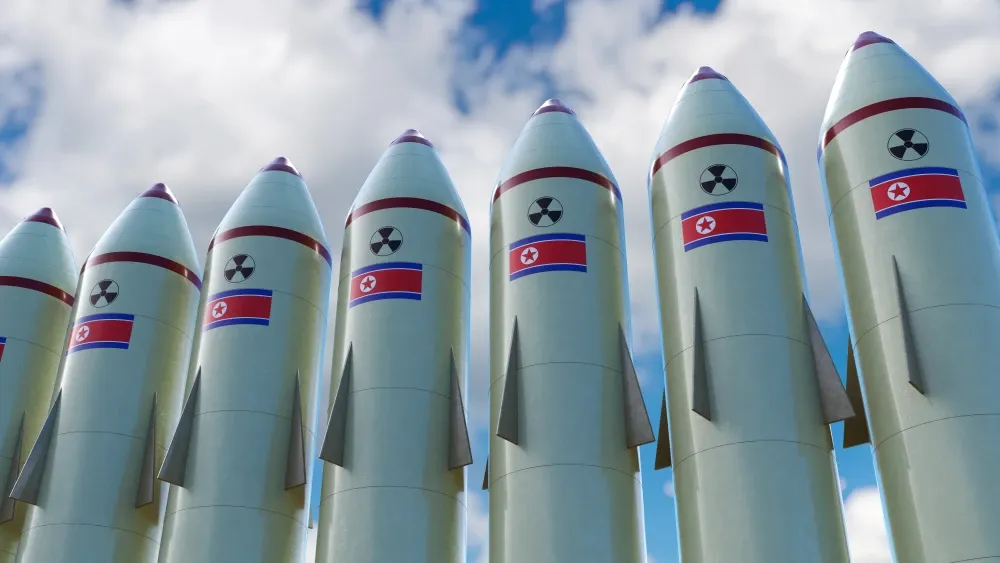
North Korea Is the Head of the Snake—and the West Keeps Striking the Tail
By: Jose Lev Alvarez Gomez
For decades, North Korea has supplied missile and nuclear technology to Iran, compromising U.S. interests and global nonproliferation efforts.
Why it matters: This partnership destabilizes the Middle East and provides Iran with advanced capabilities, threatening regional security.
Khan’s pivotal role: Pakistani scientist Abdul Qadeer Khan was instrumental in proliferating nuclear technology, linking Iran with North Korea.
Policy implications: Effective countermeasures require targeting North Korea’s support networks and enforcing stringent sanctions.
To read the full article, click here.
|
|
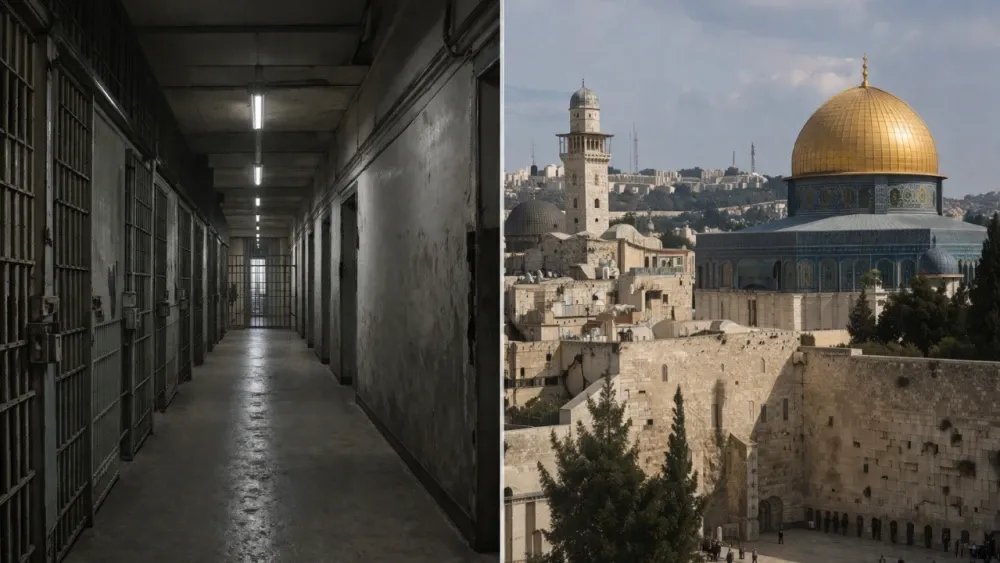
Islamic State Editorial: ‘Our Aqsa and Our Prisoners’
By Aymenn Jawad Al-Tamimi
An editorial from the Islamic State terrorist group, translated by Aymenn Jawad Al-Tamimi, highlights growing unrest in the Arab world due to Israel’s new death penalty law for Palestinian militants, triggering fears of mass executions.
Why it matters: The law has provoked demonstrations in Syria, focusing on Palestinian prisoners and the closure of al-Aqsa Mosque.
Islamic State’s narrative: The group reframes the outrage to spotlight its imprisoned members in Iraq, criticizing the lack of attention to their plight.
Strategic implications: The editorial underscores deep-rooted animosity towards Shia groups, framing them as obstacles to liberating Jerusalem.
To read the full article and translation, click here.
|
|
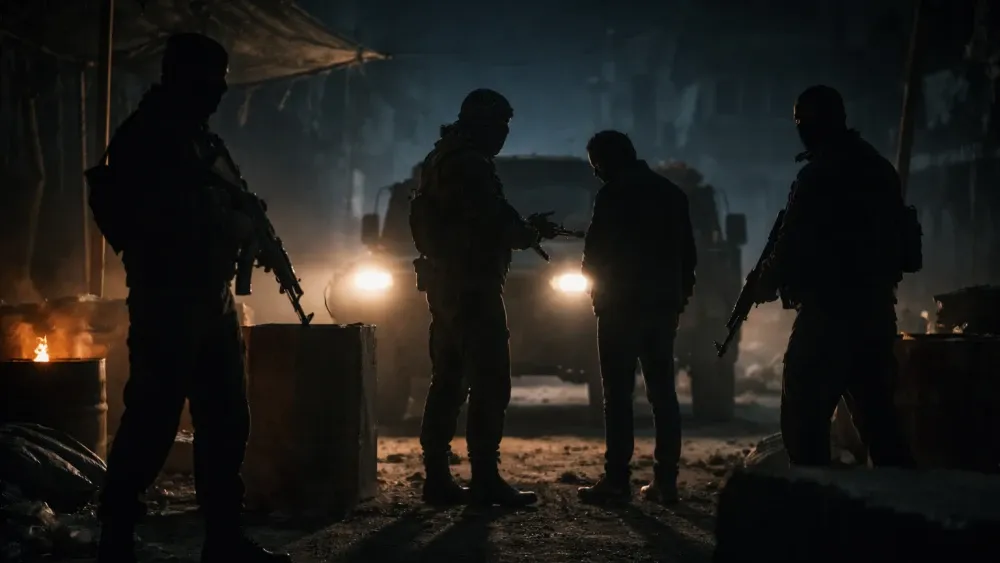
Anti-Hamas Armed Groups in Gaza: Interview with ‘The Popular Defence Forces’
By: Aymenn Jawad Al-Tamimi
Amidst Gaza’s turmoil, Hamas confronts new challenges from armed groups like the southern ‘Popular Defence Forces,’ who call for peace and the return of the Palestinian Authority. Aymenn Jawad Al-Tamimi interviewed a representative of the group.
Why it matters: Hamas, labeled a terrorist organization by its opponents, faces internal dissent as groups advocate for peace with Israel.
Hamas’s stance: Despite opposition, Hamas remains influential, leveraging its control to maintain power and resist Israeli influence.
Broader implications: The ongoing conflict and internal divisions in Gaza affect regional stability and the potential for peace.
To read the full interview, click here.
|
|
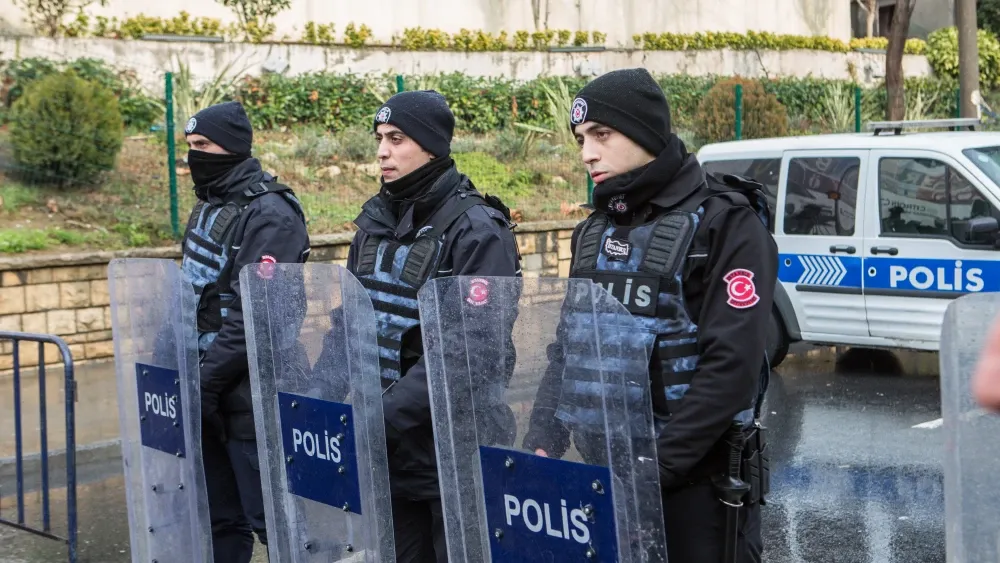
Attack on Israeli Consulate in Istanbul Reflects Policies of Erdoğan That Enabled ISIS
By: Abdullah Bozkurt
The recent attack on the Israeli consulate in Istanbul underscores Turkey’s leniency towards the Islamic State in Iraq and Syria (ISIS) networks while cracking down on legitimate opposition to sustain President Recep Tayyip Erdoğan’s regime.
Why it matters: This incident highlights the disparity in Turkey’s counterterrorism efforts, risking both internal and international security.
Judicial leniency: The lead attacker, Yunus Emre Sarban, previously acquitted on ISIS charges, exemplifies Turkey’s softer stance on jihadist groups.
Broader implications: Erdoğan’s focus on suppressing opposition, rather than extremism, could destabilize regional peace.
To read the full article, click here.
|
|
|
|
|
We hope you enjoyed this issue of the MEF Dispatch. The Middle East Forum provides a steady stream of analyses and updates at https://www.meforum.org/. Please share your thoughts on our coverage in the comments.
Thank you,
Winfield Myers
Managing Editor, Middle East Forum
Director, Campus Watch
|
|
|
Was this edition useful?  

Your email will be recorded and shared with the sender |
      
MEF, an activist think tank, deals with the Middle East, Islamism, U.S. foreign policy, and related topics, urging bold measures to protect Americans and their allies. Pursuing its goals via intellectual and operational means, the Forum recurrently has policy ideas adopted by the U.S. government.
Copyright © 2025 Middle East Forum, All rights reserved.
Our mailing address is:
Middle East Forum
1650 Market Street, Suite 3600
Philadelphia, PA 19103
|
|
|
|
Powered by 
|
This email was sent by Middle East Forum via Axios HQ |
|
|
|

0 коммент.:
Отправить комментарий