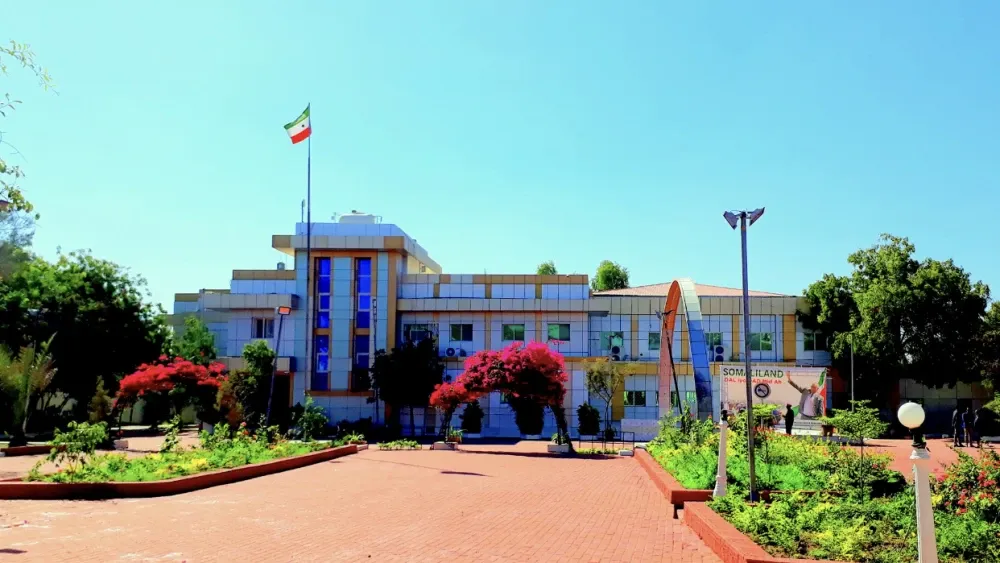
| |  | | | The Fall of Iran Could Change Everything; Israel at a Turning Point By Winfield Myers ● Jan 02, 2026 Smart Brevity® count: 10 mins...2603 words We start with two articles on Iran from Michael Rubin, who writes that if the Iranian regime collapses, the West should not expect its fall to be a "pass to security and a peaceful Middle East." He also suggests concrete steps to ensure that regime leaders responsible for bloodshed and oppression face justice. We feature three articles by Rubin on the opportunities created by Israel's diplomatic recognition of Somaliland, including how U.S. recognition would would be President Trump's ultimate response to Rep. Ilhan Omar's efforts to undermine his policies on assistance and immigration. Alex Selsky argues that 2025 saw a turning point for Israel, with the decisive moment coming in June, when Israel launched its direct attack on Iran. Jonathan Spyer analyzes why, in the face of the October 7 attacks, the West Bank remained quiet. We also offer more from Michael Rubin along with Eric Navarro's examination of the 2026 National Defense Authorization Act. | | The Fall Of Iran Could Change Everything 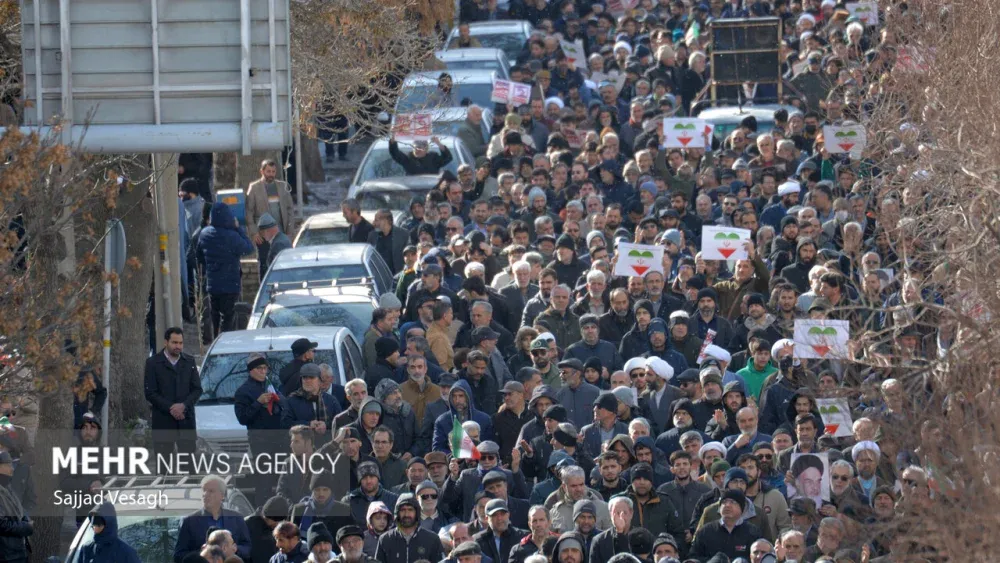 By: Michael Rubin The Iranian regime faces its biggest challenge since its inception over 46 years ago, with protests spreading across societal lines, including traditionally supportive groups. Why it matters: The collapse of the Islamic Republic could reshape the geopolitical landscape. -
Economic woes, like inflation and currency devaluation, are hitting even regime loyalists hard, signaling potential systemic collapse akin to the Tehran Bazaar's closure. Regional impacts: A smooth succession in Iran is unlikely due to fragmented opposition. This chaos could limit Iran's regional threats, as security forces focus inward. Winners and losers: While the Gulf states may gain, their enduring relevance is uncertain. The Revolutionary Guard remains powerful but faces diminishing influence in Iraq. Broader implications: Civil war in Iran could lead to a refugee crisis in the Gulf. Turkey may emerge stronger, filling the ideological void left by Iran's downfall. Regime change in Iran will be welcome. The devil we know is not always better than the devil we do not. But, any tendency on the part of the White House and Washington think tanks to see Iran's collapse as a "Hail Mahdi" pass to security and a peaceful Middle East will be embarrassingly naïve. To read the full article, click here. | | How Should the United States Approach Justice in Iran? 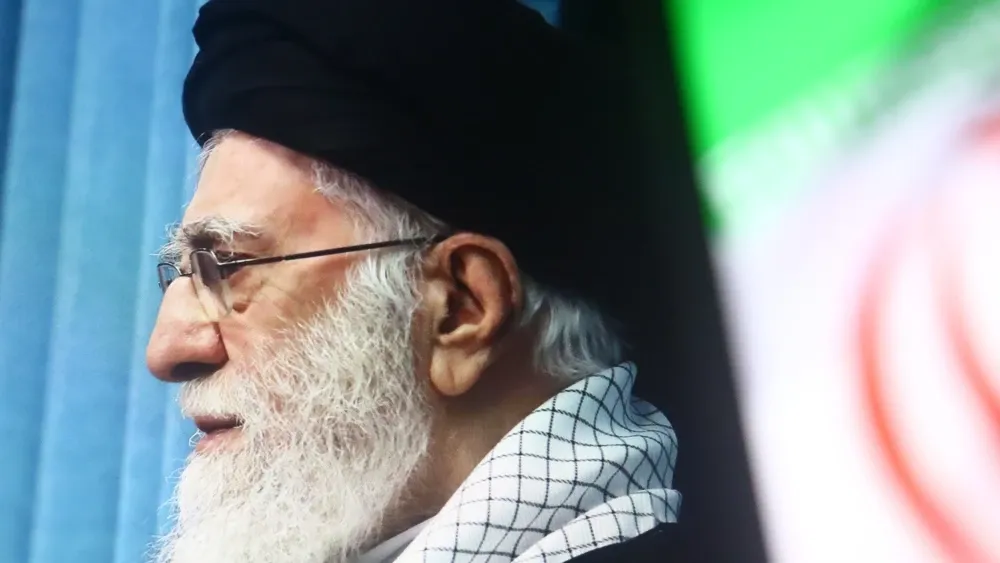 By: Michael Rubin In the early morning hours of January 2, 2026, President Donald Trump threw down the gauntlet on Iran. "If Iran shots [sic] and violently kills peaceful protesters, which is their custom, the United States of America will come to their rescue," he wrote on Truth Social. "We are locked and loaded and ready to go." Why it matters: Empowering the Iranian people's courage is key to effecting regime change without relying solely on U.S. military action. This aligns with the Middle East Forum's advocacy for regional stability through local empowerment. Key actions: The U.S. should lead efforts to trace the regime's embezzled funds, urging allies like the U.K. and UAE to refrain from protecting Iranian assets. -
The United States, preferably with the European Union and as many Middle Eastern and South Asian countries that will join, should issue an ultimatum to the Islamic Revolutionary Guard Corps and current cabinet members: Leave Iran, turn yourself into foreign embassies abroad, and live. You can escape the death penalty, if not win amnesty. -
Drawing from Iraq's historical lessons, ensuring justice and financial transparency post-regime change is critical for sustainable reform. Next steps: Trump also must prepare the U.S. Department of Justice and the Internal Revenue Service to deal with those Americans who helped and assisted the Islamic Republic as unregistered foreign agents. Securing internal Iranian documents and leveraging informants from the failed regime who can prove the complicity and corruption of American citizens or residents in regime propaganda should be a top priority for the United States internally as Iran simultaneously seeks to rebuild. To read the full article, click here. | | What the National Defense Authorization Act Gets Right in the Middle East and Where It Falls Short  By: Eric Navarro The fiscal year 2026 National Defense Authorization Act highlights the persistent strategic concerns posed by Iran and others but falls short in enforcing decisive actions. Why it matters: Iran's missile and drone capabilities, coupled with its support for proxies like the Houthis, demand a comprehensive U.S. strategy. Iran's threat: The NDAA emphasizes reporting on Iran's evolving capabilities but treats the nation as a problem to manage rather than an adversary to defeat. Operational gaps: While the NDAA includes provisions for integrated air and missile defense, it misses a mandated campaign for the Red Sea, allowing Iran's maritime threats to persist. -
Smuggling networks, crucial to Iranian proxies, are acknowledged but not specifically targeted, leaving a strategic blind spot. Strategic oversight: The NDAA gestures toward coalition-building but fails to create a lasting regional security framework, missing opportunities for formalized Arab-Israeli cooperation. If the goal is a new Middle East, one anchored to U.S. interests, resilient against Iranian proxy warfare, and capable of defending global commerce, then future legislation must go further. Anything less risks repeating a familiar pattern: recognizing the problem but leaving initiative to the enemy. To read the full article, click here. | | ICYMI: Somaliland: Key Player in a Key Location, with Bashir Goth 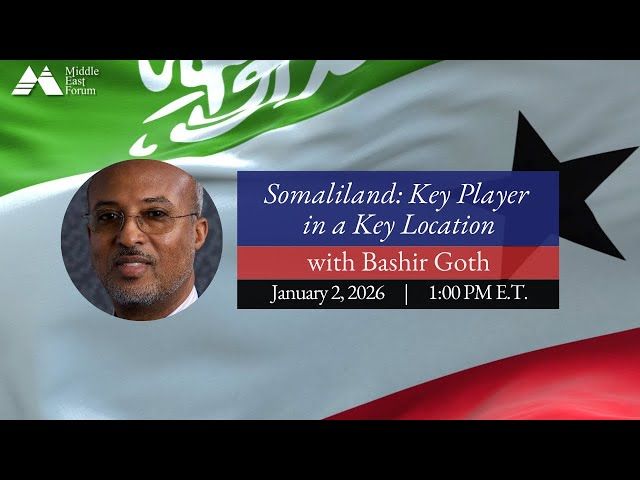 Israel's recognition of Somaliland elevated Somaliland's pursuit of sovereignty following decades of self-governance marked by repeated elections, peaceful transfers of power, and sustained internal security. The development carried strategic implications for Red Sea and Bab al-Mandab maritime security amid Houthi attacks, Iranian activity, and intensifying competition involving Turkey and China, with Somaliland positioned as a stable partner for Israel, the United States, and Gulf states including the UAE. Somaliland's historical claim to independence, efforts to expand international recognition, potential security cooperation with Israel, interest in joining the Abraham Accords, and counterterrorism coordination with Puntland are central elements of its regional and diplomatic strategy. Bashir Goth is the Somaliland Representative to the United States. He has decades of experience as a journalist, translator, media and corporate communications advisor, and diplomat. The author of numerous articles and essays in English and Arabic on political, business, cultural and social issues, many of which have been translated into other languages or referenced in academic texts, Goth has contributed to Newsweek, the Washington Post's blog Global Post, and many other leading Middle East and African newspapers. Goth graduated from Somali National University with degrees in English literature and history. To watch the full podcast, click here. | | Recognizing Somaliland Would Be Trump's Ultimate Response to Ilhan Omar 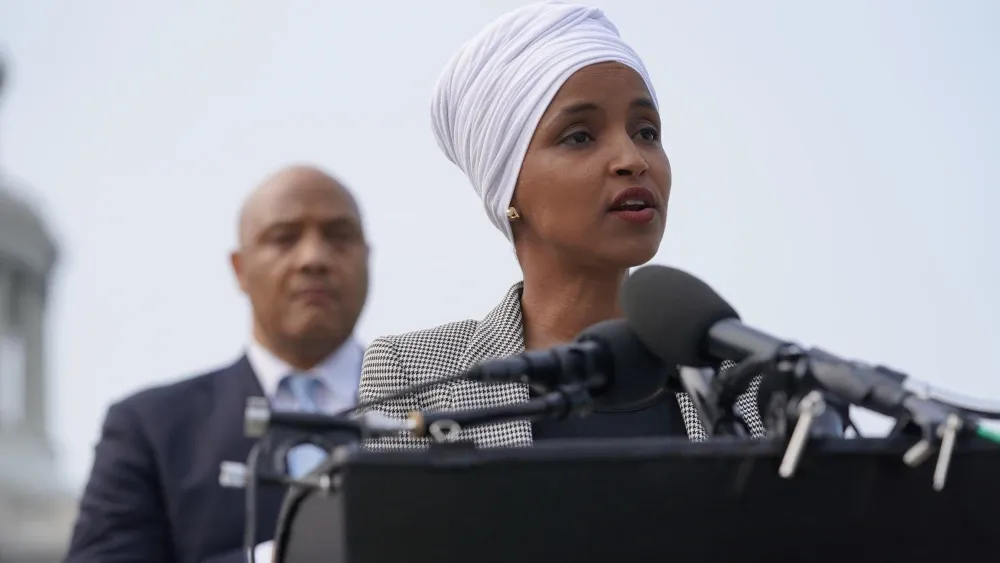 By: Michael Rubin President Trump's upcoming meeting with Israeli Prime Minister Netanyahu includes discussions on regional stability, highlighting the potential recognition of Somaliland's independence as a strategic move. Why it matters: Recognizing Somaliland would bolster U.S. national security interests and counter Somali corruption, particularly in Minnesota, where Rep. Ilhan Omar's policies challenge Trump's agenda. Strategic rationale: Somaliland has a historical precedent of independence before merging with Somalia, akin to other global dissolutions like the Soviet Union and Yugoslavia. Political dynamics: Rep. Ilhan Omar's support for Somali policies and criticism of the U.S. underscore the need for a strategic pivot. Recognizing Somaliland would not only counter corruption and clan politics but also align with U.S. strategic interests, reinforcing a stable ally in East Africa. To read the full article, click here. | | After Somaliland, Israel Should Recognize South Yemen 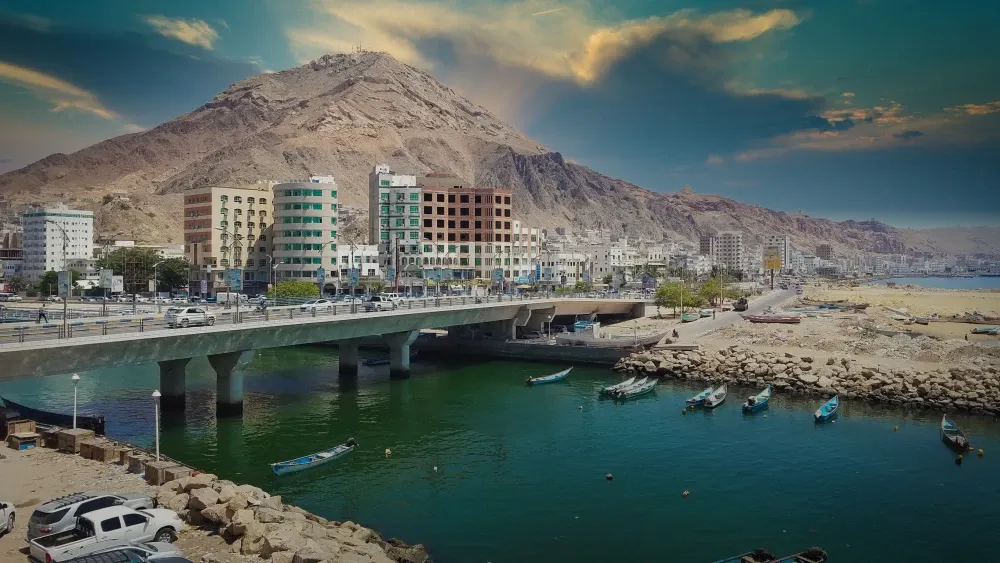 By: Michael Rubin Israel's recognition of Somaliland's independence marks a strategic milestone, urging similar actions for South Yemen to bolster regional stability. Why it matters: Somaliland, with its defined borders and autonomy, thrives despite international non-recognition, offering a model for stability in the Horn of Africa. Strategic implications: Recognizing Somaliland and South Yemen could counteract Iranian influence and secure key maritime routes. Regional dynamics: South Yemen shares Somaliland's historical legitimacy and moderate political culture, providing a strategic ally against Iranian proxies and extremist groups. This recognition strategy presents a unique diplomatic opportunity that promises benefits for Israel, the U.S., and moderate Arab states at minimal cost, reinforcing a stable geopolitical landscape. To read the full article, click here. | | Greece Should Recognize Somaliland 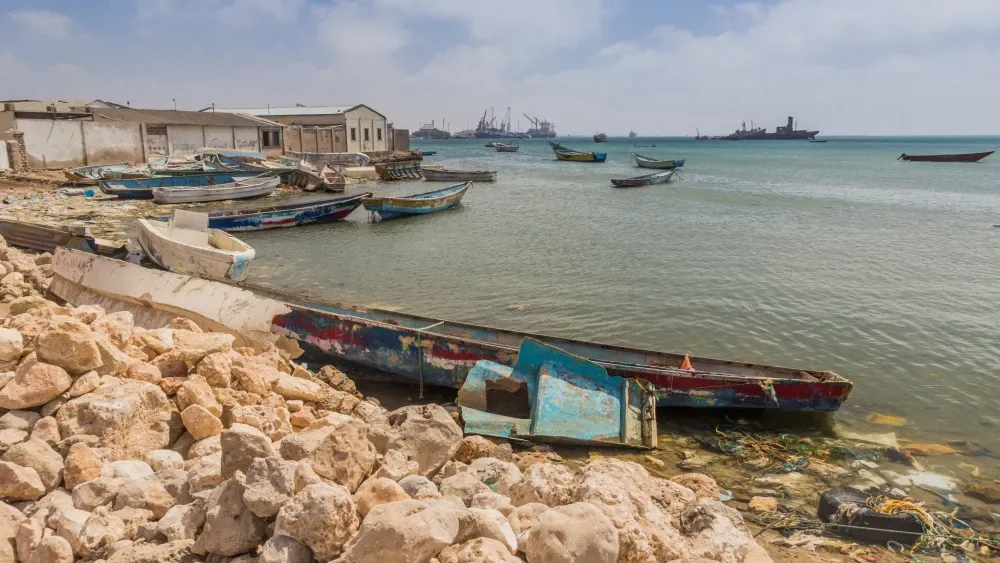 By: Michael Rubin On December 26, 2025, Israel formally recognized Somaliland, a move celebrated for its justice and strategic foresight. Why it matters: Somaliland, a former British protectorate, has demonstrated resilience and stability, thriving independently despite lacking formal recognition. Strategic rationale: Berbera's strategic location offers a security edge, crucial for countering threats like the Houthis' targeting of shipping routes. Diplomatic opportunity: With its secure environment and effective governance, Somaliland represents an opportunity for Greece to extend its diplomatic influence beyond the Mediterranean. -
Following Israel's lead, Greece could reinforce its commitment to democracy and stability by recognizing Somaliland, aligning with moderate, law-abiding maritime nations. Recognizing Somaliland would not only bolster regional security but also affirm Greece's role as a leader in promoting democratic values and economic prosperity. To read the full article, click here. | | The Year in Review: Israel at a Turning Point  By: Alex Selsky The year 2025 marked a turning point for Israel, starting with the pivotal operation against Hezbollah and the landmark strike on Iran. Why it matters: On June 13, Israel launched a major air operation against Iran, targeting nuclear and missile facilities and assassinating key military leaders, marking the first open military confrontation between Israel and Iran. -
This bold move was followed by Iran's retaliatory missile and drone attacks, killing 30 Israeli civilians, and a ceasefire brokered by Washington after the U.S. also struck Iran's Fordow nuclear facility. Gaza conflict: The Gaza war peaked with a U.S.-brokered ceasefire involving hostage releases, prisoner exchanges, and expanded humanitarian aid, marking a significant recovery phase for Israeli society. Domestic politics: Political tensions centered on conscription disputes with Haredi parties, yet the coalition survived a no-confidence vote, moving closer to its first full term in decades. Economic resilience: Israel's economy showed signs of recovery, with the shekel strengthening and the tech sector raising $15.6 billion in private funding. International dynamics: Despite military prowess, Israel faced campaigns targeting its legitimacy, leading to increased support for Palestinian state recognition by several Western countries. As Israel navigates these complex dynamics, the coming year will test its ability to leverage military deterrence, political stability, and economic resilience into a cohesive long-term strategy. To read the full article, click here. | | Why October 7 Didn't Ignite the West Bank 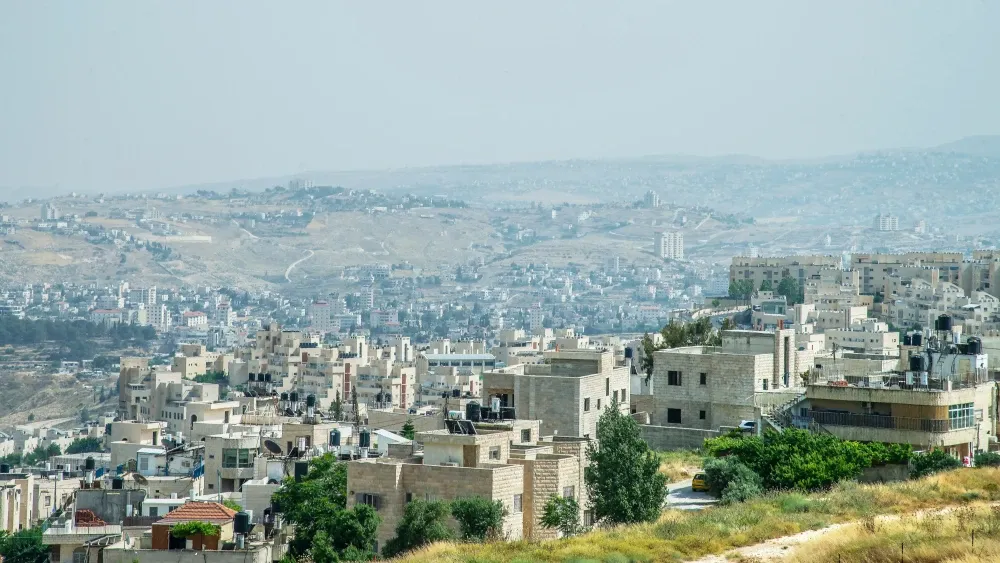 By: Jonathan Spyer In the past two years, conflict has engulfed the Middle East, sparked by the Hamas massacre on October 7, 2023. However, the West Bank and Arab Israeli population have notably remained out of the fray. Why it matters: This absence defies expectations, as past conflicts saw unrest spreading across these regions, fueled by tensions around al-Aqsa mosque. Key factors: Arab Israelis, witnessing Hamas's indiscriminate violence that affected both Jewish and Arab citizens on October 7, opted for stability by remaining within Israel. West Bank dynamics: The region has seen Israeli security actions quelling nascent militias in Tulkarem and Jenin, with the tacit cooperation of the Palestinian Authority (PA). As of now, the tentative confluence of interests between Jerusalem and Ramallah, alongside focused Israeli security measures, sustains the relative calm in the West Bank, though this balance remains delicate. To read the full article, click here. | | Will Trump's Gaza Coalition Repeat Bush's Afghanistan and Lebanon Mistakes?  By: Michael Rubin President Trump and Secretary of State Marco Rubio's proposal for an International Stabilization Force in Gaza faces significant hurdles. Why it matters: The plan aims to replace Hamas's rule with international oversight, but the disarmament requirement could lead to violent confrontations. Key concerns: Allowing Turkish forces, under President Erdoğan, known for Islamist sympathies, could empower Hamas rather than subdue it. Diplomatic pitfalls: Rubio's attempt to involve Pakistan mirrors past NATO mistakes in Afghanistan, where participation was marred by restrictive caveats. To read the full article, click here. | | | | | Thank you for your support and for subscribing to the Dispatch. If you enjoyed it, please forward it to a friend, and please let us know what you thought of this issue. Sincerely, Winfield Myers
Managing Editor, Middle East Forum
Director, Campus Watch | | | | Was this edition useful?  

Your email will be recorded and shared with the sender |        MEF, an activist think tank, deals with the Middle East, Islamism, U.S. foreign policy, and related topics, urging bold measures to protect Americans and their allies. Pursuing its goals via intellectual and operational means, the Forum recurrently has policy ideas adopted by the U.S. government.
Copyright © 2025 Middle East Forum, All rights reserved.
Our mailing address is:
Middle East Forum
1650 Market Street, Suite 3600
Philadelphia, PA 19103 | | | | | Powered by 
| | This email was sent by Middle East Forum via Axios HQ | | | |

0 коммент.:
Отправить комментарий