| |  | | | Middle East Forum Launches Dhimmitude Institute; Iran-Backed Militias Reassert Power By Winfield Myers ● Dec 17, 2025 Smart Brevity® count: 8 mins...2056 words Middle East and Islamic Studies departments have transformed from centers of learning into incubators of extremism. Through our Campus Watch project, we monitor how this ideology moves from the lecture hall to the streets. Help us hold the line. If you have already made your year-end gift, thank you. If not, please support our fight (click here) to safeguard American values from the threats inside our own institutions. MEF has launched the Dhimmitude Institute, a major research initiative that will produce cutting-edge scholarship on the treatment of religious minorities under Islamic governance. It will focus on the historic and modern manifestations of dhimmitude, examining legal restrictions, employment barriers, and coerced conversions in regions like Iran, Egypt, and Pakistan. Jonathan Spyer writes that Iran-supported militias continue to play a key role in Iraqi governance and are able and willing to act to prevent any moves to curtail or reduce the power and the capacities of their allies. Mardo Soghom reports that Iran's press claims the new U.S. 2025 National Security Strategy demonstrates "the decline of American hegemony." Dalga Khatinoglu says the Iranian rial is falling rapidly, resulting in the doubling the prices of rice, bread, milk, eggs, and chicken since summer. We also feature the work of Aaron Shuster, Amine Ayoub, and Raymond Ibrahim. | | Radical Professors Are Reshaping American Campuses  Foreign Cash. Radical Classrooms. A Threat from Within. When chants of "Globalize the Intifada" echo across the quad and Jewish students are assaulted, the threat is no longer abroad. It is here. The Middle East Forum has exposed billions of dollars in foreign funding flowing into the U.S. universities that shape our future diplomats and policymakers. We forced universities and lawmakers to confront exactly who is buying influence in American education. But money is only the fuel. The professors are the engine. Radicalism isn't just a student trend. It is a tenured curriculum. Middle East and Islamic Studies departments have transformed from centers of learning into incubators of extremism. Through our Campus Watch project, we monitor how this ideology moves from the lecture hall to the streets. We recently exposed a network of over 130 Faculty for Justice in Palestine chapters operating with zero oversight. MEF Action Gets Real Results: -
Stopped the Rot: A Georgetown professor was removed as department chair and placed under investigation. -
Forced Accountability: Northwestern's president resigned following congressional hearings that cited MEF research. -
Enforced the Law: DHS arrested a Hamas-linked academic after Campus Watch reporting.
Foreign funding fuels the ideology. MEF exposes the operators. Help us hold the line. If you have already made your year-end gift, thank you. If not, please support our fight to safeguard American values from the threats inside our own institutions. To make your donation, click here. | | Middle East Forum Launches Dhimmitude Institute 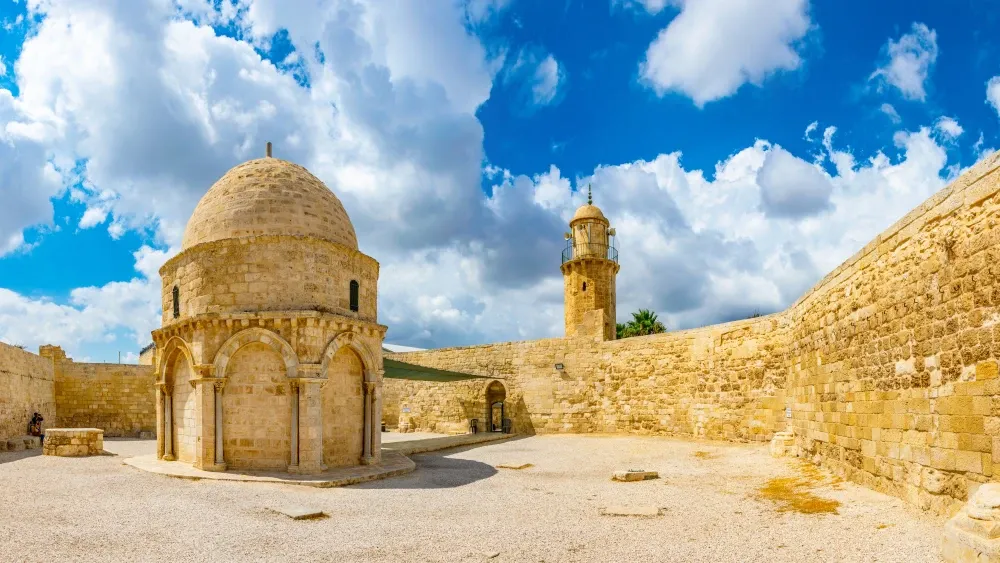 News from the Middle East Forum The Middle East Forum has launched the Dhimmitude Institute, a major research initiative that will produce cutting-edge scholarship on the treatment of religious minorities under Islamic governance—from the historic subjugation of Christians, Jews, and other non-Muslims to its modern manifestations across the Muslim world and in the West. Why it matters: The Institute honors the groundbreaking work of scholars Bat Ye'or and David Littman, whose research first exposed the theological and political mechanisms that subordinated non-Muslim populations under Islamic rule through the dhimma—the legal regime that granted "protection" to minorities in exchange for political and social submission. The big picture: The Institute will focus on the historic and modern manifestations of dhimmitude, examining legal restrictions, employment barriers, and coerced conversions in regions like Iran, Egypt, and Pakistan. What's next: Submissions should be directed to Dexter Van Zile at vanzile@meforum.org. To read the full press release, click here. | | ICYMI: Israel Insider with Ashley Perry  Israel faces mounting pressure to move toward Phase Two of the Trump-brokered Israel–Hamas ceasefire, with unresolved disputes over timing, substance, and enforcement—particularly Hamas's refusal to disarm and Israel's insistence that lasting stability is impossible without dismantling Hamas's military capabilities. International involvement in Gaza's future remains uncertain, as questions persist over reconstruction funding, the deployment of foreign forces, and Israel's firm opposition to any Turkish role, while a recent Israeli strike killing senior Hamas figure Ra'id Sa'ad exposed friction with Washington over Israel's operational freedom under the ceasefire. Domestically, Prime Minister Netanyahu is navigating year-end coalition maneuvering, ultra-Orthodox enlistment tensions, and a looming budget vote that could determine the government's survival in the months ahead. Ashley Perry is an advisor to the Middle East Forum's Israel office. He served as adviser to Israel's minister of foreign affairs and deputy prime minister in 2009-15, and has also worked with Israel's Ministers of Intelligence, Agriculture and Rural Development, Energy, Water and Infrastructure, Defense, Tourism, Internal Security, and Immigrant Absorption and as an advisor to The Negev Forum. Originally from the U.K., he moved to Israel in 2001. He holds a B.A. from University College London and an M.A. from Reichman University (IDC Herzliya). To watch the full podcast, click here. | | Iran-Backed Militias Reassert Power in Iraq, Proving the Islamic Axis Is Still Standing  By: Jonathan Spyer The Iraqi government's reversal on freezing assets of Hezbollah and Ansar Allah highlights ongoing militia influence. Why it matters: The strength of Iran-backed militias in Iraq suggests Tehran's regional influence remains potent. The big picture: Iran's proxy model continues to wield power across the region, merging political clout with military capabilities, despite recent setbacks. What's next: Israeli observers must reassess the regional threat landscape, as the Iran-led bloc remains a formidable force. To read the full article, click here. | | Iran Seizes on U.S. Strategy Shift to Claim Waning American Power  By: Mardo Soghom Iran has reacted sharply to the Trump administration's 2025 National Security Strategy, claiming it is a sign of declining U.S. influence. Why it matters: Iran perceives the strategy as a confirmation of American retreat from global leadership, framing U.S. policies as failing to align with its declared goals. The big picture: The strategy's allegedly conciliatory tone towards Russia and China, coupled with its downplaying of Middle Eastern conflicts, has not reassured U.S. allies. What's next: As Iran rebuilds its military capabilities post-conflict, regional observers and U.S. allies must reassess their security strategies. To read the full article, click here. | | Iran's Currency Collapse Accelerates as Inflation Surges  By: Dalga Khatinoglu The Iranian rial has lost 20 percent of its value in a month, sending food prices to record highs and threatening food security. Why it matters: The currency collapse means basic goods like rice and milk are now double their summer prices, straining families across Iran. The big picture: Iran's economic woes are exacerbated by a complex web of exchange rates and reduced imports, with the Central Bank using foreign currencies like yuan and rubles. -
State purchases, such as Pakistani rice bought cheaply, are sold domestically at exorbitant rates, revealing government profiteering. What's next: Decreasing oil revenues and unsold oil stockpiles add pressure, with Iran diverting funds to proxies like Hezbollah, worsening the crisis. To read the full article, click here. | | Palestinian Independence Is a Fantasy. External Control Is Essential 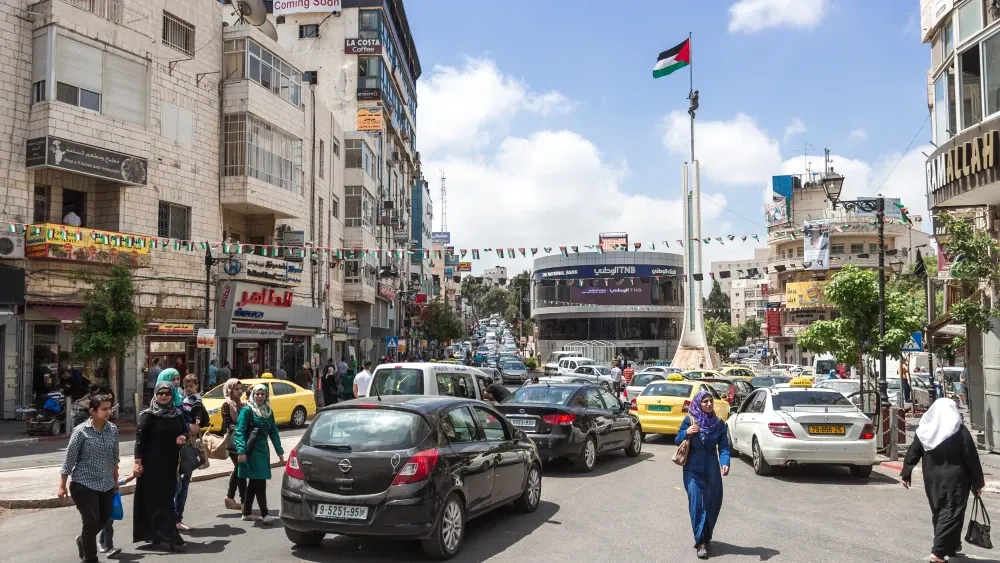 By: Aaron Shuster The collapse of the two-state solution post-October 7, 2023, highlights the need for a new approach—decentralized Arab emirates with internal autonomy under Israeli control. Why it matters: This model aligns governance with Arab social structures, offering internal autonomy without compromising Israeli security. -
For instance, in the West Bank, rival clans and militias often wield more authority than the Palestinian Authority, demonstrating the need for local governance. The big picture: Centralized Arab governance has failed due to clan-based societal dynamics, evident in the West Bank's fragmented power structures. -
Autonomous emirates could foster stability, economic development, and meaningful self-rule, avoiding past pitfalls of imposed central authority. -
The International Crisis Group has reported how clans fill the power vacuum, underscoring the potential for emirates to be more effective. What's next: A decentralized emirates model—grounded in Arab social realities, aligned with Israeli security requirements, and resilient against extremist capture—offers the first workable framework in decades. To read the rest of the article, click here. | | How Spain's Anti-Israel Decree Fractures the Maghreb Security Consensus  By: Amine Ayoub The high-level summit between Spain and Morocco revealed deep divisions within the Spanish government, undermining Mediterranean security efforts. Why it matters: Spain's internal discord over Western Sahara and its defense embargo against Israel threaten the strategic cohesion essential to regional security. The big picture: Spain's actions disrupt the Morocco-Israel defense partnership, critical for countering threats like jihadist groups and Russian influence in Libya. What's next: Transatlantic allies must demand that Spain align with the Western security framework to prevent further strategic instability. To read the full article, click here. | | How the West's $57 Billion Bailout Is Funding Egypt's Next Disaster  By: Amine Ayoub Egypt's recent parliamentary election was a formality, reinforcing President Abdel Fattah el-Sisi's power amidst allegations of vote-buying and opponent exclusion. Why it matters: The West overlooks Egypt's authoritarianism due to el-Sisi's strategic role in regional security, prioritizing stability over democratic principles. The big picture: Despite receiving $57 billion in Western aid since 2024, Egypt's regime uses this funding to strengthen its security state rather than address economic woes. What's next: The West's support could backfire, as Egypt's economic and political issues mirror conditions that sparked the Arab Spring. To read the full article, click here. | | Islam's 'Humanitarian' Conquests? Dismantling Egypt's Latest Myth  By: Raymond Ibrahim Egyptian cleric Khaled El-Gendy claims Islam's conquests were for "human freedom," refashioning Islam's early military expansion into a kind of seventh-century humanitarian NGO mission. Why it matters: El-Gendy's narrative, portraying conquests as humanitarian, contradicts historical records of coercion and subjugation. The big picture: Historically, Muslim conquests were celebrated for expanding the Dar al-Islam (World of Islam) "by the sword," capturing vast territories from Spain to India. What's next: Western audiences, often unfamiliar with Islamic history, risk being misled by these revisionist narratives. To read the full article, click here. | | Thank you for your support and for subscribing to the Dispatch. If you enjoyed it, please forward it to a friend, and please let us know what you thought of this issue. Sincerely, Winfield Myers
Managing Editor, Middle East Forum
Director, Campus Watch | | | | Was this edition useful?  

Your email will be recorded and shared with the sender |        MEF, an activist think tank, deals with the Middle East, Islamism, U.S. foreign policy, and related topics, urging bold measures to protect Americans and their allies. Pursuing its goals via intellectual and operational means, the Forum recurrently has policy ideas adopted by the U.S. government.
Copyright © 2024 Middle East Forum, All rights reserved.
Our mailing address is:
Middle East Forum
1650 Market Street, Suite 3600
Philadelphia, PA 19103 | | | | | Powered by 
| | This email was sent by Middle East Forum via Axios HQ | | | |

0 коммент.:
Отправить комментарий