| |  | | | MEF Delivered Significant National Security Wins in 2025; How Qatari Royals Conquered Northwestern-Qatar By Winfield Myers ● Dec 19, 2025 Smart Brevity® count: 7.5 mins...1946 words In 2025, MEF delivered significant security wins by turning research into action that resulted in cutting off $3 billion in extremist-linked grants and designating four new terrorist organizations. Please consider a year-end gift (click here) to help us continue our work. A new MEF report details how Northwestern University's Qatar campus has become a de facto elite-access pipeline, admitting members of Qatar's most powerful royal and ruling families at rates that bear no resemblance to the country's demographic reality. It operates as a selective training ground for the same families who finance and control the campus, effectively blurring the line between a U.S. university and a state-run patronage system. Michael Rubin writes that, after the Bondi Beach massacre, the real explosion of violence against Jews may soon come in Ireland, Norway, and Turkey. Hussein Aboubakr Mansour observes that the intifada is indeed now globalized. Aymenn Jawad Al-Tamimi translates an Islamic State editorial on Bondi Beach and says it was quickly apparent the attack had an Islamic State-link. This issue also includes the work of Frzand Sherko and Nicoletta Kouroushi. | | This Year, MEF Delivered Some of the Most Significant National Security Wins  Your Support Stops Extremist Groups from Accessing U.S. Taxpayer Dollars In 1994, Daniel Pipes built the foundation. By 2025, MEF has built an arsenal of truth. Now, we need your help to keep it fully stocked for 2026. For three decades, MEF warned Americans about the threats emerging from the Middle East and beyond. This year proved monumental, as MEF exposed groundbreaking reports on these dangers and translated that knowledge into action: -
$3 billion in extremist-linked grants cut off -
Four new terrorist organization designations -
Academic staff removed after investigations revealed Qatari funding MEF reports were instrumental in shaping U.S policy domestically and abroad. This influence is made possible through the generosity of supporters like you. If you have already made your year-end gift, thank you. If not, I ask you to consider making a contribution to support our efforts in safeguarding American values from threats emanating from the region. To make your donation, click here. | | How the Qatari Royals and Elite Conquered Northwestern University's Qatar Campus in Doha  Northwestern's Qatar (NU-Q) campus serves as an elite-access pipeline, admitting members of Qatar's most powerful families at rates that don't reflect the country's demographics. Why it matters: NU-Q operates more as a selective training ground for Qatar's ruling elite than an open academic institution. The big picture: NU-Q offers limited majors focused on communication and journalism, supporting the notion that it serves as a communications-training pipeline. -
This setup aligns with Qatar's state-backed media landscape, amplifying figures linked with the Muslim Brotherhood. -
Graduates frequently enter high-level roles, influencing media and government narratives. What they found: A Middle East Forum study outlines how Qatar's seven hundred million dollar plus investment in NU-Q reflects a deeper integration between the Evanston and Doha campuses. -
This includes governance links and faculty exchanges, raising concerns about influence and access. -
The study reveals that nearly twenty percent of alumni are from elite families, emphasizing the depth of this access loop. The bottom line: NU-Q acts as a training center for Qatar's next generation of leadership, with alumni often entering influential roles in state media and government. -
This closed-loop system of governance and funding demands scrutiny, with parallels to the U.S. Varsity Blues scandal. -
Such a system could have significant implications for U.S. policy and foreign influence. To read the full report, click here. | | After Australia, Will Jewish People in Europe Be Next? 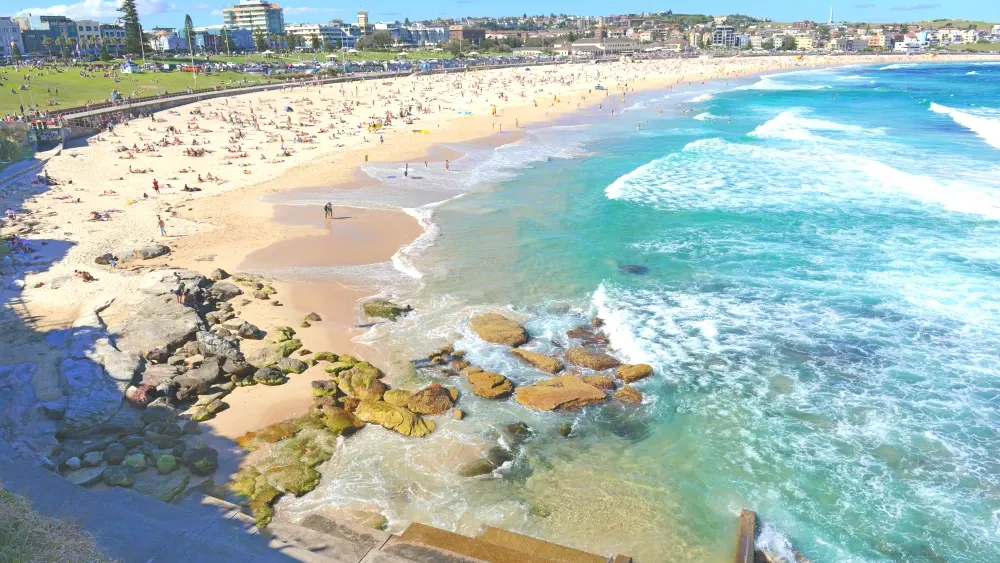 By: Michael Rubin The tragedy of the Bondi Beach massacre of Australian Jewish people celebrating Hanukkah is that it is the tragedy everyone saw coming. Why it matters: Australia's Jewish community, deeply integrated yet more religiously orthodox than its Western counterparts, faces a rising tide of antisemitism fueled by political appeasement. -
Australian leaders, under Prime Minister Anthony Albanese and Foreign Minister Penny Wong, now cater to Islamist demands, compromising religious security. Political cynicism exposed: Albanese and Wong's policies mimic former Canadian Prime Minister Justin Trudeau's pandering to Sikh extremists, prioritizing electoral gains over minority safety. Ireland's echo: 10,000 miles away, Ireland mirrors Australia, becoming Europe's antisemitism hub. Global parallels: Turkey and Norway follow suit, where antisemitism masquerades as anti-Zionism. The bottom line: Australia is a canary in the coal mine, warning of potential antisemitic explosions in Ireland, Norway, and Turkey. To read the full article, click here. | | 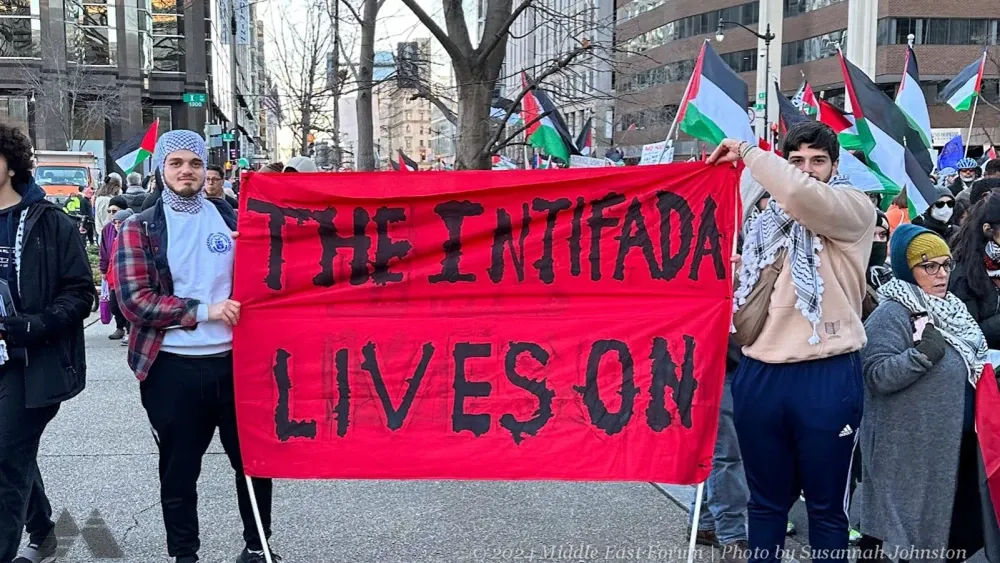 By: Hussein Aboubakr Mansour On Hanukkah's first night, Sydney's Bondi Beach became a scene of terror as two gunmen unleashed terror, leaving twelve dead, including children, and a Chabad rabbi, with twenty-nine others wounded. Intifada's global reach: "Globalize the Intifada" was never a metaphor. Intifada means what it has always meant in practice—acts of anti-Jewish violence. To globalize it simply means to do so globally. -
This slogan, long echoed in Western streets, now manifests in deadly attacks, with Bondi Beach as the latest testament. Political blindness: Australia, enamored with radical chic, has nurtured Islamist networks under the guise of multiculturalism. -
Such networks, fertile ground for foreign intelligence, show Canberra's failure to grasp the looming threat. -
As strange as it may seem to read the latest White House National Security Strategy distancing itself from Europe, the assessment is correct—and the distancing is prudent. Act now: Western establishments falter in addressing these dangers, risking a future devoid of Jewish presence and rife with dysfunction. To read the full article, click here. | | Islamic State Editorial on the Sydney Attack Against Jews 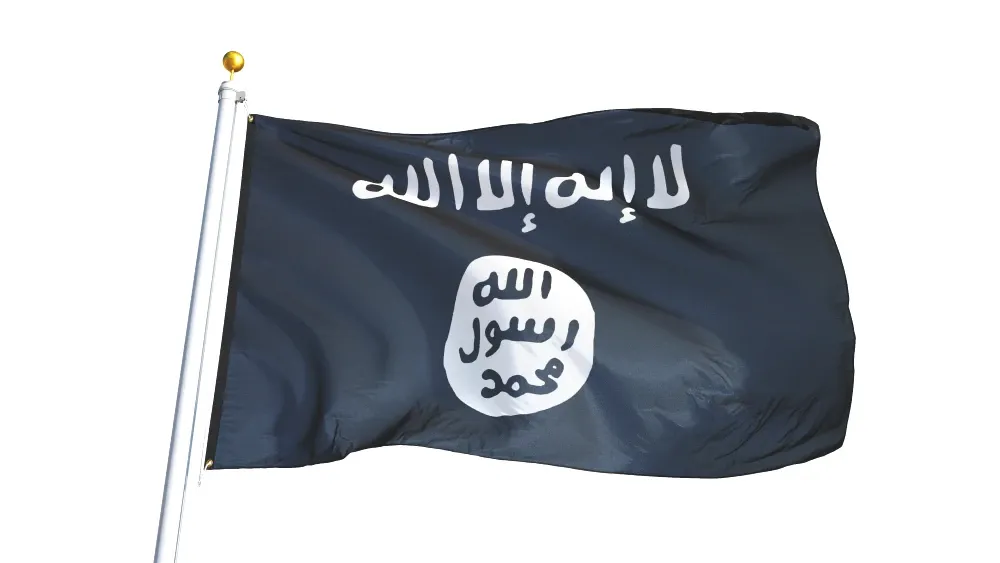 By: Aymenn Jawad Al-Tamimi Below is a summary of an Islamic State editorial translated by Aymenn Jawad Al-Tamimi. Despite some very early speculation that the attack targeting Jews in Sydney was the work of Iranian-backed operatives, it quickly became apparent that the attack had an Islamic State-link, at least in the sense that the attackers were supporters of the Islamic State and following its repeated and clear directives to its members and supporters worldwide to target Jews. Strategic narrative: The Islamic State condemns Western protests as ineffective, framing the conflict as a religious war against Jews and apostates. -
Their rhetoric positions these attacks as part of a larger jihadist strategy, exploiting cyberspace for recruitment and direction. -
For the Islamic State, there is no solution to the Palestine question except through endless jihad against Jews and other "infidels" and "apostates," with the goal in relation to Israel being to break the "wall" of "apostate" regimes that surround as a stepping stone to the future "great war" with the Jews. Global implications: The editorial highlights the Islamic State's call to Muslims in Belgium to exploit the holiday season for attacks. A stark warning: Despite Western condemnation, the Islamic State sees its actions as a vanguard effort, undeterred by global criticism. To read the full translation, click here. | | Has PJAK Missed Its Opportunity to Expand Its Reach in Iran?  By: Frzand Sherko Many Western security analysts view the Kurdistan Free Life Party (PJAK) as Iran's most dangerous Kurdish insurgent group, but recent developments suggest a shift in its role. Why it matters: Although PJAK has a disciplined military apparatus, its political reach remains limited, preventing it from being a systemic threat to Tehran. Contextual dynamics: The PKK-Turkey peace process and Iran-Israel tensions revealed PJAK's strategic limitations. Current stance: PJAK survives through discipline and entrenchment, but lacks the alliances and infrastructure to drive systemic change. To read the full article, click here. | | How Greece Became Central to U.S. Energy Policy in Europe 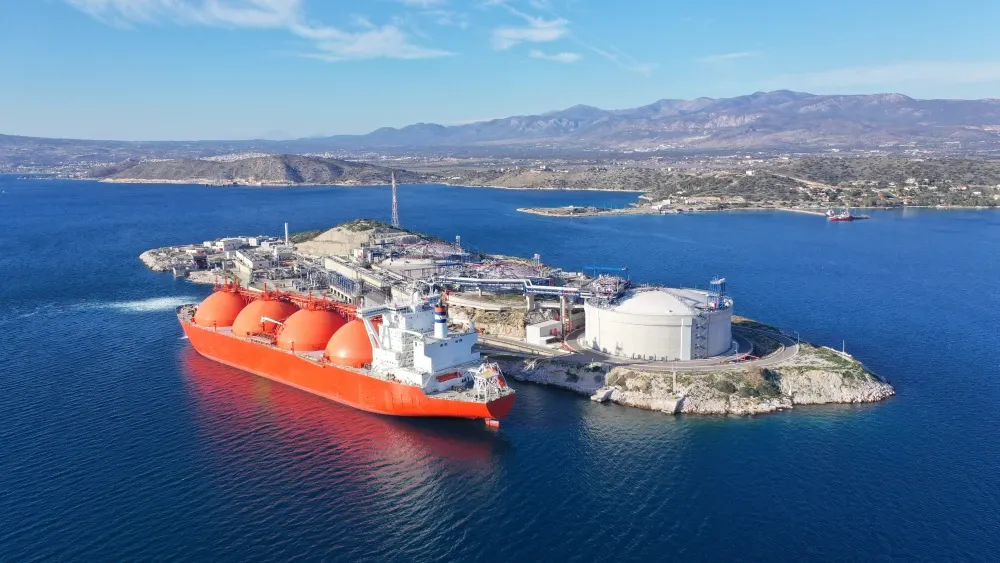 By: Nicoletta Kouroushi The war in Ukraine has pushed the EU to reduce its dependence on Russian gas, positioning the U.S. at the center of Europe's energy security. Why it matters: Greece's geographic position and infrastructure investments make it a key entry point for American liquefied natural gas (LNG), supporting a diversified and resilient European energy network. -
The recent Greece-ExxonMobil agreement underscores the U.S.-Greece energy relationship, aligning with U.S. strategies to weaken Russian influence. -
The deal reduces Russia's ability to influence European states through natural gas supply, reinforce the security of the southeastern flank of the North Atlantic Treaty Organization, and create alternative energy routes that do not depend on Turkey. Strategic developments: Greece's infrastructure boosts Europe's LNG capacity, with terminals like Revithoussa and Alexandroupolis channeling gas to multiple European countries. Broader impact: Greece's partnerships with Cyprus, Israel, Egypt, and Gulf states enhance its role as a Mediterranean link, complementing U.S. goals to stabilize Europe's eastern flank. To read the full article, click here. | | Why Greek Orthodox Communities Matter for the Middle East's Future 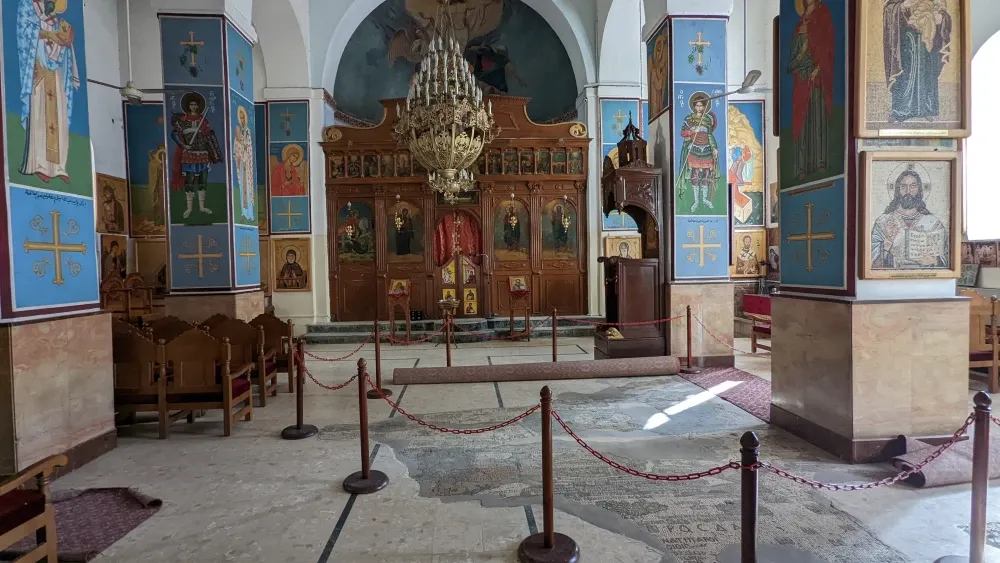 By: Nicoletta Kouroushi Greek Orthodox communities in the Middle East have maintained a presence for centuries and are the true inheritors to Byzantium and, through it, to the Roman Empire; but now they face challenges from conflict, economic decline, and demographic shifts. Why it matters: These communities are crucial for social stability and cultural continuity, especially in conflict-prone regions. Current challenges: Christian populations in the Middle East have declined from one-fifth during WWI to about 4 percent today, with ongoing emigration due to economic pressures and insecurity. -
In Syria, Iraq, and Egypt, the Greek Orthodox face economic hardships, while in Jordan, economic constraints affect long-term decisions. Policy engagement: Secretary of State Marco Rubio's visa restrictions on officials abusing religious freedom are a step forward, yet more initiatives are needed. -
Cultural heritage projects, educational programs, and diplomatic efforts can bolster these communities and promote regional stability. Greece's partnerships with Cyprus, Israel, and Egypt further enhance its role as a Mediterranean link. The bottom line: Supporting Greek Orthodox communities aligns with broader strategic interests, enhancing social cohesion and reducing regional volatility. To read the full article, click here. | | | | | Thank you for reading the Dispatch and for counting on the Middle East Forum to bring you continuing updates and analyses. Please share this with a friend and let us know what you think of our ongoing coverage. Thank you, Winfield Myers
Managing Editor, Middle East Forum
Director, Campus Watch | | | | Was this edition useful?  

Your email will be recorded and shared with the sender |        MEF, an activist think tank, deals with the Middle East, Islamism, U.S. foreign policy, and related topics, urging bold measures to protect Americans and their allies. Pursuing its goals via intellectual and operational means, the Forum recurrently has policy ideas adopted by the U.S. government.
Copyright © 2025 Middle East Forum, All rights reserved.
Our mailing address is:
Middle East Forum
1650 Market Street, Suite 3600
Philadelphia, PA 19103 | | | | | Powered by 
| | This email was sent by Middle East Forum via Axios HQ | | | |

0 коммент.:
Отправить комментарий