| |  | | | Time for Extreme Vetting; Canada a Magnet for Hamas; Islamic Supremacy and Grooming Gangs By Winfield Myers ● Dec 05, 2025 Smart Brevity® count: 8 mins...2064 words In an interview with Fox News, Jim Hanson argues that the U.S. needs to implement extreme vetting of would-be immigrants. When "we don't know their motives, their ability to assimilate, their suitability to be a part of Western civilization," we admit the likes of the Afghan who gunned down the National Guardsmen in Washington, D.C. Joe Adam George reports that Canada, too, has a poorly regulated financial and immigration system that Hamas has exploited for years with "almost astonishing ease." In one of three articles in this issue, Jules Gomes draws on a recent report by MEF writing fellow Mark Durie showing that the key elements fueling Britain's grooming gangs—dominated by Muslim men of Pakistani origins—is not the "Asian" ethnicity of the perpetrators, as claimed by government reports. Instead, the Islamic doctrines of the superiority of Muslims over non-Muslims and the superiority of men over women are the key "religious drivers" of the gangs' criminality. Elizabeth Samson writes that, regarding F-35 sales to the Saudis, the U.S. "cannot afford a contradictory F-35 strategy that penalizes Turkey for behavior it implicitly tolerates in Saudi Arabia." We also feature articles by Michel Gurfinkiel, Aymenn Jawad Al-Tamimi, and Amine Ayoub. | | Does the United States Need Extreme Vetting? 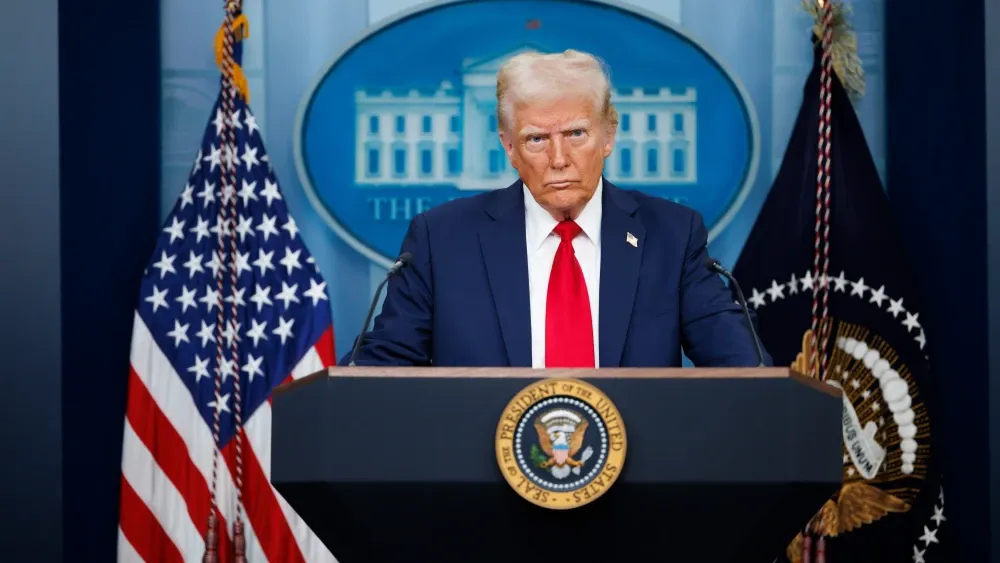 By: Jim Hanson In a recent Fox News interview, MEF chief strategist Jim Hanson discussed the pressing issue of dangerous individuals with radical beliefs entering the U.S., as illustrated by the Afghan national who shot two National Guardsmen in Washington, D.C. Why it matters: Ensuring the safety of U.S. citizens hinges on robust vetting processes to identify and prevent threats. What they're saying: Hanson emphasized the need for improved systems to discern individuals whose beliefs conflict with American values. What's next: President Trump's announcement of a major review of immigration and asylum policies is an overdue step towards addressing these challenges. -
This includes revisiting policies that enabled individuals involved in recent violent acts to enter the country. -
MEF's proactive approach is evident in its collaboration with national security experts to refine extreme vetting strategies. To read the full transcript and watch the interview, click here. | | Canada Is a Magnet for Hamas Members and Ottawa Refuses to Act  By: Joe Adam George A recent Global News investigation reveals that about 450 individuals linked to Hamas have connections to Canada, including citizens and permanent residents. Why it matters: Canada's financial and immigration systems are being exploited, posing significant security risks. By the numbers: The Criminal Intelligence Service of Canada estimates $45 to $113 billion is laundered annually, underscoring Canada's role in international financial crimes. -
Key figures include Usama Ali, who manages $500 million through real estate in Turkey, and Omar Alkassab, involved in crypto transactions aiding Hamas. Global context: This issue isn't isolated to Canada. Germany recently arrested a suspect linked to a Hamas cell plotting in Europe, and Turkey uncovered $500 million siphoned off by Hamas-linked charities. What's next: This latest revelation ought to jolt Ottawa out of its reflexive complacency on national security. The Carney government must understand that inaction is complicity. To read the full article, click here. | | MEF Action Alert: Tell Your Governor to Designate CAIR As a Terrorist Group 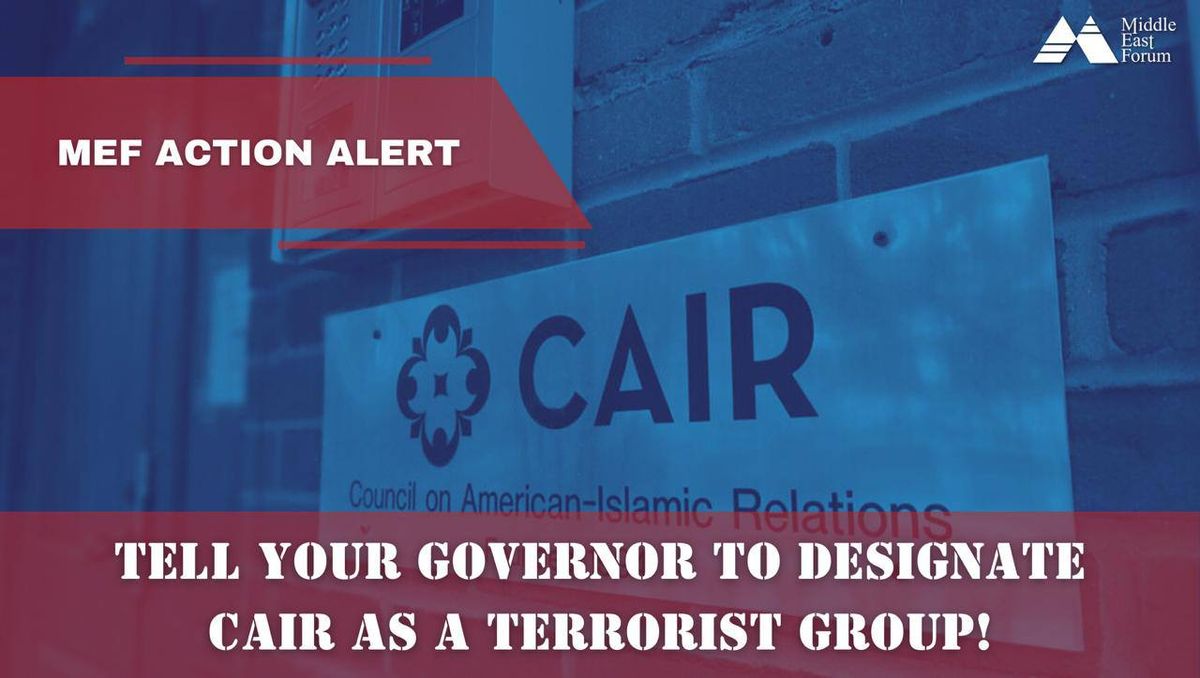 Texas has taken decisive action. On November 18, 2025, Texas Governor Greg Abbott officially designated the Council on American-Islamic Relations (CAIR) and the Muslim Brotherhood as terrorist organizations, citing CAIR's documented ties to Hamas—a U.S.-designated foreign terrorist organization. Now, you can ask your governor to follow suit and designate CAIR in your state. Visit the link to sign up and send a customizable email today. CAIR was listed as an unindicted co-conspirator in a Hamas-financing trial, and seven CAIR officials have been implicated in terrorism-related crimes. Despite this, it continues to operate freely in 18 states—meeting with lawmakers, shaping school curricula, training law enforcement, and influencing policy while advancing the Muslim Brotherhood's long-term goal of undermining Western institutions from within. Texas has set the precedent. Now it's time for YOUR state to act. Join our nationwide campaign with a single click! #DesignateCAIR | | Islamic Supremacism A Key Driver Behind U.K. Rape Gangs, Scholar Notes  By: Jules Gomes An exhaustive report by Islamic scholar Mark Durie reveals how populist versions of Islamic law and theology fuel Britain's grooming gangs, predominantly involving Muslim men of Pakistani origin. Why it matters: Understanding the religious motivations behind these crimes is crucial for addressing the systemic issue. Key insights: Durie identifies eight Islamic factors, including doctrines of Muslim superiority and forced marriage, that contribute to these crimes. Broader implications: The reluctance to address religious motivations stifles effective countermeasures. What's next: The report calls for open discussions on the role of religion in grooming gangs' ideology. To read the full article, click here. | | U.K. Government Ignores Plea to Proscribe Group Banned in Pakistan  By: Jules Gomes A Pakistani Islamist party, Tehreek-e-Labaik Pakistan (TLP), calls for the execution of "blasphemers" and is gaining traction in the U.K. Why it matters: The TLP poses a direct threat to British citizens with its violent ideology targeting Jews, Christians, and secular Muslims. -
Fiyaz Mughal, founder of the Muslim hate crime monitor Tell MAMA (Measuring Anti-Muslim Attacks), urges the U.K. government to proscribe the TLP, highlighting its extremist threat. Recent incidents: TLP members in Birmingham used violent rhetoric against global leaders and advocated for aggressive actions. What's next: Despite Pakistan's ban, TLP's influence in the U.K. remains significant. To read the full article, click here. | | Islamists Flee Sweden After Accused of Swindling Millions in Welfare Benefits  By: Jules Gomes A damning exposé by Expressen reveals that Islamist leaders in Sweden have fled the country after siphoning over a billion Swedish kroner (SEK) in government welfare funds, while leaving SEK 33 million in unpaid tax debts. Why it matters: Radical networks, like those linked to the Muslim Brotherhood, exploited Sweden's welfare system to fund extremist activities, raising serious questions about the country's social policies. Key players: Abdirizak Waberi, a former Swedish MP, embezzled SEK 13 million for activities in Somalia, while Abdel Nasser el Nadi transferred SEK 4 million to Malta before fleeing to Egypt. -
The Federation of Islamic Organizations in Europe (FIOE) has been identified as a key player, with Waberi serving as its vice president, influencing Muslim Brotherhood activities in Europe. -
The report also identified Rabie Karam and Abo Raad as ringleaders in the network. What's next: Sweden must address these vulnerabilities to prevent further exploitation. To read the full article, click here. | | A French Rightist Is, for the First Time, Predicted to Win the Presidential Election in 2027  By: Michel Gurfinkiel A recent Ifop Group survey reveals young French Muslims increasingly align with radical Islamic lifestyles, diverging from mainstream culture and impacting political landscapes. Why it matters: This shift raises significant questions about integration in France and has political implications. -
The Muslim population, now seven to ten percent of France, shows a growing inclination towards religious conservatism and political influence, exemplified by their support for La France Insoumise. Key insights: François Kraus suggests this re-Islamization reflects a desire for identity and power. -
Young Muslims increasingly support Sharia over French law, with fifty-seven percent in favor, a significant rise from previous decades. -
This trend parallels support for far-left party La France Insoumise, intertwining with radical Islamism. Political landscape: Jordan Bardella, leader of the National Rally, gains traction amid these shifts, with polls predicting his victory in the 2027 presidential election regardless of his opponent. To read the full article, click here. | | The U.S. Needs a Coherent F-35 Policy 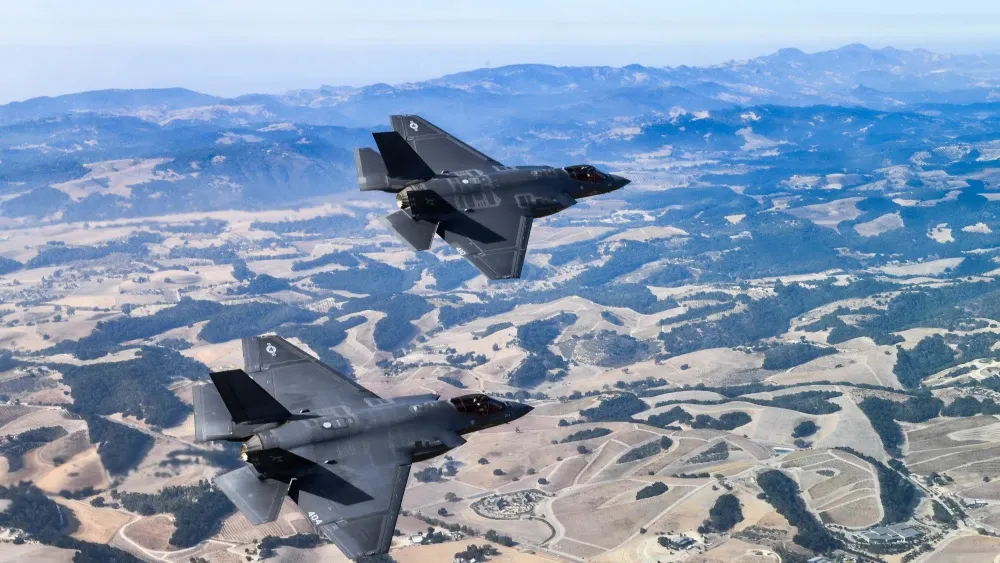 By: Elizabeth Samson Following the Trump administration's move to sell F-35 jets to Saudi Arabia, debates arise about whether Turkey should also rejoin the program under similar conditions. Why it matters: This decision highlights inconsistencies in U.S. policy, risking Middle East stability and questioning strategic risk assessments. Current dynamics: Saudi Arabia's ties with China, through military and surveillance partnerships, mirror Turkey's previous Russian engagement, raising concerns over inconsistent standards. What's next: The United States cannot afford a contradictory F-35 strategy that penalizes Turkey for behavior it implicitly tolerates in Saudi Arabia. Nor can it maintain regional stability while undermining Israel's technological edge. -
Consistent standards would enhance American credibility, strengthen deterrence, stabilize alliances, and safeguard advanced U.S. technology. -
Without a coherent policy, the U.S. risks avoidable security dilemmas and undermines the strategic principles guiding its most critical defense relationships in the Middle East. To read the full article, click here. | | Kais Saïed's Mask: Tunisia's Shift from Democratic Hope to Judicial Farce  By: Amine Ayoub Tunisia, once a beacon of democracy in the Arab world, is reverting to authoritarian rule under President Kaïs Saïed, who has dismantled political pluralism and imposed a regime of repression. Why it matters: Saïed's crackdown threatens the democratic gains Tunisia achieved since the 2011 Arab uprisings. Current unrest: On November 22, over a thousand Tunisians protested in Tunis against the regime's authoritarian drift, calling for justice and the release of political prisoners. International response: The European Parliament has prioritized Tunisia's human rights crisis, debating it as an urgent agenda item. -
The president's actions, framed as a fight against corruption, have devolved into a campaign to eliminate all political competition, leaving the country with the façade of a republic and the machinery of a police state. -
The U.S. and European allies must decide whether to support Tunisia's stability while opposing its repression, challenging the legality of Saïed's regime. To read the full article, click here. | | Druze Factions in Al-Suwayda': Interview with Quwat Qalib Al-Karama  By: Aymenn Jawad Al-Tamimi Aymenn Jawad Al-Tamimi interviews Quwat Qalib al-Karama, a Druze faction in Syria's al-Suwayda'. The conversation reveals ongoing tensions with the Syrian government and aspirations for autonomy. Why it matters: The Druze community's stance highlights resistance to central authority and the complexity of regional power dynamics. -
Quwat Qalib al-Karama, formed in 2018, opposes the Syrian regime's involvement in regional conflicts, advocating for Druze self-determination. Recent developments: Druze factions demand separation, citing oppression and religious intolerance. Looking ahead: The Druze seek global recognition and acknowledge past support from Israel and the U.S. To read the full interview, click here. | | Thank you for your support and for subscribing to the Dispatch. If you enjoyed it, please forward it to a friend, and please let us know what you thought of this issue. Sincerely, Winfield Myers
Managing Editor, Middle East Forum
Director, Campus Watch | | | | Was this edition useful?  

Your email will be recorded and shared with the sender |        MEF, an activist think tank, deals with the Middle East, Islamism, U.S. foreign policy, and related topics, urging bold measures to protect Americans and their allies. Pursuing its goals via intellectual and operational means, the Forum recurrently has policy ideas adopted by the U.S. government.
Copyright © 2024 Middle East Forum, All rights reserved.
Our mailing address is:
Middle East Forum
1650 Market Street, Suite 3600
Philadelphia, PA 19103 | | | | | Powered by 
| | This email was sent by Middle East Forum via Axios HQ | | | |

0 коммент.:
Отправить комментарий