| |  | | | Bondi Beach: The Most Predictable Terrorist Attack in Australia's History By Winfield Myers ● Dec 15, 2025 Smart Brevity® count: 8 mins...2123 words For years, the foreign policy establishment called our "Israel Victory" doctrine unrealistic, even radical. Then came October 7, and the illusion collapsed. Please consider a year-end gift (click here) to help us continue our work. Gregg Roman writes that for 26 months, the Albanese government treated a developing terrorist campaign as a community relations problem. The massacre demands an equivalent response against the ideological and institutional infrastructure that produced the killers. Of the increase in Jew-hatred in Australia, Danielle Pletka says the difference between Australia and the U.S. is that the Albanese government has played a significant role in the alienation of Jews. Jim Hanson adds that it was "painful for me to listen to Anthony Albanese talk about how all of this was unforeseeable or they are going to come together now." France, meanwhile, has reached a new high in terrorism investigations, reports Jules Gomes. We finish with four pieces—two each by Sirwan Kajjo and Aymenn Jawad Al-Tamimi—on the situation in Syria a year after the fall of the Assad regime. | | What Does Victory Look Like? MEF Is at the Forefront of Middle East Policy of Victory. With Your Continued Support, Victory Will Be Achieved  For years, the foreign policy establishment called our "Israel Victory" doctrine unrealistic, even radical. They insisted that conflict management was wisdom and decisive victory was outdated. Then came October 7, and the illusion collapsed. The bottom line: -
What MEF predicted about Iran? Confirmed. -
What MEF knew about Hamas? Proven. -
What MEF exposed about Qatar's financial influence? Now under federal investigation. -
What MEF identified as strategic victory? Implemented into policy. History vindicated our analysis. Now we must press the advantage or lose the moment. Your support sustains the analysts, investigators, and policy advocates who converted 30 years of warnings into action Washington can no longer ignore. If you have already made your year-end gift, thank you. If not, please consider making a contribution to support our efforts in safeguarding American values from threats emanating from the Middle East. To make your donation, click here. | | After Australia's Bondi Attack, Will Albanese Match Howard's Courage?  By: Gregg Roman Fifteen Jews were murdered during Hanukkah at Bondi Beach. This was Australia's deadliest mass shooting since Port Arthur—and the most predictable terrorist attack in the nation's history. Why it matters: The attack underscores Prime Minister Anthony Albanese's government's failure to act decisively against a growing threat. -
For 26 months, the warning signs accumulated. For 26 months, the Albanese government treated a developing terrorist campaign as a community relations problem. -
The result now lies on the blood-stained sand of Australia's most iconic beach. Driving the news: The systematic escalation of antisemitic incidents was documented, yet proper actions were not taken. -
On October 9, 2023, two days after Hamas's massacre in Israel, a mob descended on the Sydney Opera House, burning Israeli flags and chanting threats against Jews while police advised the Jewish community to stay away rather than dispersing the crowd. -
The Executive Council of Australian Jewry reported a 316 percent increase in antisemitic incidents after October 2023. -
Iranian involvement was identified, yet operational networks remained largely intact. The bottom line: The Bondi massacre demands an equivalent response, not against guns, which are already tightly controlled, but against the ideological and institutional infrastructure that produced the killers. -
Immediate proscription of groups like Hizb ut-Tahrir that glorify terrorism and transparency in foreign funding are critical steps. -
If investigation confirms Iranian involvement in the Bondi massacre, and the hallmarks of state-sponsored terrorism are unmistakable, Australia must support allied kinetic action against Islamic Revolutionary Guard facilities and sever diplomatic relations with Tehran. To read the full article, click here. | | Hanukkah Terror Has Roots in Australia's Alienation of Jews 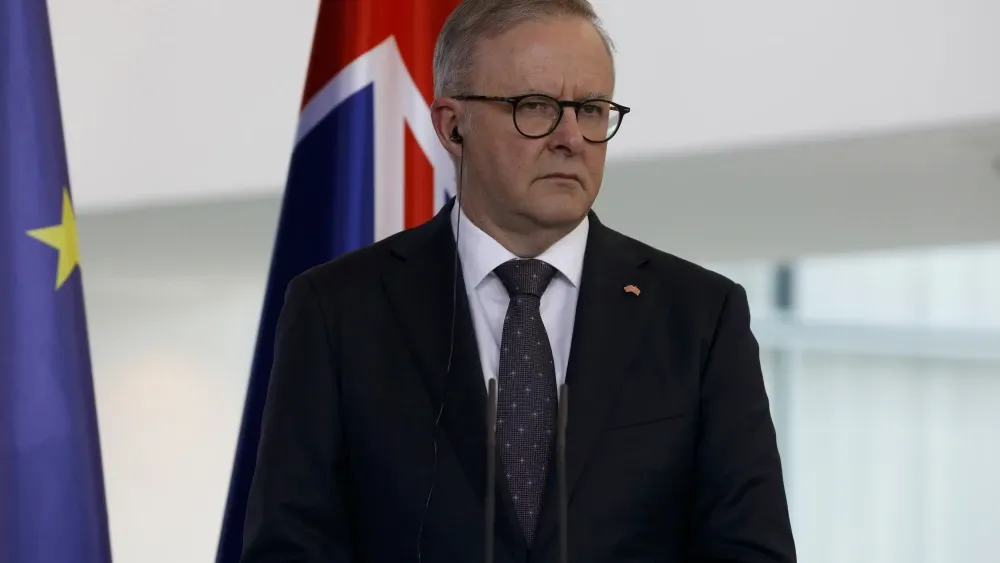 By: Danielle Pletka As Jewish families celebrated Hanukkah, shots echoed at Bondi Beach, leaving 15 dead, including one shooter, Naveed Akram. NSW Premier Chris Minns described the attack as a "horrifying evil attack" on what should have been a night of peace. Why it matters: Albanese and his Foreign Minister Penny Wong have done their utmost in the 26 months since the October 7, 2023, Hamas attacks on Israel to signal their uninterest in the well-being of Jewish communities, in Israel, Australia, and beyond. -
Albanese's initial statement omitted any reference to Jews, sparking criticism amid a rising wave of antisemitism in Australia. -
The government's recent actions, like recognizing a "State of Palestine," have further strained relations with Jewish communities. Driving the news: Antisemitic incidents have surged in Australia, with key political shifts exacerbating tensions. -
Pro-Hamas sentiments and actions, including the repatriation of "ISIS brides," contrast sharply with the exclusion of pro-Israel figures. -
Albanese eventually expelled the Iranian ambassador after intelligence exposed Iran's role in anti-Jewish attacks. The bottom line: Australia's Jewish community faces increasing threats amid shifting political landscapes. -
As in France, where Muslims outnumber Jews by at least ten-to-one, Muslims in Australia now outnumber Jews by eight-to-one. That demographic reality has political implications, and Labor appears to understand them all too well. To read the full article, click here. | | ICYMI: Egypt's Security Challenges in the Red Sea and Africa with Mohamed Farid 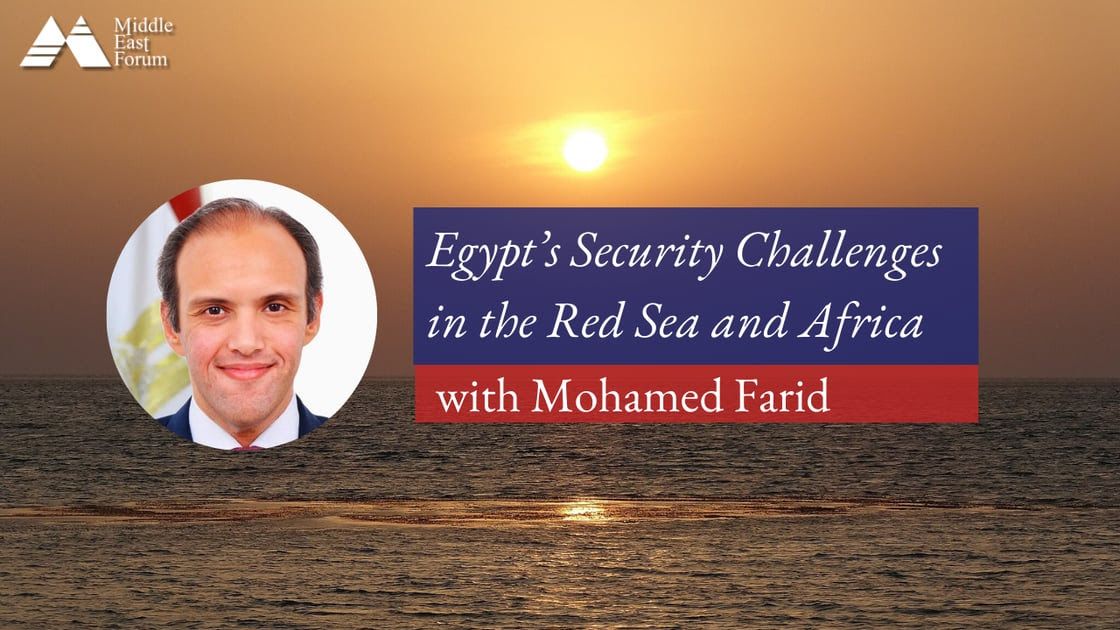 Egypt views the Red Sea shipping crisis as the predictable outcome of years of inconsistent policy toward Yemen, the Houthis, and Iran, arguing that airstrikes and naval deployments alone cannot restore freedom of navigation or confidence in the corridor, while imposing direct economic and security costs on Cairo through Suez Canal losses, tourism risk, and regional spillover. Across the Horn of Africa, Egypt warns that terrorism and instability thrive where state institutions collapse, criticizing efforts to bypass national governments or legitimize militias in Somalia and opposing unilateral moves that militarize Red Sea access or exploit local divisions. Sudan is Egypt's most urgent security challenge, with militia-driven conflict producing mass refugee flows, cross-border crime, and extremist threats that directly affect Egyptian stability. Egypt's approach prioritizes institutional cohesion, political end states, and regional coordination over escalation; militias flourish wherever states fail, and durable security depends on rebuilding legitimate authority. Mohamed Farid is an Egyptian Member of Parliament and policy expert with a background in economic development and institutional reform. He previously served as Deputy Chair of the Egyptian Senate's Committee on Human Rights and Social Solidarity and has been actively engaged in regional policy dialogue on Red Sea security, the Horn of Africa, and political Islam. His work focuses on advancing economic freedom, accountable governance, and Egypt's constructive role in regional stability. He holds a doctorate in business administration, a master's in economic development and planning, and is currently pursuing a second professional doctorate in political and strategic sciences. To watch the entire podcast, click here. | |  By: Jim Hanson Fifteen people killed and dozens wounded during a Hanukkah celebration at Bondi Beach, Sydney. Why it matters: The attack highlights the vulnerability of iconic locations like Bondi Beach. The big picture: Free Western countries face challenges in securing public spaces against terrorism. What's next: Global cooperation is essential to combat terrorism and preserve Western values. Cultural focus: Assimilation and cultural integration remain critical for societal cohesion. To read the full transcript and watch the video, click here. | | France Reports Record High in Jihadi Terrorism Investigations  By: Jules Gomes France now investigates over one Islamist terrorism case weekly, reaching new highs since the National Anti-Terrorist Prosecutor's Office (PNAT) was established in 2019. Why it matters: The increasing involvement of minors in Islamist terrorism signals a dire trend in radicalization. The big picture: Since 2019, PNAT has tackled 429 Islamist terrorism cases, with notable incidents like the Bir-Hakeim bridge attack, in which a jihadist killed a German-Filipino tourist and injured two others near the Eiffel Tower on December 2, 2023. What's next: Experts call for societal action to prevent youth radicalization. -
Expert on Islamic terrorism, radicalization, and antisemitism Catherine Perez-Shakdam warns that without intervention, society risks losing a generation to extremist ideologies. To read the full article, click here. | | Syria's New Military Is a Future Threat 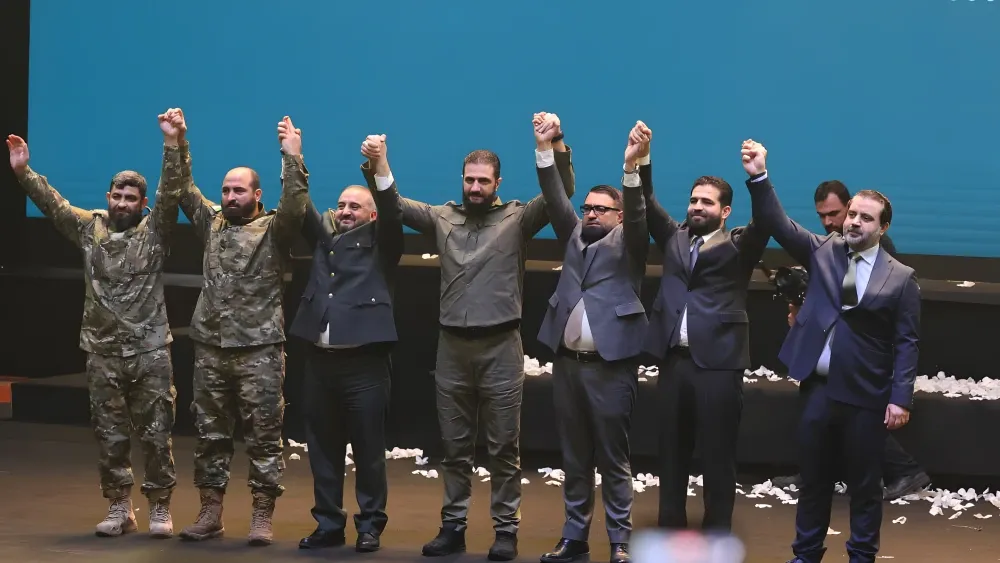 By: Sirwan Kajjo The collapse of Assad's regime in 2024 led to the abolition of mandatory military service, but Syria's new military is fraught with perilous transformations. Why it matters: The interim Syrian government's Islamist-led military is an incendiary mix of radical factions. The big picture: Syria's military chaos threatens both regional stability and internal security. What's next: Under the current circumstances, it would be difficult for U.S. Central Command to build a long-term partnership with the Syrian military, especially now that Syria has joined the global coalition against the Islamic State. -
Although this partnership is currently limited in scope, it remains constrained by the Syrian military's unprofessionalism, internal fragmentation, and ideological orientation. To read the full article, click here. | | The Palmyra Attack Reveals the Limits of U.S.-Syria Military Partnership 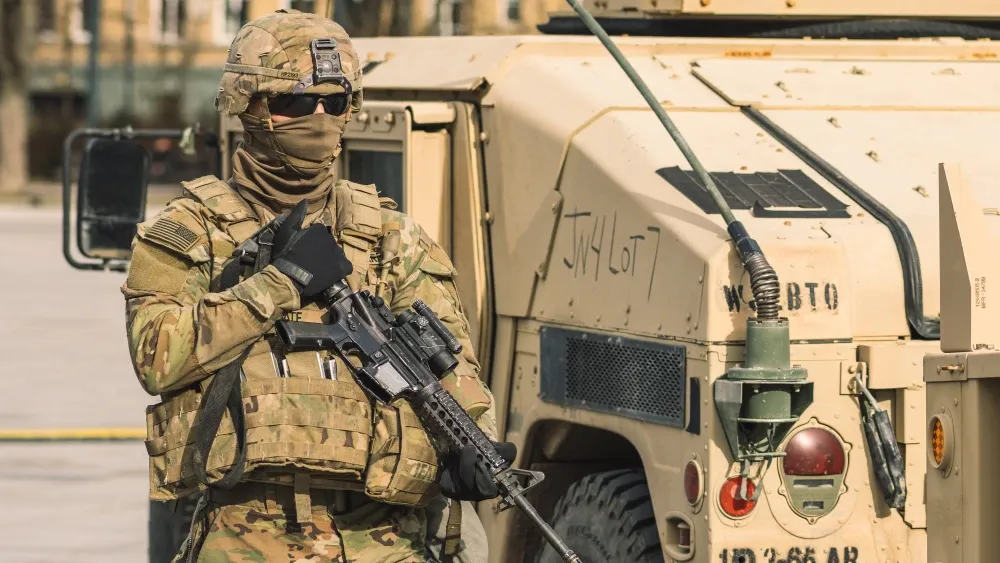 By: Sirwan Kajjo The December 13, 2025, attack near Palmyra, which killed two U.S. soldiers and a civilian interpreter, underscores the complexities of partnering with Syria's new military. Why it matters: The attacker, a member of the Syrian security forces, reveals the military's vulnerability and extremist infiltration. The big picture: Syria's interim government, amid Islamic State activity, inherits a military beset by Islamist factions. What's next: The U.S. must reassess its military partnership with Syria and leverage its ties with the Kurdish-led Syrian Democratic Forces. To read the full article, click here. | | Islamic State Editorial on the Anniversary of the Fall of the Assad Regime  By: Aymenn Jawad Al-Tamimi An Islamic State editorial, translated by Aymenn Jawad Al-Tamimi, critiques Syria's revolution as a facade of liberation, marking the Assad regime's fall anniversary. Why it matters: The editorial highlights Syria's ties with the U.S. and denounces President Ahmad al-Sharaa as a traitor to Islam. The big picture: Syria's "liberation" is portrayed as a betrayal of Islamic principles, with celebrations seen as misleading. What's next: The Islamic State calls for a return to Shari'a and warns against Western influence in Syria's governance. To read the full commentary and translation, click here. | | Druze Factions of al-Suwayda': Interview with Quwat al-Mithaq  By: Aymenn Jawad Al-Tamimi A year after the fall of the Bashar al-Assad regime in Syria, Syrian government forces control northern and western countryside areas, while the rest of the province is controlled by local Druze factions, most if not all of which are nominally united under the "National Guard" project endorsed by Druze spiritual leader Hikmat al-Hijri. One "National Guard" faction is Quwat al-Mithaq ("The Covenant Forces"), whose leader Hasan al-Othman, Aymenn Jawad Al-Tamimi recently interviewed. Why it matters: Hasan al-Othman highlights the complexities of autonomy and factional unity in al-Suwayda'. The big picture: The Druze National Guard, led by spiritual leader Hikmat al-Hijri, seeks security and dignity for its people amid ongoing tensions. What's next: Al-Suwayda' weighs alliances, including with the SDF, for greater security and autonomy. To read the full interview, click here. | | Thank you for your support and for subscribing to the Dispatch. If you enjoyed it, please forward it to a friend, and please let us know what you thought of this issue. Sincerely, Winfield Myers
Managing Editor, Middle East Forum
Director, Campus Watch | | | | Was this edition useful?  

Your email will be recorded and shared with the sender |        MEF, an activist think tank, deals with the Middle East, Islamism, U.S. foreign policy, and related topics, urging bold measures to protect Americans and their allies. Pursuing its goals via intellectual and operational means, the Forum recurrently has policy ideas adopted by the U.S. government.
Copyright © 2024 Middle East Forum, All rights reserved.
Our mailing address is:
Middle East Forum
1650 Market Street, Suite 3600
Philadelphia, PA 19103 | | | | | Powered by 
| | This email was sent by Middle East Forum via Axios HQ | | | |

0 коммент.:
Отправить комментарий