| |  | | | Winning the War Against Antisemitism in America; Hamas--and ISIS--Reemerge By Winfield Myers ● Nov 24, 2025 Smart Brevity® count: 9.5 mins...2469 words In a recent speech, Gregg Roman warned his American pro-Israel audience: "You're being hunted from both sides." The far right gains visibility even as the antisemitic/anti-Zionist academic left continues to exercise widespread influence. In the face of myriad challenges, he urged his listeners to "Stand up. Stand together. Stand now." Dominic Green, on an MEF Podcast, was encouraged that, after the Heritage Foundation's recent imbroglio with the far right, the "vast majority of elected Republicans are rightly abhorred about" the corrosive influence of Nick Fuentes and his ilk on the conservative movement. Dexter Van Zile, in both a podcast and an article, updates us on developments in Dearborn, Michigan, where its Islamist mayor escaped much-deserved additional scrutiny for his anti-Christian, pro-terrorist actions thanks to a far-right agitator's efforts to stoke violence. Sam Westrop writes that, in light of Texas's recent designation of CAIR as a terrorist organization, more dangerous Islamist threats are being ignored. Jonathan Spyer reports from Gaza that Hamas is reemerging and, in a second article, concludes that ISIS is again stirring. We also feature Mohammad Taha Ali on ISIS's use of AI, and Aaron Shuster on the strategic risks to Israel posed by the doctored video leaked from the Sde Teiman detention facility. | | Beyond October 7th: Winning the War Against Antisemitism in America 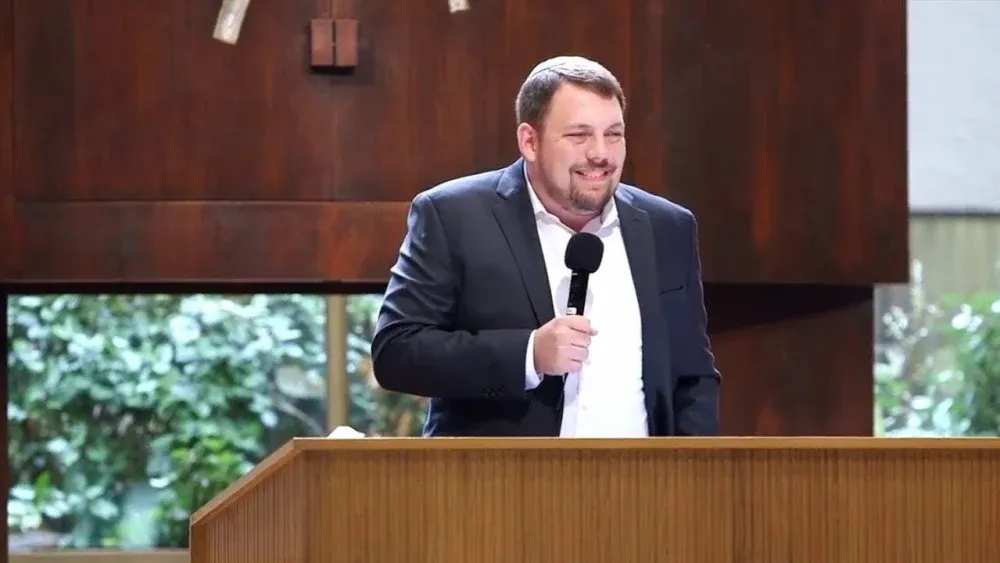 By: Gregg Roman The following points are drawn from Gregg Roman's speech delivered to the American pro-Israel community at the Israel Now Forum on November 16, 2025, in Plano, Texas. The hunt from both sides: You're being targeted from both the left and right with narratives distorting Jewish identity and history. -
On the right, figures like Tucker Carlson and Nick Fuentes are mainstreaming Holocaust revisionism. -
On the left, academia perpetuates anti-Zionism, with professors likening Zionism to Nazism. Strategic solutions: Implementing robust legal, economic, and political measures is crucial to counter these threats. -
Legal Warfare: Use the Racketeer Influenced and Corrupt Organizations Act (RICO) to build lawsuits against groups like Students for Justice in Palestine. Document every incident and push for prosecution to make antisemitic actions legally prohibitive. -
Economic Leverage: Redirect philanthropic dollars away from institutions that tolerate antisemitism and towards those that stand strong against it. Organize boycotts and reward courage. -
Political Action: Exercise power to enforce consequences for discrimination and promote policies that ensure equal protection for Jewish students and communities. The foreign influence: Countries like Qatar are funding U.S. universities, shaping narratives about the Middle East. The daily reality: Jewish students in the U.S. face increasing anti-Semitism on campus and in society. The uncomfortable questions: Why is condemning antisemitism politically calculated? -
There is an urgent need for a strategic response to these challenges, emphasizing legal, economic, and political measures. To read or listen to the entire speech, click here. | | Conservative movement's crossroads: A strategic imperative 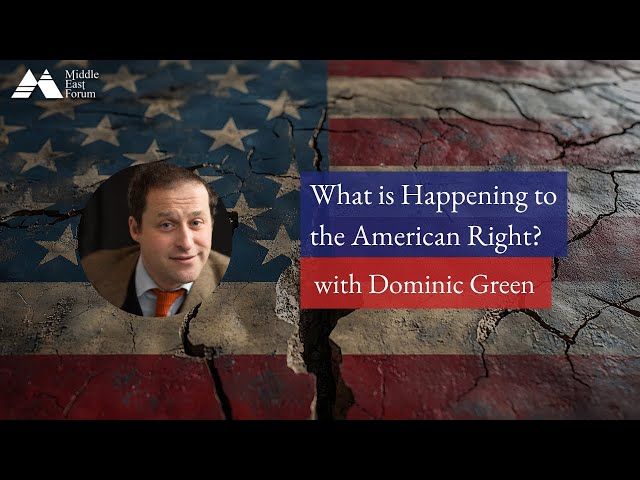 By: Marilyn Stern In a recent MEF Podcast, Dominic Green draws parallels between today's conservative conflicts and past ideological battles. Historical echo: The current rise of extremist voices echoes the "old right" of the 1950s. -
William F. Buckley, Jr., effectively countered these—including the John Birch Society—by consolidating the movement through principled debate, shaping modern conservatism. Modern media's role: Commentator Tucker Carlson's platform amplifies anti-American and antisemitic figures, reflecting internal power struggles. -
His interviews, notably with Holocaust-denying, Hitler-admiring "Groyper" leader Nicholas J. Fuentes have amplified extreme views, challenging the movement's core values. Strategic responses: Addressing these tensions requires decisive leadership and media accountability. International and domestic implications: The ideological battle has significant global and national consequences. Encouraging signs: Many conservative think tanks and officials are pushing back against extremism. The vast majority also of elected Republicans are rightly abhorred by the influence of the likes of Fuentes on the conservative movement. -
This rejection of racism and divisive narratives is crucial for maintaining a thriving, intellectually vibrant, morally just, and inclusive conservative movement. To read the full summary and watch the podcast, click here. | | ICYMI: Dissecting the Discord and Division in Dearborn with Dexter Van Zile  Escalating tensions in Dearborn, Michigan, have centered on disputes involving public support for Hezbollah, anti-Israel activism, and the conduct of city leadership. These culminated in conflict between local officials, Christian residents, Islamist groups, and far-right agitators. A controversy over naming a street corner after a known Hezbollah supporter grew after Mayor Abdullah Hammoud publicly denounced a local pastor who questioned the honor, prompting concerns about treatment of non-Muslims. Dearborn's persistent public displays of support for Hezbollah, regular anti-Israel or anti-American slogans at protests, and reluctance among local elites to confront extremist rhetoric have intersected with the growing involvement of outside far-right groups. The resulting dynamic and chaos highlight dual threats to democratic norms: Islamist activism within the city and the efforts of extremist outsiders attempting to appropriate local grievances for broader ideological aims. Dexter Van Zile is the Violin Family Research Fellow and Managing Editor of Focus on Western Islamism at the Middle East Forum. He has reported extensively on Islamist activism in Dearborn, anti-Israel protests across the United States, and extremist networks in England. Van Zile holds a master's degree in political science and environmental studies from Western Washington University and a B.A. in politics and government from the University of Puget Sound. To watch the entire podcast, click here. | | Dearborn Mayor's Attack on Christian Invites Far-Right Chaos 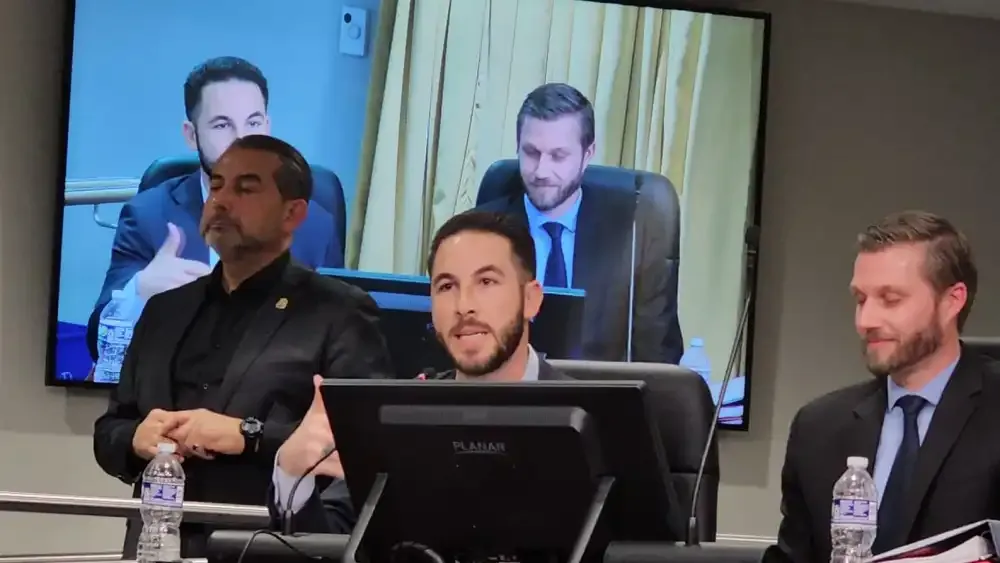 By: Dexter Van Zile On November 18, 2025, anti-Muslim agitator Jake Lang incited chaos in Dearborn, Michigan, providing Mayor Abdullah Hammoud a crucial diversion from his recent controversial actions. Lang's nativist agenda: Lang inflamed tensions by burning religious texts, shifting focus from Hammoud's own controversies. Mayor's controversies: Hammoud has been under fire for bullying local pastor Ted Barham and refusing to distance himself from Osama Siblani, a newspaper publisher and Hezbollah sympathizer. Council meeting chaos: Lang's disruptive presence diverted attention from Hammoud's troubling ties and actions. Police inaction: The passive response by Dearborn police during Lang's march further diverted scrutiny from the mayor's failures. To read the full article, click here. | | Texas Faces a Far Broader Islamist Threat Than Just the Muslim Brotherhood 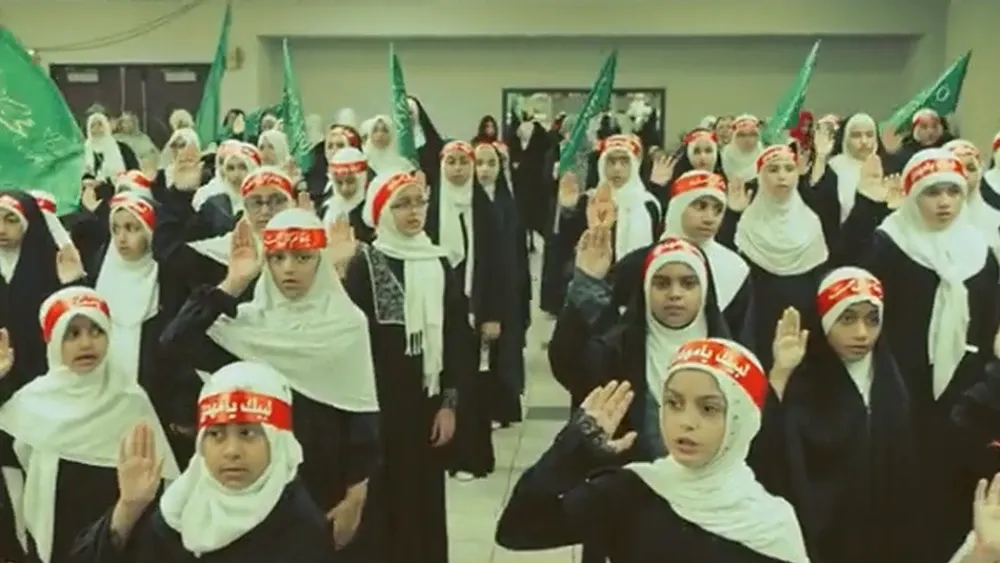 By: Sam Westrop Governor Greg Abbott's designation of the Muslim Brotherhood and the Council on American-Islamic Relations (CAIR) as "foreign terrorist organizations" highlights a deeper, multifaceted Islamist issue in Texas. Underlying issues: While CAIR is a known entity, other groups present a larger, subsidized threat. -
The Muslim American Society (MAS) Katy, near Houston, received $91,862 in state funding, yet its founder, Main Alqudah, promotes controversial ideologies, including restrictions on women's public speaking. Brotherhood legacy: Post-2008, legacy groups tied to the Holy Land Foundation continue unchecked. -
Figures like Khalil Meek and organizations like Baitulmaal, linked to Hamas, remain active, with Baitulmaal collaborating with Hamas proxies in Gaza. Diverse influences: Deobandi (a South Asian Islamist sect) and Salafi institutions wield significant influence. -
The Qalam Institute in Carrolton, led by Hussain Kamani, promotes extreme views, while Omar Suleiman of Valley Ranch Islamic Center is a prominent Salafi figure. Call to action: Texas has a broader Islamist problem than just the legacy of the Muslim Brotherhood. Worst of all, a substantial proportion of this problem is subsidized by public funding. -
If Texas conservatives are indeed serious about tackling the growing theocratic dangers in Texas, officials must first stop funding these Islamists, and second, understand the full array of Islamist forces at work across the state. To read the full article, click here. | | As IDF Holds Gaza's Dividing Line, Hamas Reemerges from the Shadow of War 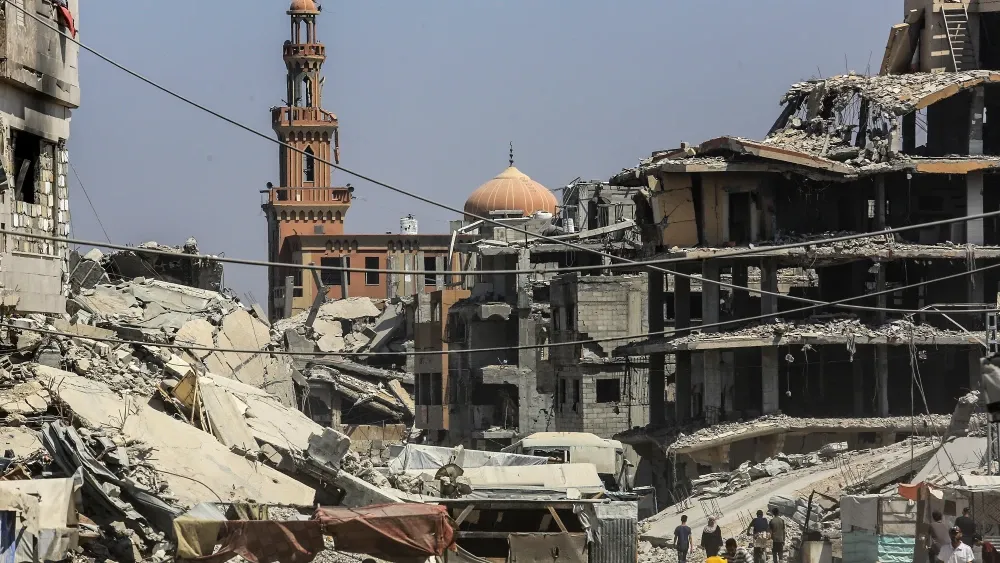 By: Jonathan Spyer Col. Nadav Shoshani of the Israel Defense Forces (IDF) warns that despite the ceasefire, Hamas is not disarming but consolidating power in Gaza. Hamas's commitment questioned: In Gaza, Hamas retains control over 47 percent of the territory, with the IDF holding the rest. Ceasefire dynamics: The IDF's position near the Yellow Line highlights ongoing tensions and violations. International response: The proposed International Stabilization Force aims to stabilize and disarm Hamas, but skepticism remains. Strategic implications: What this means is that despite the losses and the huge efforts made since October 2023, the essential question facing Gaza—namely, the continued existence or the removal of an armed and hostile Islamist sovereignty in the area—remains unresolved. To read the full article, click here. | | The Spiritual War Between Jihadists and Jews in the Tunnels  By: Giulio Meotti In the tunnels of Gaza, 40 meters underground, Israeli hostages endured captivity with unwavering faith, transforming their confinement into spiritual fortitude. Survival through faith: Hostages like Omer Shem Tov and Eli Sharabi turned to Jewish rituals for strength. -
Shem Tov, kidnapped during the October 7 attack, recited blessings over meager meals, and vowed to pray with tefillin if freed. Sharabi, after 491 days, emerged to find his family lost but held onto the Shema prayer in captivity. Spiritual resistance: Amidst violence and deprivation, hostages maintained clandestine observance of Jewish traditions. Inspiring parallels: The hostages' stories echo the resilience seen in historical Jewish persecution. A testament to endurance: Despite attempts to force conversion, hostages like Agam Berger held firm to their beliefs. To read the full article, click here. | | ISIS Is Stirring Once More  By: Jonathan Spyer Indications that the Islamic State (ISIS) has begun to employ artificial intelligence in its efforts to recruit new fighters should come as no surprise. At the height of its power a decade ago, ISIS was characterized by its combination of having mastered the latest methods of communication with an ideology and praxis that seemed to have emerged wholesale from the deserts of 7th century Arabia. Technological tactics: At its peak, ISIS used platforms like Twitter and YouTube for recruitment and propaganda. Persistent presence: Despite losing territorial control, ISIS maintains a "ghost caliphate" in remote areas of Syria and Iraq. -
Support networks, fighters, and infrastructure persist, with recruitment thriving in the poorest tribal regions. Roj and al-Hol camps: The camps holding ISIS prisoners and their families are breeding grounds for a new generation of ISIS fighters, under the watch of the U.S.-aligned Syrian Democratic Forces (SDF). -
While the SDF guards the perimeters, ISIS exerts control inside, indoctrinating youth and maintaining its own "justice" system, posing a significant challenge to regional stability. -
There are 38,000 residents of these camps, along with 9,000 ISIS fighters in the SDF's jails. Security implications: In short, Islamic State is returning. It is making use of the full variety of recruitment and operational tools available to it. To read the full article, click here. | | Inside the Islamic State's 'AI Caliphate' 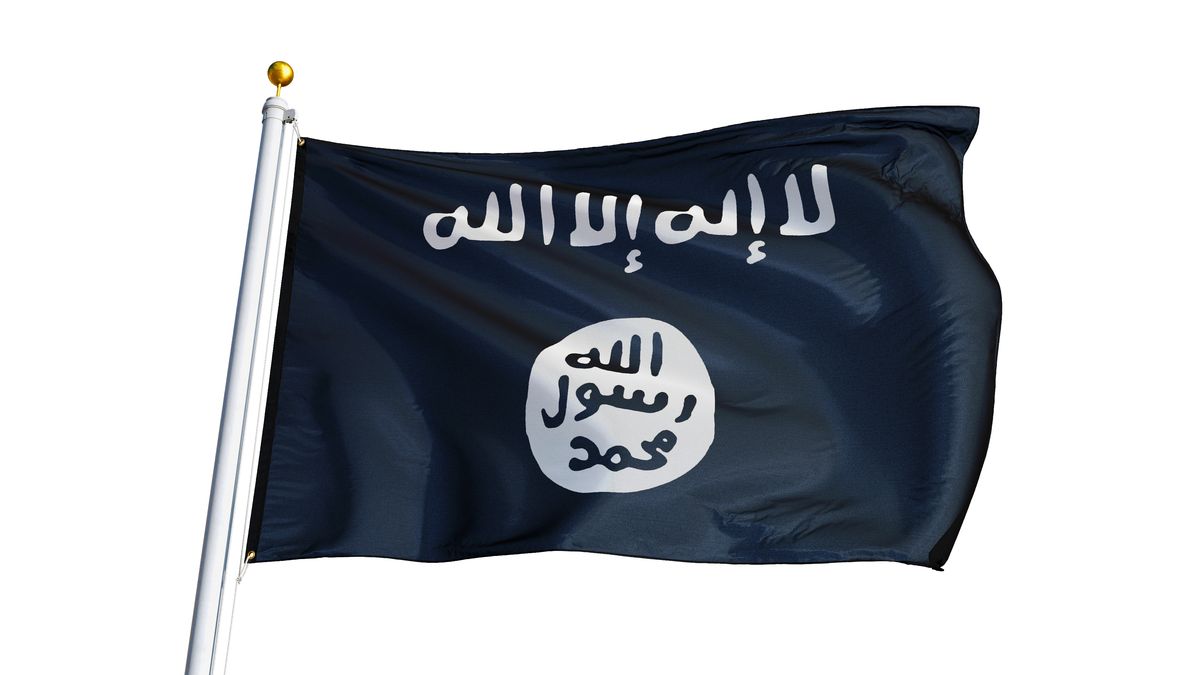 By: Mohammad Taha Ali After losing Baghuz in 2019, the Islamic State (ISIS) reinvented itself, thriving in virtual spaces with AI and encrypted finance. Digital sovereignty: ISIS's new strength lies in AI, diaspora networks, and cryptocurrency, moving beyond physical territories. Virtual recruitment: Unlike traditional jihadist movements, ISIS capitalizes on online gaming and encrypted platforms. Financial innovation: Disrupted hawala networks gave way to cryptocurrency, enabling anonymous, cross-border transactions. Policy implications: Counterterrorism must adapt to ISIS's networked insurgency. To read the full article, click here. | | The Strategic Risk Exposed by the Sde Teiman Leak 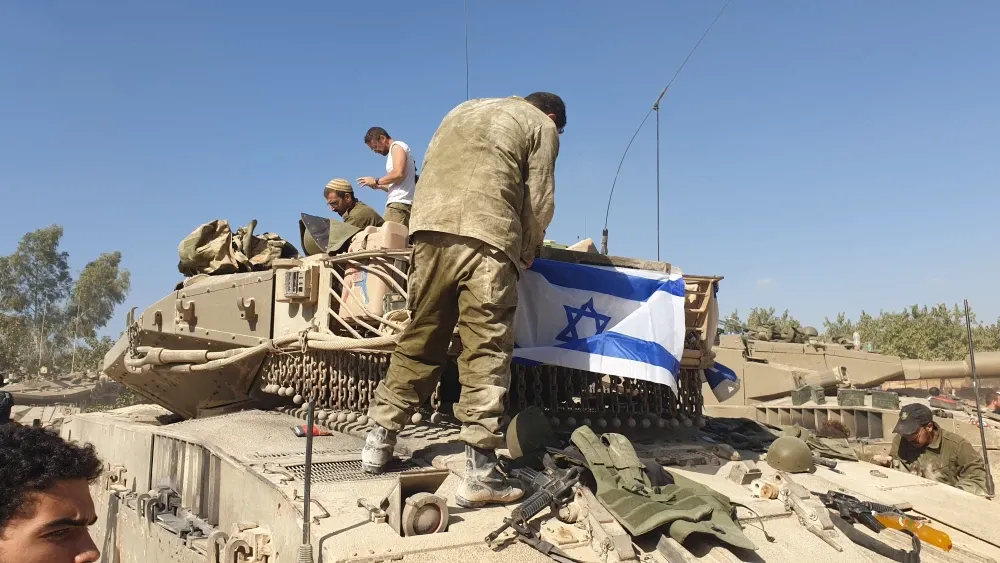 By: Aaron Shuster The release of a doctored video from Israel's Sde Teiman detention facility exposed vulnerabilities in wartime oversight, with global diplomatic repercussions. Strategic risk: The video, authorized by a senior Military Advocate General's Office official, misrepresented IDF conduct. Internal failure: Investigations revealed the Military Advocate General's Office knowingly released misleading content. Global implications: Similar to the Snowden incident in the U.S., a single insider's actions caused widespread damage. Call for reform: Israel must enhance oversight of its Military Advocate General's Office. To read the full article, click here. | | | | | We hope you found this issue of the MEF Dispatch enlightening and enjoyable. If you enjoyed it, please forward it to a friend. We invite you to use the comments feature to let us know your thoughts on the Dispatch and the issues we cover. Sincerely, Winfield Myers
Managing Editor, Middle East Forum
Director, Campus Watch | | | | Was this edition useful?  

Your email will be recorded and shared with the sender |        MEF, an activist think tank, deals with the Middle East, Islamism, U.S. foreign policy, and related topics, urging bold measures to protect Americans and their allies. Pursuing its goals via intellectual and operational means, the Forum recurrently has policy ideas adopted by the U.S. government.
Copyright © 2024 Middle East Forum, All rights reserved.
Our mailing address is:
Middle East Forum
1650 Market Street, Suite 3600
Philadelphia, PA 19103 | | | | | Powered by 
| | This email was sent by Middle East Forum via Axios HQ | | | |


0 коммент.:
Отправить комментарий