| |  | | | Gotham's Red-Green Takeover & Other Threats; Mohammad bin Salman's Nov. 18 White House Visit By Winfield Myers ● Nov 05, 2025 Smart Brevity® count: 10.5 mins...2771 words Gregg Roman and Jim Hanson assess yesterday's victory of Zohran Mamdani in NYC's mayoral election. It represents, they say, "a fusion of his Democratic Socialist agenda with a network of stealth Islamist allies who funded his rise." New Yorkers elected this "unqualified amateur," but they may come to regret it. Shay Khatiri looks for Middle Eastern analogies in the election, sees several, and notes that Mamdani is at base a "Muslim tribalist" who views the world through a Third World lens. Gregg Roman, in a second article, argues that when Mohammed bin Salman arrives at the White House on November 18, his meeting with President Trump "will determine whether Gaza becomes an economic hub integrated into the Abraham Accords or remains a terrorist breeding ground awaiting the next war." In other news, Israeli Prime Minister Netanyahu's recent declarations on victory in Gaza signal a "public confirmation and adoption of the core principles the Middle East Forum has advanced for years through its Israel Victory Project." We feature several other articles on Islamist influences in the West by Dexter Van Zile, Michael Teplitsky, Jules Gomes, and Potkin Azarmehr. | | Gotham's Red-Green Takeover: The Mamdani Experiment Begins 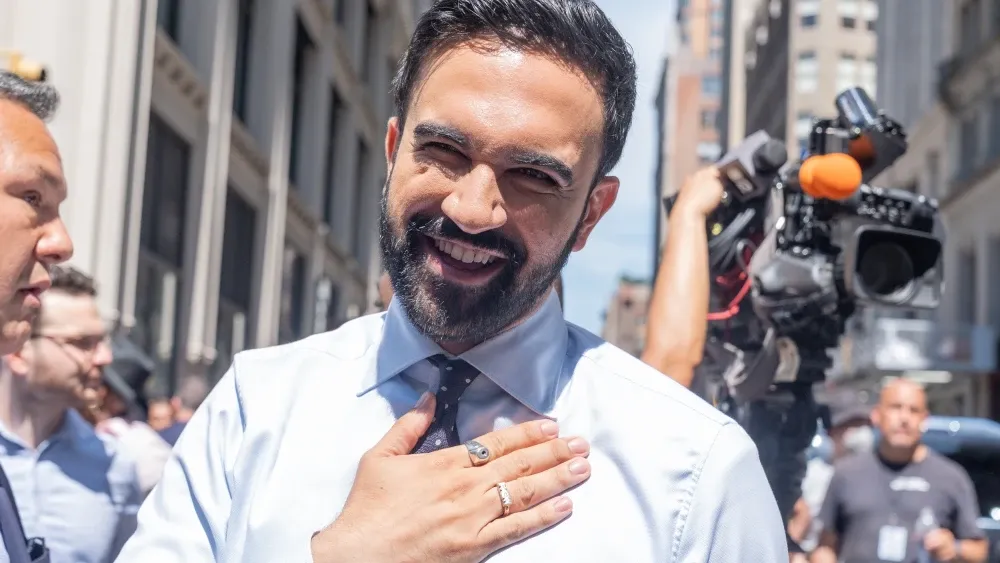 By: Gregg Roman and Jim Hanson New Yorkers have elected Zohran Mamdani, whose win signals a shift in city governance influenced by a Red-Green alliance. The power he grants his patrons subsumes his personal beliefs. He is the vessel, not the source. -
His leftist revolutionary comrades and his Islamist allies in civilizational jihad are over the moon with the unprecedented opportunity they have won. -
They are poised to fundamentally transform New York City into a shining example of socialist and Islamist de-construction. Why it matters: Mamdani's policies are deeply intertwined with his alliances, particularly with groups like the Council on American-Islamic Relations (CAIR), promising major changes in New York City. -
His public safety plan, part of the Democratic Socialists of America's "prison abolition" ideology, includes eliminating cash bail, decriminalizing drug possession, and pledging "no new jails." -
These policies align with CAIR's advocacy for reduced law enforcement presence regardless of the damage to public safety. Driving the news: Mamdani's alignment with Islamist organizations extends to financial backing from CAIR-linked entities. -
CAIR Action's financial support was funneled through the "Unity and Justice Fund PAC," contributing significantly to Mamdani's campaign. -
This backing underscores the influence of Islamist groups in shaping his agenda, including enhancing their presence in civic matters. The bottom line: Mamdani's ties to prominent Islamist groups, like CAIR, suggest a governance model that could prioritize their interests. -
His political mentor, Linda Sarsour, and associations with figures like Imam Siraj Wahhaj—an unindicted co-conspirator in the 1993 World Trade Center bombing—highlight the potential for a radical shift in New York's political landscape. -
New Yorkers may soon witness the implications of this alliance as Mamdani enacts policies rooted in both socialist and Islamist ideologies. To read the full article, click here. | | What Middle Eastern Analogy Best Explains Zohran Mamdani? 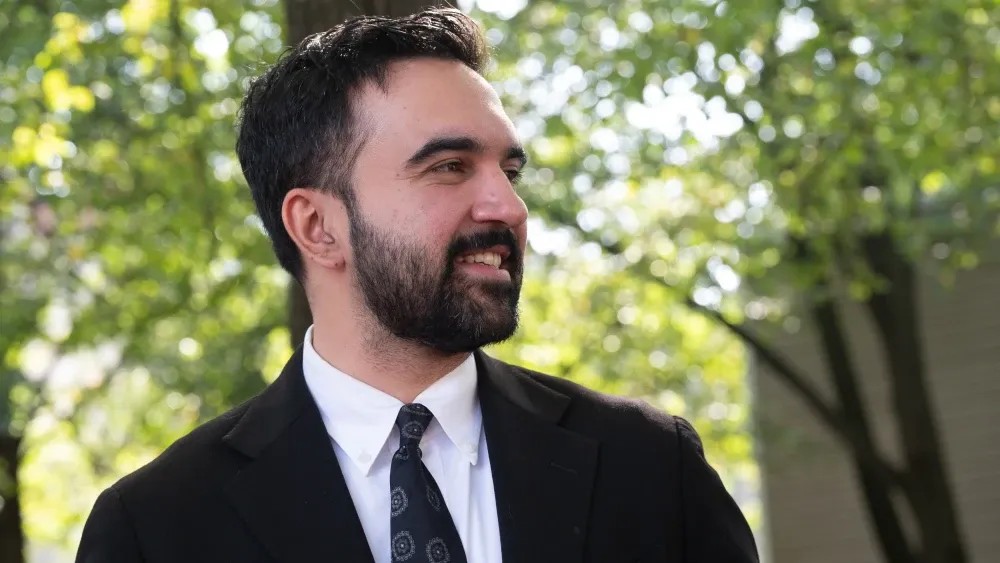 By: Shay Khatiri Zohran Mamdani's ascent to potential New York City mayoralty draws parallels with historical figures, raising concerns among Iranian opposition groups, who see in him comparisons to Ruhollah Khomeini, and many others in the West. Why it matters: Mamdani's policies intertwine with Islamist support, echoing a historical pattern of anti-Western sentiment and tribalism. -
Comparing Mamdani with Khomeini is easy. Mamdani is a Twelver Shi'ite, anti-Zionist and likely antisemite, but the similarities with Khomeini end there. -
He is not an Islamist, but he is a Muslim tribalist. According to this view, the white race has exploited Middle Eastern Muslims along with the rest of the Third World. -
He sees Jews as white settlers and Palestinians as colored natives. For Mamdani, Muslims are first among unequals. It is in this context that Mamdani falsely stated his aunt feared wearing a hijab in New York after the September 11, 2001, terror attacks. Driving the news: Mamdani channels a Third World paradigm, viewing global politics as a struggle between exploiters and the exploited. -
he resembles former Iranian Prime Minister Mohammad Mosaddegh. Like Mamdani, Mosaddegh acceded to power through democratic procedures before usurping them. -
Like Mamdani, he was also a secular leader whose work was marked by knee-jerk hatred of foreign powers, even if it cost his constituencies. The bottom line: While Mamdani channels a Third World paradigm of the oppressed versus the oppressor, the implications of his governance may very well mirror historical anti-Western and anti-Zionist agendas. To read the full article, click here. | | ICYMI: Israel Insider with Ashley Perry 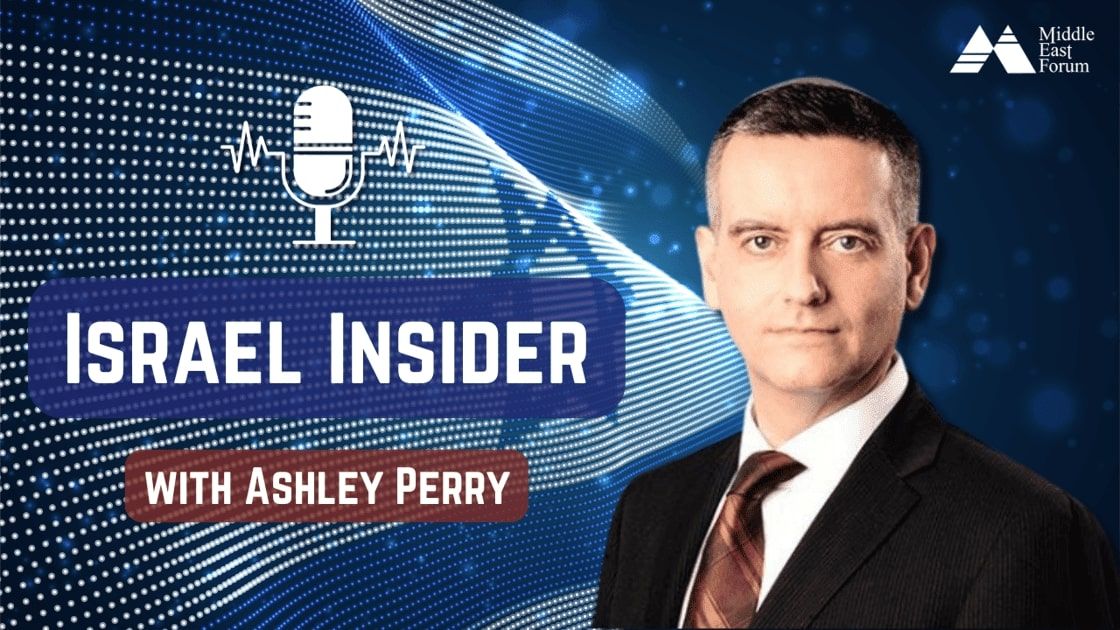 Israel was riveted this week by the scandal surrounding the IDF's military attorney general, who resigned and reportedly attempted suicide after being accused of leaking footage of Hamas detainee abuse—a revelation fueling government claims that Israel's legal establishment is unaccountable and underscoring Prime Minister Netanyahu's push for judicial reform ahead of elections. In Gaza, Israel faces U.S. pressure to resolve the fate of 200 trapped Hamas fighters, while the ceasefire remains fragile and Hamas regains ground amid stalled plans for an international stabilization force. Tensions also persist with Hezbollah in the north, and Netanyahu's coalition faces strain over ultra-Orthodox resistance to an enlistment law. Meanwhile, settler violence in the West Bank remains limited but controversial, Erdogan's anti-Israel rhetoric continues, and the Houthi threat has receded since the ceasefire. Ashley Perry is an advisor to the Middle East Forum's Israel office. He served as adviser to Israel's minister of foreign affairs and deputy prime minister in 2009-15, and has also worked with Israel's Ministers of Intelligence, Agriculture and Rural Development, Energy, Water and Infrastructure, Defense, Tourism, Internal Security, and Immigrant Absorption and as an advisor to The Negev Forum. Originally from the U.K., he moved to Israel in 2001. He holds a B.A. from University College London and an M.A. from Reichman University (IDC Herzliya). To watch the entire podcast, click here. | | Interview with Dearborn Imam Who Loves Trump—And Lost His Moment 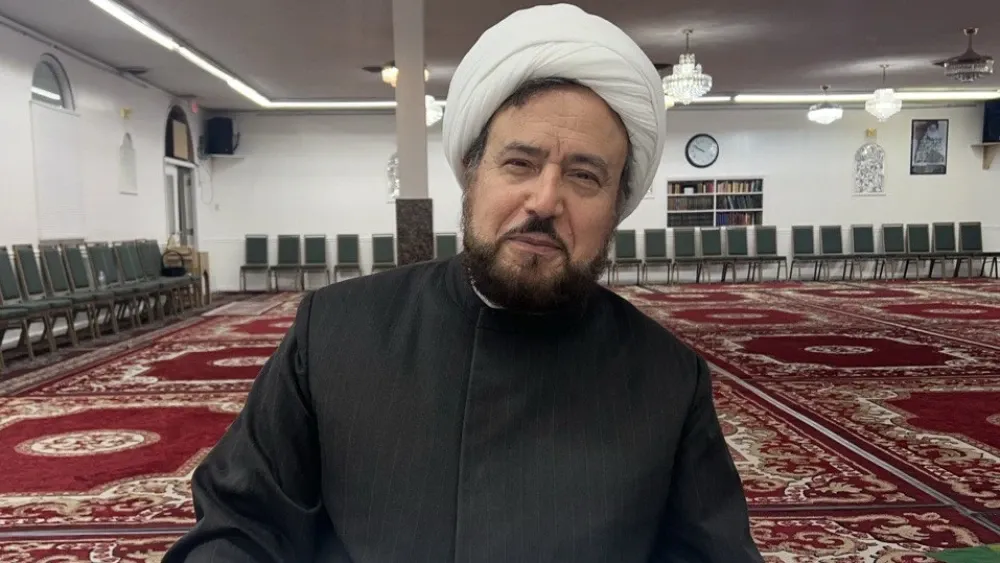 By: Dexter Van Zile In an interview with Focus on Western Islamism, Imam Husham Al-Husainy, the imam at the Karbala Islamic Educational Center in Dearborn, Michigan, learned the hard way that cheering for America's enemies may play well before Muslim audiences in Michigan but is poison on the national stage. Why it matters: Al-Husainy's endorsement of Donald Trump in 2024 ended with a fall from grace when his past support for Hezbollah came to light and cost him a spot on the dais at Trump's 2025 inauguration, where he was scheduled to offer a prayer. Driving the news: Al-Husainy's discourse aligns with a narrative of Western exploitation, framing Jews as settlers and Palestinians as indigenous. -
As demonstrated by MEF research, "Al-Husainy has a significant history of extremism. In 2015, he and his organization hosted a rally at the Karbala Islamic Educational Center, in which he wished death upon Saudi Arabia, and denounced Saudis as 'agents of the Jews' whose 'Zionist' planes 'rain down' death upon the people of Yemen." The bottom line: Al-Husainy's rhetoric, while outwardly promoting interfaith harmony, often aligns with anti-Western sentiments. -
But for all his talk about loving the adherents of the Abrahamic faiths, Al-Husainy, who fled Saddam Hussein's Iraq in the 1970s, would not affirm the right of the Jewish people to a sovereign state of their own—only the right to live where they want as individuals. -
Al-Husainy was loath to condemn Hezbollah, an Iranian-backed organization responsible for the deaths of hundreds of U.S. citizens. -
He also downplayed the mistreatment of women in the Islamic Republic of Iran. Insight: While his genuine gratitude over the refuge he and his followers enjoy in the United States is reassuring, his easy praise for Iran's rulers, his evasions on Hezbollah, and his theologically coded rejection of Jewish sovereignty reveal a cleric fluent in the language of interfaith harmony but unwilling to confront the ideological currents that divide his own community from the country that gave him refuge. To read the full article, click here. | | Muslim Rights Group Assails Efforts to Protect Rights of Jews at Northwestern  By: Michael Teplitsky The Council on American-Islamic Relations (CAIR) and graduate activists have asked the U.S. District Court for the Northern District of Illinois to block Northwestern's student antisemitism module. They claim that requiring students to complete antisemitism education violates civil rights protections by imposing a political viewpoint. Why it matters: This legal battle could reshape how universities balance free expression and anti-bias training. Driving the news: Northwestern's module follows the International Holocaust Remembrance Alliance (IHRA) definition of antisemitism, aiming to differentiate legitimate criticism of Israel from antisemitic harassment. The bottom line: CAIR's legal push could threaten Holocaust and antisemitism education across the U.S., potentially classifying them as "political indoctrination." To read the full article, click here. | | Netanyahu's 'No More Containment' Doctrine Vindicates Middle East Forum's Long-Standing 'Victory' Campaign  News from the Middle East Forum Prime Minister Benjamin Netanyahu's recent declaration marks a significant shift in Israeli policy, aligning with the Middle East Forum's longstanding Israel Victory Project. Why it matters: Netanyahu's statement, "There is no more containment," publicly validates the MEF's strategic advocacy against passive conflict management. MEF's role: For nearly a decade, MEF has spearheaded efforts to shift Israeli strategy from conflict management to decisive victory. -
Through billboard campaigns, Congressional caucuses, and Knesset engagements, MEF has relentlessly advocated for a proactive approach. -
The Forum's influence extends to providing a workable Gaza Victory Plan and collaborating with Knesset partners to change the status quo. The bottom line: With the conclusion of the Gaza war, MEF will continue to monitor and support the full implementation of this strategy to secure Israel's future. To read the entire press release, click here. | | The November 18 Decision: Why Saudi Arabia and the United Arab Emirates Must Lead Gaza Reconstruction  By: Gregg Roman Mohammed bin Salman (MBS) arrives at the White House on November 18. The meeting will determine whether Gaza becomes an economic hub integrated into the Abraham Accords or remains a terrorist breeding ground awaiting the next war. Trump faces a straightforward choice between two incompatible directions for Gaza's future. One path leads through Riyadh and Abu Dhabi; the other runs through Ankara and Doha. There is no middle ground. Why it matters: Gaza requires $50 billion for reconstruction. The question is not whether to rebuild, but who controls the money and therefore Gaza's future. -
The answer determines whether the 67,000 Palestinians who died and the complete destruction of Gaza's infrastructure lead to lasting change or simply reset the clock for another October 7. -
Saudi Arabia and the United Arab Emirates (UAE) advocate for a $50 billion reconstruction plan that promotes regional trade and stability. Driving the news: Trump faces a strategic decision between paths for Gaza's future: a collaborative approach with Saudi Arabia and the UAE, or alignment with Turkey and Qatar. The stakes: With Hamas still operational, controlling significant territory, the allocation of reconstruction funds will shape Gaza's trajectory. -
The Saudi and UAE leadership would ensure funds are used to foster economic integration and stability, contrasting with the influence from Turkey and Qatar. -
Turkey and Qatar's support for Hamas undermines efforts for peace, as they have historically provided financial and political backing to extremist factions. What's next: This decision could transform Gaza into a model of Arab moderation and economic development. -
Empowering Gaza's clans strengthens local governance, fostering stability and reducing Hamas's influence by promoting internal cohesion and self-determination. -
Mohammed bin Salman and Mohammed bin Zayed represent the Middle East's future: economic integration, religious moderation, and coexistence with Israel. Turkey's Erdoğan and Qatar's Al Thani represent its past: ideological extremism, perpetual conflict, and terrorism as statecraft. To read the full article, click here. | | U.K. Teacher Banned for Life for Offending Adherents of Unnamed Religion 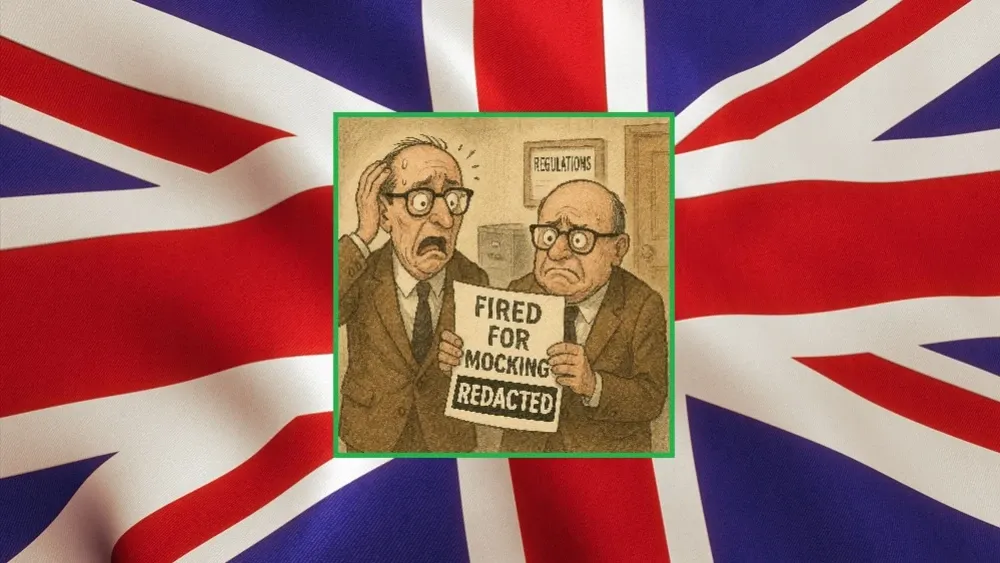 By: Jules Gomes A Church of England school teacher, Alex Lloyd, has been banned from teaching for life after the Teaching Regulation Agency (TRA) found him guilty of "unprofessional behavior" during a lesson on "honor killings." Why it matters: The TRA's redaction of all references to Islam as the specific milieu of "honor killings" and "genital mutilation" in the ruling has sparked controversy and accusations of censorship, sending shockwaves through the educational community. -
"The redaction of all mention of Islam in the TRA ruling is truly sinister," Tim Dieppe, author of the book The Challenge of Islam: Understanding and Responding to Islam's Increasing Influence in the UK, told Focus on Western Islamism. -
Critics slam this decision as a chilling precedent that effectively imposes an Islamic blasphemy code, muzzling critical discussions about religion. Driving the news: Despite evidence of good character, Lloyd was penalized for supposedly mocking Islam in a classroom discussion. The bottom line: This ruling threatens educational freedom, creating a climate of fear where teachers might avoid important topics to protect their careers. To read the full article, click here. | | When Fear Replaces Freedom: Britain's Slide Toward a Soft Blasphemy Law  By: Potkin Azarmehr Law enforcement in Britain made over 12,000 arrests in 2023 for "offensive" social media posts, challenging the nation's proud history of free speech. Why it matters: Conservative MP Nick Timothy warns that Britain is sliding towards a "soft blasphemy law," enforced through the Public Order Act. Driving the news: Timothy highlights cases where criticism of Islam led to prosecution under the guise of public order offenses. The bottom line: The clampdown on speech fosters a climate of self-censorship, where individuals fear expressing controversial opinions. -
This has broader implications, such as deterring open discourse in academia, where fear of backlash may prevent scholars from exploring sensitive topics. -
Journalists may also shy away from reporting on certain issues, impacting public access to a full spectrum of views. Urgent call: Timothy's bill aims to stop misuse of laws to silence criticism, emphasizing that preserving free speech is vital for a pluralistic society. This defense of liberties is crucial to maintaining a healthy democratic discourse. To read the full article, click here. | | European Union Parliamentarian Raises Alarm Over Islamist Funding for Europe's Largest Mosque  By: Jules Gomes An European Union lawmaker has raised alarms over Islamist funding for Europe's largest mosque, nearing completion in Strasbourg, France. Why it matters: The mosque, backed by Turkish Islamist nationalist group Millî Görüş, is seen as Turkey's growing influence in Europe, raising concerns about cultural and religious integration. Driving the news: Millî Görüş, linked to the Muslim Brotherhood, funds the mosque with support from the Turkish government, Qatar, and other nations. The bottom line: The mosque's construction symbolizes a broader trend of Turkish Islamism making inroads in Europe, challenging secular values and societal cohesion. -
Geopolitically, this development underscores Turkey's strategic influence in Europe, potentially altering diplomatic dynamics and testing the EU's ability to maintain its secular and democratic principles amid foreign religious influence. -
Specific geopolitical impacts include increasing Turkey's leverage in European Union negotiations, particularly regarding migration policies. -
Lawmakers warn that Europe must confront this "cultural substitution" to preserve its historical identity and societal norms. To read the full article, click here. | | We appreciate your continued support for the Middle East Forum. If you found this edition of the Dispatch useful, please share it with others and be sure to let us know your thoughts on our coverage via the comments feature. Sincerely, Winfield Myers
Managing Editor, Middle East Forum
Director, Campus Watch | | | | Was this edition useful?  

Your email will be recorded and shared with the sender |        MEF, an activist think tank, deals with the Middle East, Islamism, U.S. foreign policy, and related topics, urging bold measures to protect Americans and their allies. Pursuing its goals via intellectual and operational means, the Forum recurrently has policy ideas adopted by the U.S. government.
Copyright © 2024 Middle East Forum, All rights reserved.
Our mailing address is:
Middle East Forum
1650 Market Street, Suite 3600
Philadelphia, PA 19103 | | | | | Powered by 
| | This email was sent by Middle East Forum via Axios HQ | | | |

0 коммент.:
Отправить комментарий