| |  | | | All on Iran: The Closing Iranian Window; Inside the Mind of the IRGC By Winfield Myers ● Nov 17, 2025 Smart Brevity® count: 7 mins...1912 words Gregg Roman warns that "the strategic calculus of the Middle East has been irrevocably altered" because Iran is "on the cusp of achieving a decisive strategic advantage through the operational deployment of hypersonic weapons." Saeid Golkar and Kasra Aarabi, in an analysis of the Islamic Revolutionary Guard Corps, write that the IRGC holds "a worldview in which anti-Americanism is not so much a geopolitical strategy as a doctrine of salvation." Dalga Khatinoglu says the return of U.N. sanctions on Iran is causing it to send significant amounts of oil "to waters near China, its only crude buyer, to maintain a steady supply available for prompt delivery"—a move that exacerbates Iran's loss of oil income just when the regime needs it. We feature two articles by Mardo Soghom on the readiness of Iran's defenses, plus the work of A.J. Caschetta and Babak Taghvaee. | | The Closing Iranian Window: Preemption and Deterrence in the Hypersonic Age 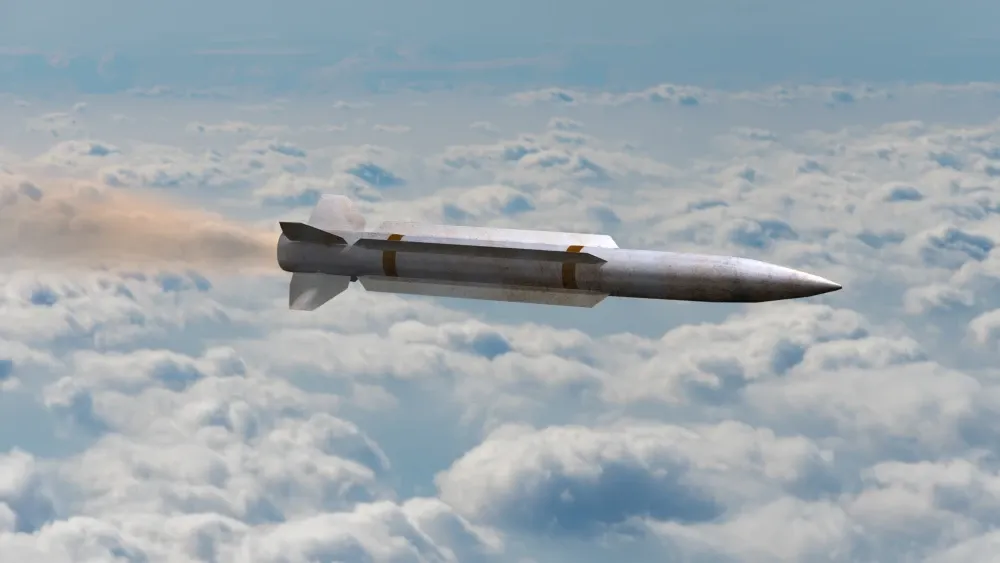 By: Gregg Roman The strategic calculus of the Middle East has been dramatically altered by Iran's deployment of hypersonic weapons. Why it matters: This capability poses a severe threat to Israel's strategic depth and civilian safety, forcing a rethink of its national security posture. By the numbers: Iran's hypersonic missile, the Khorramshahr-4, can travel at speeds exceeding Mach 12, with a range of around 3,000 kilometers. -
These missiles can reach Tel Aviv in under 10 minutes, leaving minimal time for countermeasures. -
The missiles carry up to 80 submunitions, enabling saturation attacks that can overwhelm advanced defenses. The big picture: Iran's internal decay, marked by economic collapse and societal unrest, fuels its aggressive foreign policy. The stakes: Israel's new military doctrine of "enforcement" aims to dismantle threats proactively. What's next: The United States remains the indispensable cornerstone of Israeli security, yet growing constraints on American military capacity and industrial output mean that Israel must plan for a scenario in which U.S. support is powerful but time-limited. -
This strategic limitation compels Israel to adopt a warfighting strategy that prioritizes speed, surprise, and decisive outcomes, further reinforcing the logic of its preemptive "enforcement" doctrine. -
Israel must plan to achieve its primary strategic objectives—the neutralization of Iran's hypersonic and nuclear threats—within the opening hours or days of a conflict, before U.S. interceptor stockpiles are critically depleted. To read the full article, click here. | | Inside the Mind of Iran's Revolutionary Guard 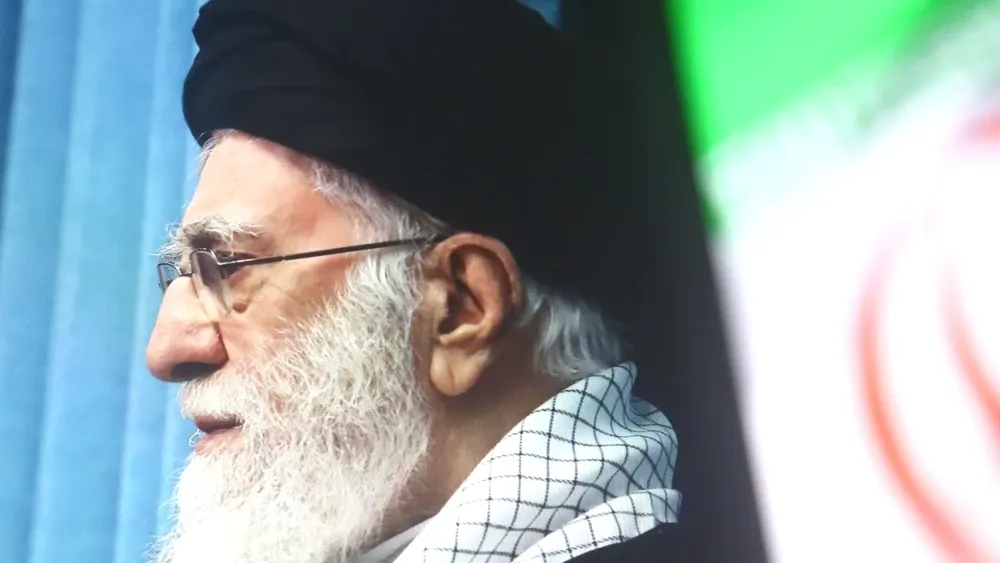 By: Saeid Golkar and Kasra Aarabi Iran's Islamic Revolutionary Guard Corps (IRGC) recently hosted its third "International Conference on the Decline of the United States," framing U.S. decline as a central tenet of its ideology. Why it matters: This belief is not just propaganda but a core doctrine shaping Iran's geopolitical strategy. By the numbers: The IRGC's academic campaign, beginning in 2019, has expanded with conferences and panels across Iranian universities. The stakes: This ideology drives Iran's regional actions, reinforcing its alliances with Russia and China and expanding militia networks in the Middle East. What's next: Understanding the IRGC's mindset is crucial for policymakers in Washington and Europe, as its hostility toward the U.S. is structural, not subject to diplomatic change. To read the full article, click here. | | ICYMI: What Is Happening to the American Right? with Dominic Green 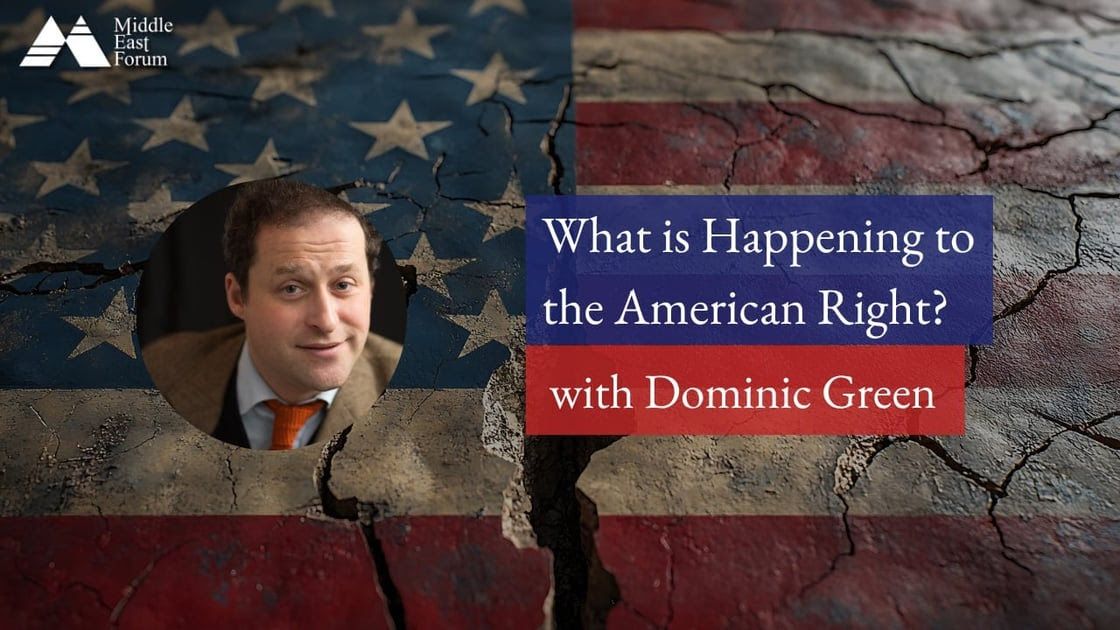 The widening ideological fractures on the American right are being driven by the spread of online extremism, isolationist sentiment, and foreign influence networks that are reshaping the movement's direction. These developments stem from long-standing tensions over racism and isolationism, now intensified by digital platforms and the growing prominence of figures such as Tucker Carlson and Nick Fuentes. Their influence has begun to affect major conservative institutions, including the Heritage Foundation, while succession dynamics surrounding Vice President JD Vance are further heightening internal divisions. The rise of racist and conspiratorial factions—largely fringe and heavily online—presents broader implications for U.S. policy, posing risks to the stability of the Republican coalition and to America's global role if not effectively countered. Dominic Green is a contributor to the Wall Street Journal and a columnist for the Washington Examiner and the Jewish Chronicle. The author of five books, he was previously editor of the Spectator's American edition and contributes regularly to the New Criterion, the Free Press, and the Washington Free Beacon. He is a fellow of the Royal Historical Society, the Foreign Policy Research Institute and the Center for American Culture and Ideas. To watch the entire podcast, click here. | | Iran: Surrounded by Water with Nothing to Drink 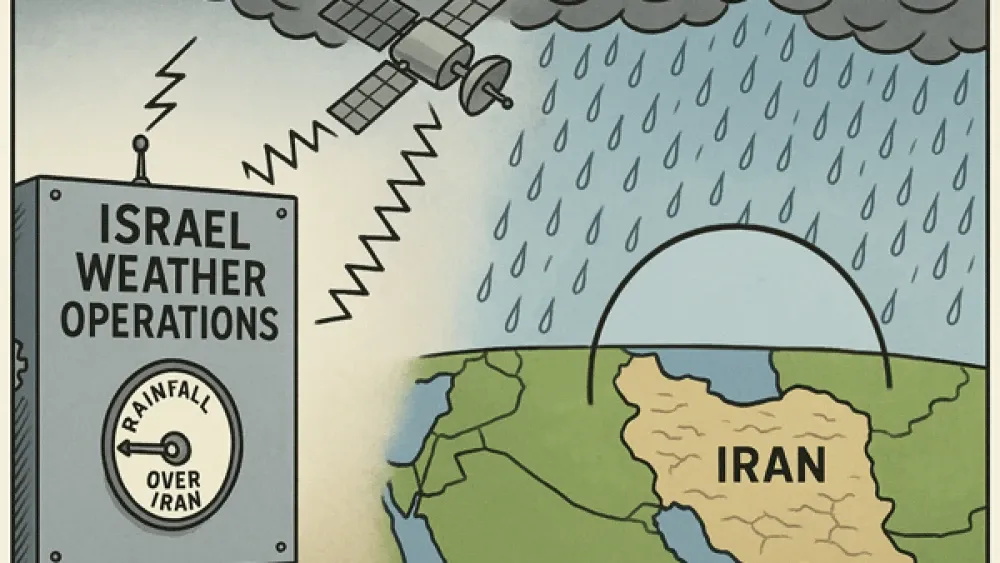 By: A.J. Caschetta Iran, surrounded by water yet parched for drinking supply, faces a severe water crisis exacerbated by its misplaced focus on nuclear ambitions over essential infrastructure. Why it matters: While other Middle Eastern nations invest in sustainable water solutions, Iran's leadership prioritizes nuclear facilities, leaving its people in dire straits. By the numbers: Iran's nuclear ambitions have drained resources, with nuclear sites costing billions that could build numerous efficient desalination plants. -
Despite its vast coastline, Iran lags with outdated facilities, unlike Kuwait and the UAE, which have secured significant water supply through modern technology. The stakes: Iran's ineffective policies have led to groundwater depletion and land sinking, a crisis largely of its own making. Irony alert: The irony of Iran's situation is that the entire world would step up to help the people of Iran avoid impending disaster were their nation not run by a bellicose government motivated by hatred. And Israel—the object of that hatred—would be among the nations most willing to help. To read the full article, click here. | | Iran Increases Floating Oil Storage Amid Difficulty in Deliveries to China  By: Dalga Khatinoglu New shipping data show that despite a surge in oil loadings from its Persian Gulf terminals over the past two months, Iran has faced difficulties in getting its crude to Chinese buyers, resulting in a large buildup of Iranian floating oil storage near Chinese waters. Why it matters: Iran's strategy to circumvent sanctions by storing oil offshore is financially burdensome and undermines its revenue. By the numbers: Kpler data shows that Iran's oil deliveries to China fell to under 1.2 million barrels per day, down from 1.44 million earlier this year. The stakes: U.N. sanctions indirectly impact Iran's oil operations, increasing shipping costs and insurance hurdles. What's next: So long as Iranian leaders refuse to recognize reality, they will not be able to compensate for the perfect storm now looming over their hydrocarbon economy. To read the full article, click here. | | Iran's Nuclear Ambiguity Falters as a Basis for Deterrence 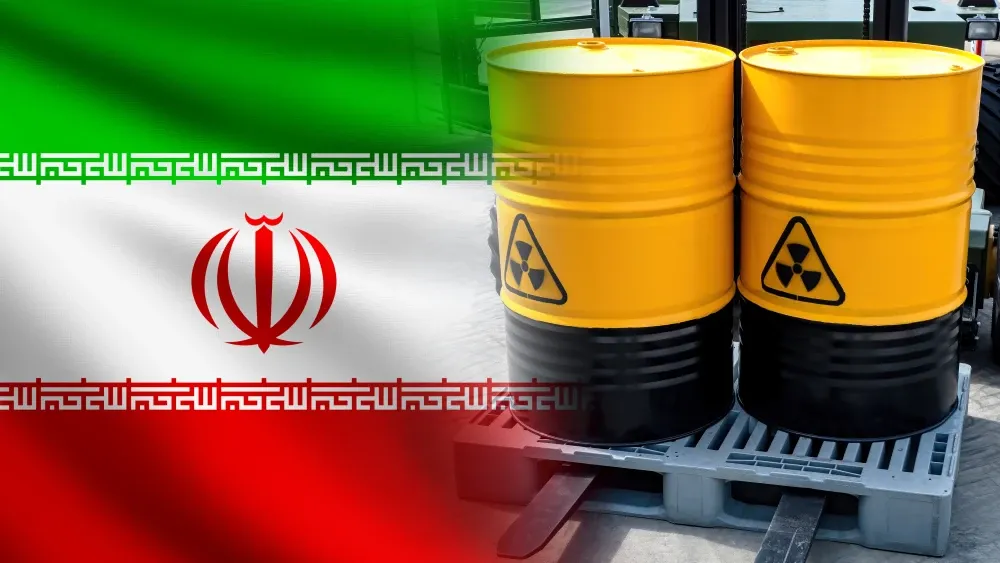 By: Mardo Soghom Islamic Republic of Iran officials vow to rebuild the nuclear facilities destroyed in the joint Israeli-American air campaign in June 2025, insisting they will never accept U.S. demands to abandon uranium enrichment. Tehran now faces a dilemma: Its strategy of deterrence through nuclear ambiguity risks becoming irrelevant unless it restores its nuclear infrastructure. Why it matters: Iran's strategy of nuclear ambiguity risks becoming obsolete unless it can restore its nuclear infrastructure. By the numbers: Before the strikes, Iran reportedly possessed over 400 kilograms of uranium enriched to 60 percent, nearing weapons-grade. -
The coordinated operation crippled 18,000 to 22,000 centrifuges, significantly impacting enrichment capabilities. The stakes: Tehran's refusal to negotiate and continued support for proxies like Hezbollah increases the risk of further military action. What's next: Tehran continues to insist on uranium enrichment, missile development, and support for militant proxies, clinging to the same pillars that have brought it isolation and decline. The regime may not be so lucky should Trump end his ceasefire. To read the full article, click here. | | Iran's Missile Rhetoric Grows Louder as Its Capabilities Shrink  By: Mardo Soghom Despite threats of a massive missile assault, Iran's actual capacity to overwhelm Israel's defenses remains questionable, reflecting more bravado than strategic reality. Why it matters: Iran's claims of launching 2,000 missiles simultaneously are part of a psychological campaign, lacking credible military backing. By the numbers: Iran's reliance on complex, slow-to-prepare liquid-fueled missiles undercuts its claims of a large-scale barrage. The stakes: Iran's missile arsenal, its primary military lever, proved inadequate in past conflicts, depleting interceptor stockpiles but achieving little else. What's next: Without substantial enhancements to its air defense and missile capabilities, Iran's threats remain posturing, unlikely to translate into effective military action. To read the full article, click here. | | Malawi Is the New African Gateway for Iranian Aviation Smuggling  By: Babak Taghvaee Iran's Mahan Air has circumvented U.S. sanctions by exploiting Malawi as a new hub for acquiring aircraft, following the crackdown on its operations in Madagascar. Why it matters: This shift exposes vulnerabilities in international aviation controls and challenges U.S. efforts to enforce sanctions. By the numbers: The July 2025 operation rerouted five Boeing 777s using forged registrations, and Malawi's registry now includes Boeing 737s and Airbus A340s under shell operators. The stakes: Malawi's lack of aviation oversight, coupled with Chinese influence, creates an ideal environment for Iran's procurement networks. -
The State Department should press Malawi to suspend suspect their air-operator certificates and disclose full ownership records. Coordination between the FBI, Treasury, and African civil aviation authorities can replicate the successful enforcement model used in Madagascar. What's next: The Revolutionary Guards' aviation arm has shown how it can shift supply chains from one permissive jurisdiction to another. Without decisive intervention, the next set of smuggled airliners—bearing fresh African registrations—will soon touch down in Tehran, eroding U.S. deterrence one aircraft at a time. To read the full article, click here. | | We appreciate your continued support of the Middle East Forum and your reliance on MEF to bring you a steady stream of analyses and reports about the region and its influences on our world. If you enjoyed this issue of the Dispatch, please forward it to a friend and let us know your thoughts in the comments section. Thank you, Winfield Myers
Managing Editor, Middle East Forum
Director, Campus Watch | | | | Was this edition useful?  

Your email will be recorded and shared with the sender |        MEF, an activist think tank, deals with the Middle East, Islamism, U.S. foreign policy, and related topics, urging bold measures to protect Americans and their allies. Pursuing its goals via intellectual and operational means, the Forum recurrently has policy ideas adopted by the U.S. government.
Copyright © 2024 Middle East Forum, All rights reserved.
Our mailing address is:
Middle East Forum
1650 Market Street, Suite 3600
Philadelphia, PA 19103 | | | | | Powered by 
| | This email was sent by Middle East Forum via Axios HQ | | | |

0 коммент.:
Отправить комментарий