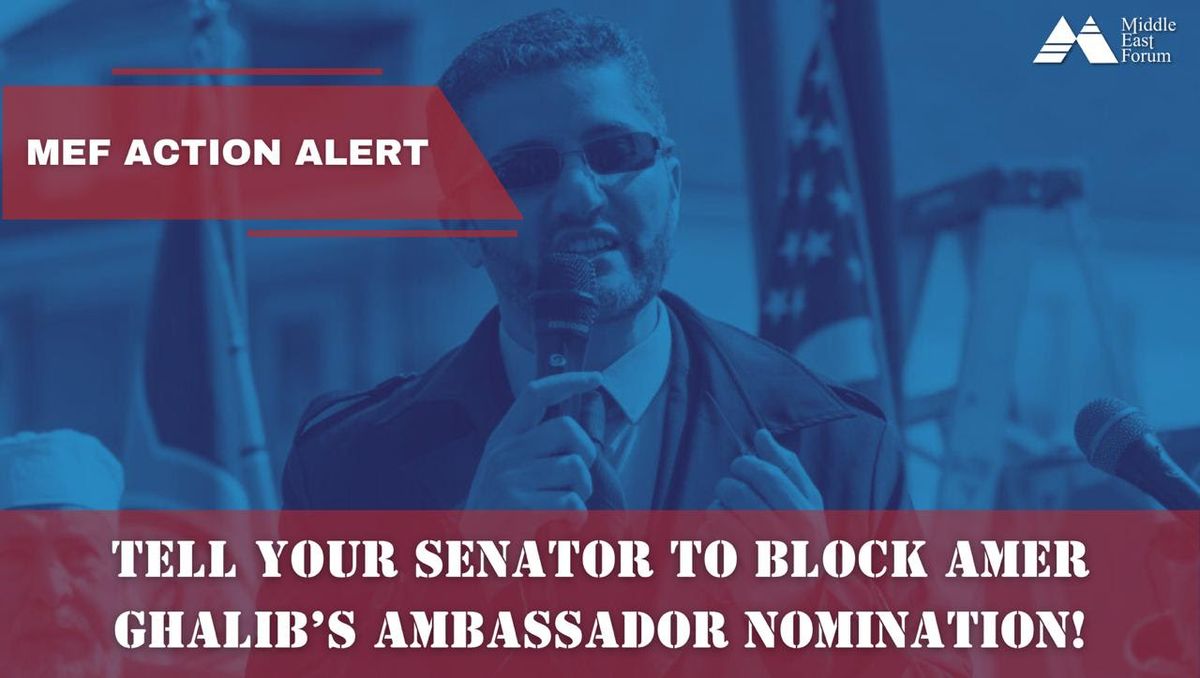
| |  | | | Islamist Mayor Up for Ambassadorship; Defeating the Houthis; All on Turkey By Winfield Myers ● Oct 22, 2025 Smart Brevity® count: 10 mins...2623 words Benjamin Baird details the Senate Foreign Relations Committee's Oct. 23, 2025, hearing on the nomination of disgraced Hamtramck, MI, mayor Amer Ghalib as U.S. ambassador to Kuwait. The Muslim Brotherhood apologist has endorsed statements referring to African Americans as "animal" and "inhuman" and Jews as "monkeys." Eric Navarro and Bridget Toomey explain how the U.S. can help secure the Red Sea by equipping and training the Yemeni coast guard to undermine threats from Houthi terrorists. Fernando Carvajal says the anti-Houthi Presidential Leadership Council in Yemen is in desperate need of reform, while Summer Ahmed, in a recent MEF Podcast, argued that international support is crucial to defeating the Houthis. We end with seven articles on Turkey, beginning with Amine Ayoub's warning against awarding Turkey any role in postwar Gaza. We include two pieces by Michael Rubin and four by exiled Turkish journalist Abdullah Bozkurt. These authors provide detailed, sobering analyses of a nation that has long since become an enemy of the West. | | Senate to Hold Confirmation Hearings for Disgraced Michigan Mayor Amer Ghalib 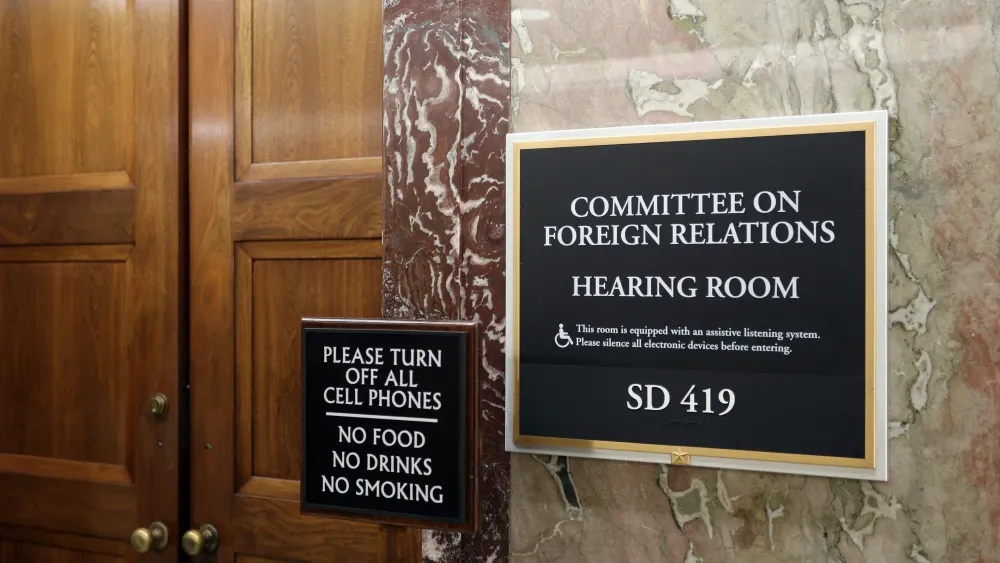 By: Benjamin Baird The Senate Foreign Relations Committee convenes tomorrow, Thursday, October 23, 2025, to consider Hamtramck, Michigan Mayor Amer Ghalib's nomination as U.S. ambassador to Kuwait. After facing months of delays stemming from Ghalib's controversial past, the Senate now has the opportunity to demand on-the-record answers from Ghalib regarding his abysmal qualifications and character. Why it matters: Ghalib's dubious credentials and history of divisive rhetoric make him unsuitable for a diplomatic role. -
He has lied about his medical qualifications and engaged in racist, anti-Semitic, and anti-LGBTQ+ comments, which are utterly incompatible with U.S. values. The big picture: Ghalib's administration is plagued by scandals, including systemic voter fraud and Islamist policies. What's next: Senators must scrutinize Ghalib's past statements and actions, which starkly contrast with U.S. diplomatic goals and values. The bottom line: Ghalib's nomination is a serious misstep that threatens the integrity of U.S. diplomacy and requires immediate rejection to uphold national values. To read the full article, click here. | | MEF Action Alert: Block Amer Ghalib's Nomination Urge your senators to oppose Hamtramck, MI, Mayor Amer Ghalib's nomination as U.S. ambassador to Kuwait. Ghalib's record includes bigotry, voter fraud, and praise for dictators—making him unfit to represent America abroad. Thanks to the Middle East Forum's investigation, the Senate delayed his confirmation hearing, now set for October 23. Lawmakers from both parties are demanding answers—but your voice can ensure accountability. We must ensure this unfit nominee is never given a chance to represent Americans on the world stage. Help us block this #UnfitNominee Amer Ghalib! Tell your senators: America deserves credible diplomats who uphold our values, not those who endanger them. Click Here to Take Action! | | How to Secure the Red Sea 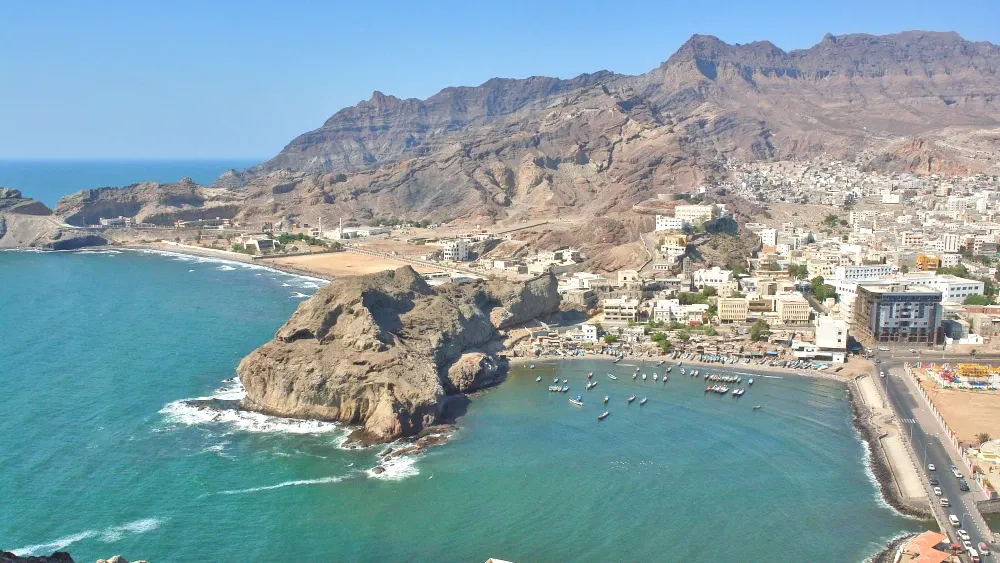 By: Eric Navarro and Bridget Toomey Yemeni President Rashid al-Alimi has called for a robust international coalition to counter Houthi threats, with the United Kingdom and Saudi Arabia launching the Yemen Maritime Security Partnership (YMSP) to fortify Yemen's Coast Guard. Why it matters: The Red Sea's strategic importance as a global trade route necessitates bolstered security to curb Houthi smuggling operations. -
The YMSP, supported by $10 million in pledges, aims to enhance Yemen's maritime defenses. -
The United States, United Kingdom, and Saudi Arabia have a vested interest in safeguarding this critical waterway. The big picture: Despite previous support, Yemen's Coast Guard faces significant resource challenges. What's next: The United States can maximize its strategic influence by intensifying intelligence sharing and logistics support to Yemen. The bottom line: The YMSP is an important step in building the capacity of the Yemenis to take their country back from the Houthis. If the United States is serious about securing the Red Sea, it must fully support this initiative and help it realize its full potential. To read the full article, click here. | | Lack of Meaningful Presidential Leadership Council Reform Condemns Yemen to Status Quo 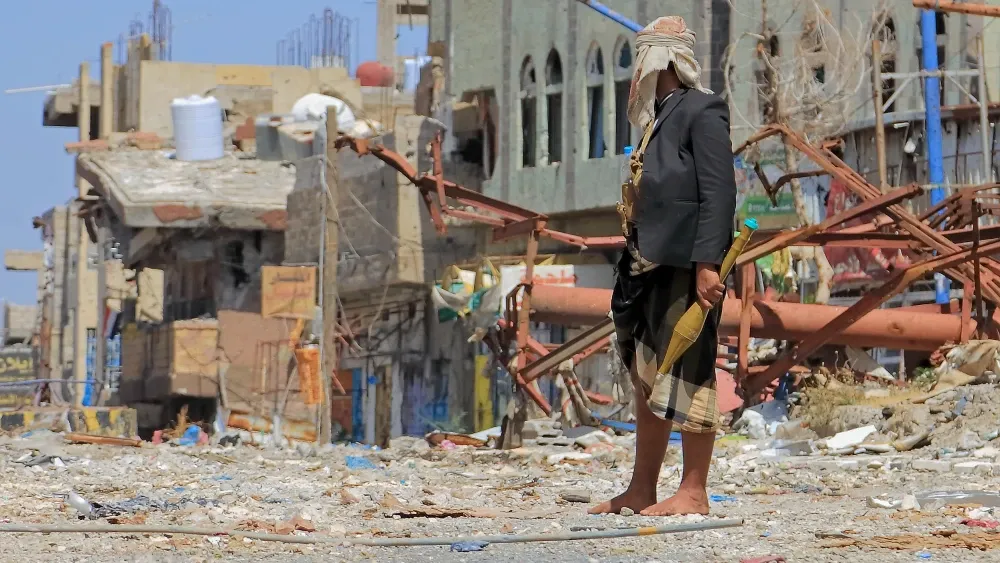 By: Fernando Carvajal Operation Rough Rider, the U.S. counter-Houthi military campaign, barely dented the Houthi rebels. Despite renewed Houthi strikes on civilian ships and missile attacks on Israel, Yemeni rivals remain distracted by political conflicts. Why it matters: The Houthis control Sana'a while the Presidential Leadership Council struggles amid crises. The big picture: Political disputes hinder a unified effort to reclaim Sana'a. What's next: Yemen's neighbors are hesitant to disrupt the status quo as Houthis pose a threat to their territories. The bottom line: The future, then, does not look bright. Unless Yemeni leaders themselves find a path toward reconciling their differences or a recipe for cooperation toward re-establishing a central state, or federation, millions will continue to suffer as the international community turns their focus to other crises. To read the full article, click here. | | Summer Ahmed on How the Houthis Can Be Defeated 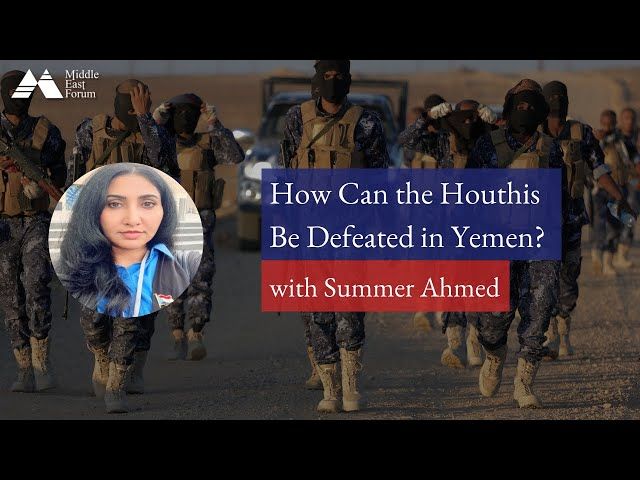 By: Marilyn Stern Summer Ahmed, the Yemeni Southern Transition Council's (STC) Foreign Affairs Representative to the United States, discussed how the Houthis can be defeated in a recent Middle East Forum Podcast. Why it matters: South Yemen is simultaneously fighting the Houthis and al-Qaeda in the Arabian Peninsula (AQAP), with the Houthis also supporting al-Shabaab in Somalia. The big picture: The Houthis, backed by Iran, have expanded their missile and drone attacks beyond Yemen, targeting regional allies like the UAE, Saudi Arabia, and Israel. What's next: Continued collaboration with international allies, including air support from the UAE and Saudi Arabia, is key to defeating the Houthis. The bottom line: The Biden administration's focus on humanitarian issues contrasts with past U.S. policies, underscoring the need for a coordinated global response to curb Houthi influence. To read the full summary and watch the podcast, click here. | | Why Turkey's 'Peace' Guarantee in Gaza Is a Hostage to Islamism 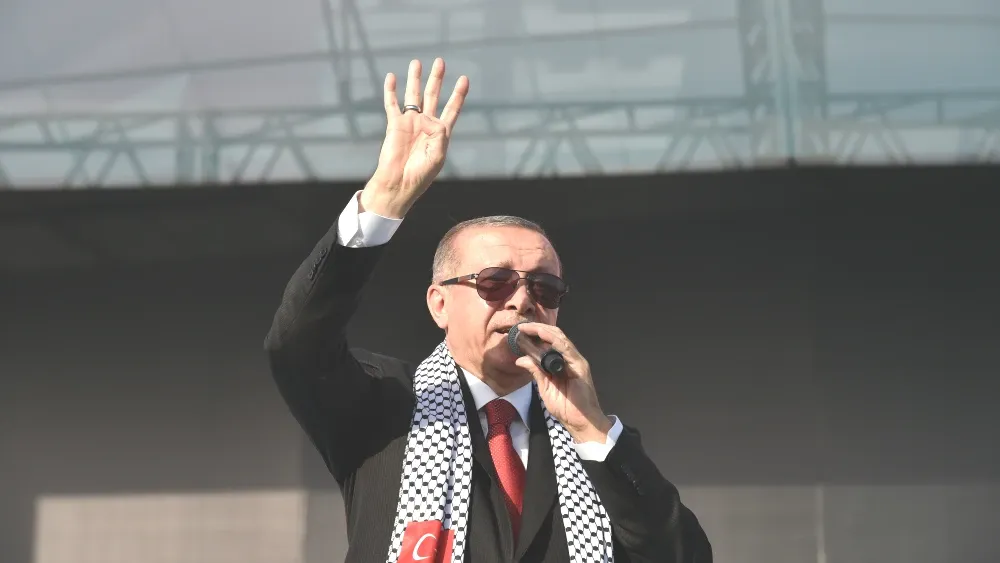 By: Amine Ayoub The October 2025 Gaza ceasefire, with Turkey as a co-guarantor, is a strategic blunder threatening regional stability. Why it matters: Turkey, a staunch Hamas ally, cannot be trusted as a neutral peacekeeper, jeopardizing long-term Middle East peace. The big picture: Iran's influence over Hamas factions gives it a "sabotage switch" over the ceasefire, undermining any gains. What's next: By sidelining Egypt's mediation efforts, Turkey threatens regional alliances and the recovery process. The bottom line: The peace achieved at Sharm El-Sheikh is a tactical pause, purchased at the cost of structural security. Until the role of ideological powers like Turkey is neutralized through rigorous, neutral international oversight, this agreement remains dangerously compromised and destined to collapse under the weight of regional rivalry and Islamist infiltration. To read the full article, click here. | | For Turkey, Israel Is the Appetizer but India Is the Main Course 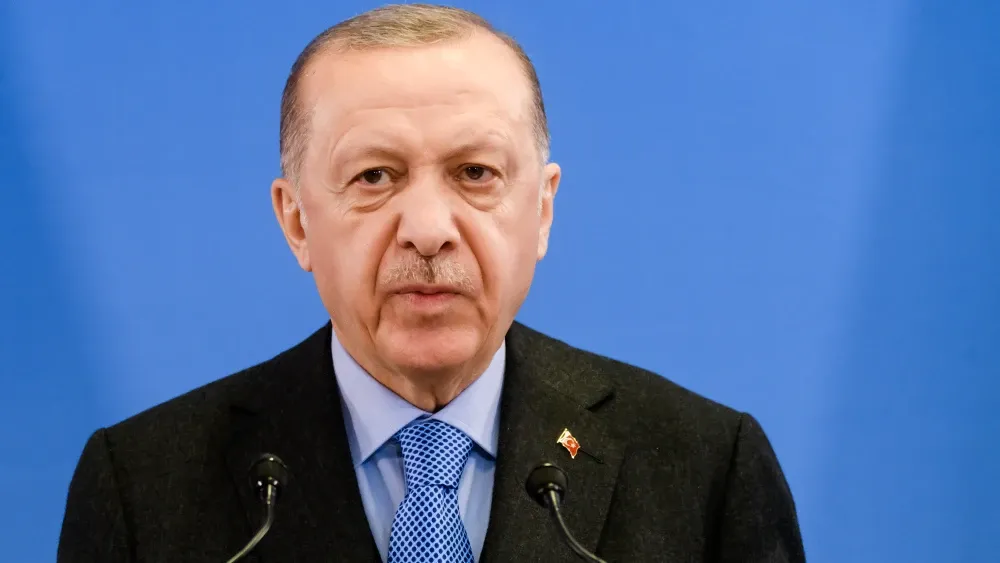 By: Michael Rubin The mask is off Turkish President Recep Tayyip Erdoğan as he sides with Hamas against Israel, threatening regional stability and exposing a dangerous agenda. Why it matters: Erdoğan's support for Hamas and anti-Israel rhetoric reveal an ambition to reshape the Middle East in line with his Islamist vision. The big picture: Erdoğan's ideology, favoring Muslim dominance, drives hostility towards non-Muslims, including India, aligning with groups like the Islamic State. What's next: Erdoğan's influence risks destabilizing both external and internal dynamics in countries like India. The bottom line: Erdoğan's ambitions pose a significant threat, requiring vigilant international responses to prevent further destabilization in the both the Middle East and South Asia. To read the full article, click here. | | Add Turkey to Financial Action Task Force Blacklist for Northern Cyprus Laundering  By: Michael Rubin Conceived by the G7, the Financial Action Task Force (FATF) combats money laundering and terror finance globally. Yet, Turkish President Recep Tayyip Erdoğan's continued occupation of northern Cyprus has turned the region into a hub for mafia-style corruption and violence. Why it matters: The Turkish-occupied third of Cyprus exemplifies unchecked money laundering and terror finance under Turkey's watch. The big picture: Erdoğan leverages northern Cyprus as a financial lifeline amid Turkey's economic woes, ignoring EU regulations. -
Under such circumstances, the idea that northern Cyprus can or will self-police is risible. -
The criminality in northern Cyprus is not a second-order effect of occupation; today, it is the purpose of Turkey's occupation. What's next: The international community must confront Turkey's role in this criminality, including blacklisting Turkey on the FATF. The bottom line: To combat the financial crime empire in Turkish-occupied Cyprus, Turkey must face repercussions that reflect its defiance of global financial standards. To read the full article, click here. | | Turkey Sticks to Policy of Denial on Ecumenical Patriarchate's Status, Government Letter Reveals 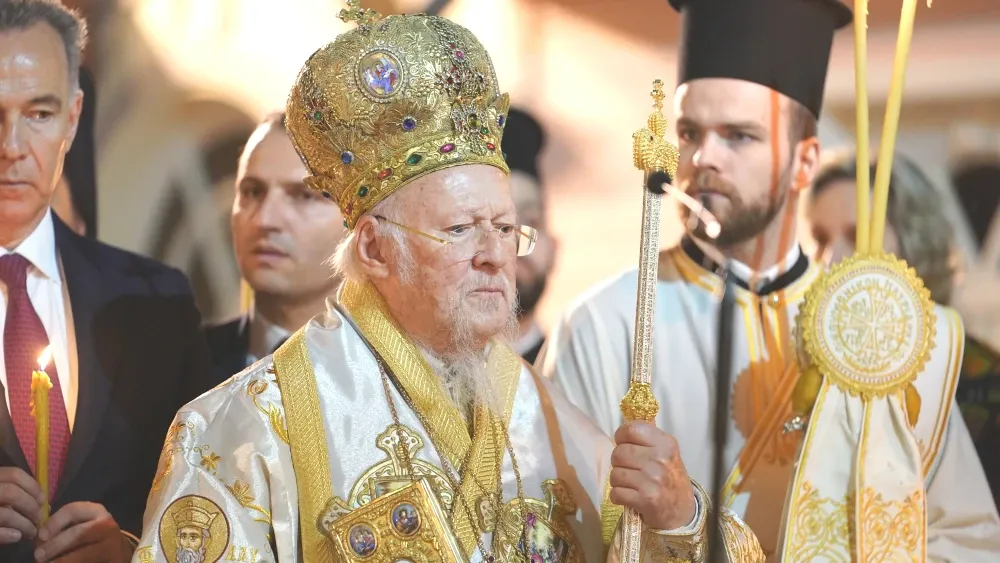 By: Abdullah Bozkurt Turkey continues to deny the Ecumenical Patriarchate of Constantinople's international status, as outlined in a letter by Turkish Foreign Minister Hakan Fidan. Why it matters: The Ecumenical Patriarchate is the spiritual leader for 300 million Orthodox Christians, and Turkey's refusal to recognize its status is intended to harm global Orthodoxy. The big picture: Turkey's interpretation of the 1923 Treaty of Lausanne limits the Patriarchate to purely spiritual and religious matters, ignoring its ecumenical role. What's next: Western governments urge Turkey to recognize the Patriarchate's status and reopen the Halki Seminary, which was closed by Turkish authorities in 1971 to prevent the training of Orthodox clergy. The bottom line: The Patriarchate navigates a delicate balance, asserting its global role in worldwide Orthodoxy while operating under Turkey's restrictive framework. To read the full article, click here. | | U.S. Top Court's Halkbank Ruling Could Spell Trouble for Turkey's Erdoğan over Iran Sanctions Scheme 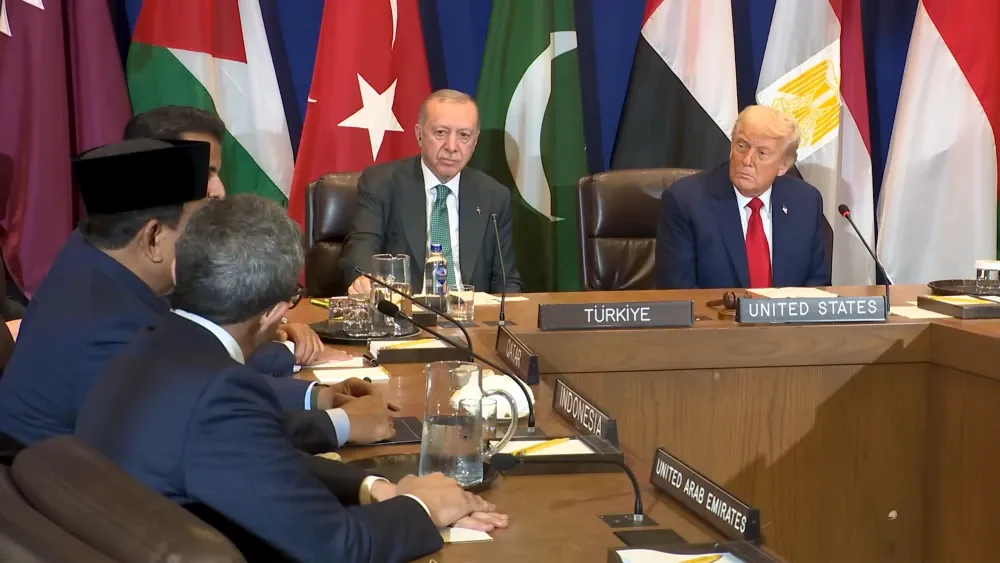 By: Abdullah Bozkurt The U.S. Supreme Court's October 6, 2025, refusal to hear Halkbank's appeal exposes Turkish President Recep Tayyip Erdoğan to potential legal fallout over a money laundering scheme benefiting Iran. Why it matters: Halkbank's trial could implicate Erdoğan and his top officials in a multi-billion dollar sanctions-busting operation, threatening Turkey's global standing. The big picture: Accusations reveal a covert network where Turkish officials facilitated Iran's evasion of U.S. sanctions, using Halkbank to channel billions through deceptive transactions. What's next: Halkbank faces trial and potential fines in New York, with evidence possibly implicating Erdoğan further. The bottom line: Rumors have circulated in diplomatic circles that Turkey offered to pay a $100 million settlement to have the case dropped altogether. Whether the U.S. judiciary will tolerate any such political bargaining remains unclear. To read the full article, click here. | | Turkey's Release of ISIS Detainees Fuels European Terrorism Threat 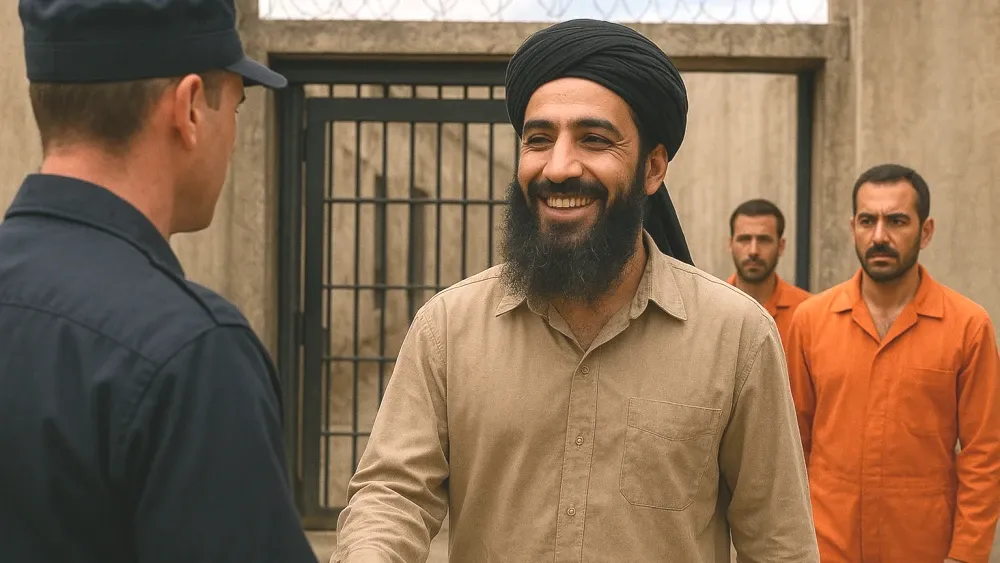 By: Abdullah Bozkurt Turkey's practice of releasing ISIS detainees, allowing them to choose destinations, poses a significant national security threat to Europe. This was evident in a recent Dutch case where a Tajik man was sentenced for long-term ISIS membership. Why it matters: Turkey's revolving-door policy enables jihadists to re-enter Europe, undermining counterterrorism efforts. The big picture: Ankara's leniency has continental consequences, with many European prosecutions tracing ISIS origins to Turkey. What's next: European counterterrorism officials must address Turkey's role in enabling jihadist activities across the continent. The bottom line: Turkey's policies continue to reverberate across Europe, necessitating a unified response to curtail the threat and ensure regional safety. To read the full article, click here. | | Germany Struggles with the Prosecution of Never-Ending Turkish Espionage Cases  By: Abdullah Bozkurt The investigation into Turkish intelligence operatives like Mehmet K. in Germany reveals a pattern of aggressive espionage by Turkey's MIT. Why it matters: Germany's legal framework treats espionage as a minor offense, resulting in lenient outcomes, such as the €5,000 fine for Mehmet K. The big picture: Under Hakan Fidan's leadership, Turkey expanded its espionage efforts abroad, targeting opponents of President Erdoğan's regime. What's next: Germany must strengthen its legal response to espionage to deter foreign intelligence operations effectively. The bottom line: Until these legal gaps are addressed, Turkish intelligence will likely persist in its operations, undermining Germany's security and judicial integrity. To read the full article, click here. | | | | | We appreciate your continued support for the Middle East Forum as we deliver critical analyses on Middle Eastern affairs. If you found this edition of the Dispatch useful, please share it with others and be sure to let us know your thoughts on our coverage via the comments feature. Sincerely, Winfield Myers
Managing Editor, Middle East Forum
Director, Campus Watch | | | | Was this edition useful?  

Your email will be recorded and shared with the sender |        MEF, an activist think tank, deals with the Middle East, Islamism, U.S. foreign policy, and related topics, urging bold measures to protect Americans and their allies. Pursuing its goals via intellectual and operational means, the Forum recurrently has policy ideas adopted by the U.S. government.
Copyright © 2024 Middle East Forum, All rights reserved.
Our mailing address is:
Middle East Forum
1650 Market Street, Suite 3600
Philadelphia, PA 19103 | | | | | Powered by 
| | This email was sent by Middle East Forum via Axios HQ | | | |


0 коммент.:
Отправить комментарий