| |  | | | Profs and the 'Resistance'; Islamic Republic Apologist Leaves Princeton; Iran's U.K. Outposts By Winfield Myers ● Aug 18, 2025 Smart Brevity® count: 7.5 mins...1949 words In Part 1 of a two-part series, A.J. Caschetta details how American academics escalated their support for the Palestinian "resistance" from rhetorical to material via the "Palestine & Praxis" model. After years of reporting on efforts to convince Princeton to part ways with former Iranian ambassador and permanent regime apologist Seyed Hossein Mousavian, Benjamin Weinthal and Isabel Vincent filed an exclusive story on Mousavian's recent departure. Questions linger, but we say good riddance. In two articles, Potkin Azarmehr exposes the growing list of Iranian outposts in the United Kingdom. Benjamin Weinthal reports that Germany refuses to protect Iranian dissidents from regime thugs, while Mardo Soghom details the Iranian opposition's plans for a post-Islamic Republic Iran should a popular uprising succeed in ousting the theocracy from power. | | Radical U – Part 1: How Professors Became Architects of the Academic Palestinian Resistance 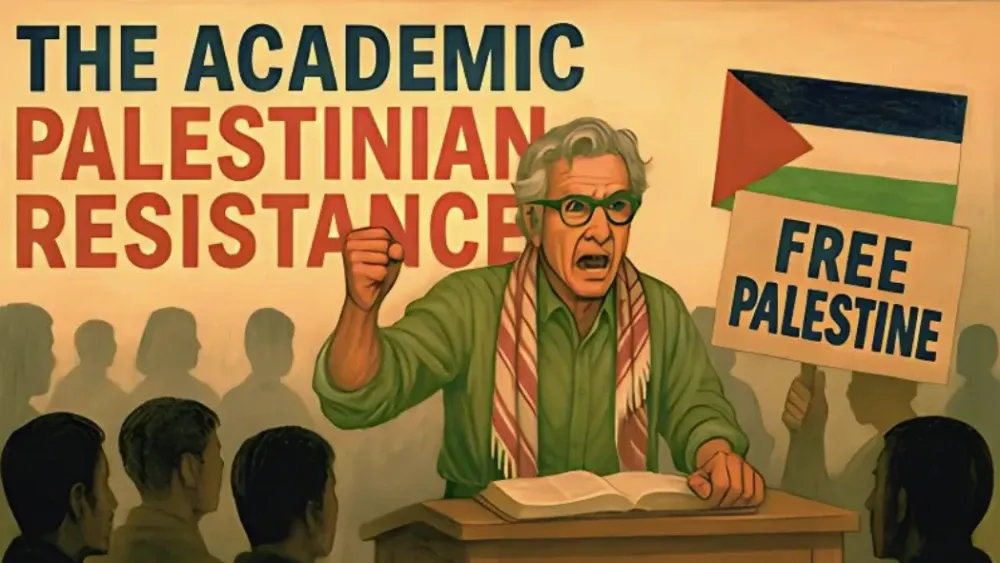 By: A.J. Caschetta In recent years, American academics have crossed a line, transforming from passive supporters to active promoters of the Palestinian "resistance." Why it matters: The transformation of academia into a mouthpiece for anti-Israel propaganda is alarming. -
Professors are adopting Hamas slogans, effectively serving as agents of radical ideologies. -
Equating airline hijacking and taking hostages with a legitimate career—"resistance work"—is the kind of normalizing violence that "Scholars for Palestinian Freedom" engage in as they "center decolonization." Driving the news: The 2021 Hamas War was a turning point, as academics openly embraced and disseminated pro-Hamas rhetoric. What's next: Scholars are not just theorizing—they're demanding direct action against Israel, including boycotts and sanctions. The backdrop: Once centers of free thought, universities are now breeding grounds for antisemitic vitriol. To read the full article, click here. | | Controversial Princeton Prof with Strong Iran Ties Steps Down After Campaign to Remove Him 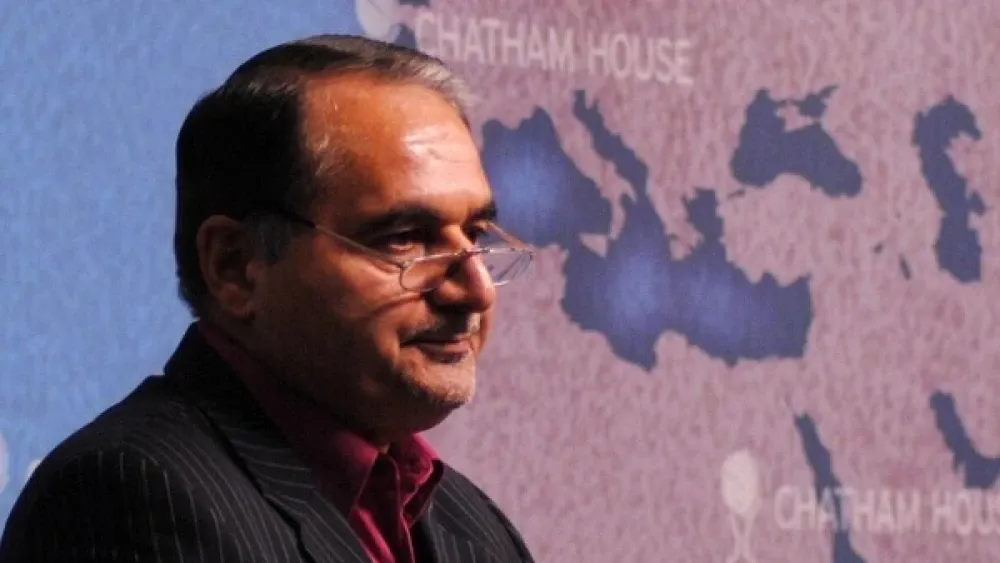 By: Benjamin Weinthal and Isabel Vincent Seyed Hossein Mousavian, a Princeton professor with strong ties to the Iranian regime, has finally stepped down quietly, following a fervent campaign by dissidents for his removal. Why it matters: Mousavian's tenure at Princeton has been marred by his involvement in Iran's nuclear and chemical programs and his controversial past as Iran's ambassador to Germany. -
During his ambassadorship, dissidents were murdered in Berlin, a period marked by allegations of Iran's leadership orchestrating these assassinations. -
During a 1997 trial in Germany, a German newspaper reported that former Iranian spy Abolghasem Mesbahi said under oath, "Mousavian was involved in most of the crimes that took place in Europe." Driving the news: Princeton faces potential loss of over $200 million in grants from the Trump administration for not addressing antisemitism, intensifying the call for Mousavian's removal. -
Iranian opposition activists and Senator Ted Cruz have been vocal in their demands, highlighting the risks associated with Mousavian's presence on campus. -
Mousavian is also controversial for being heavily involved in Iran's chemical and nuclear programs beginning in 2004, long before the country was known to have been building up its nuclear arsenal. What's next: Mousavian's retirement raises questions about his ongoing influence and demonstrates Princeton's disregard for transparency and ethical leadership. The backdrop: Mousavian's past roles and statements, including supporting controversial fatwas, should have been disqualifiers for an academic position at a prestigious institution. To read the full article, click here. | | How Many More Outposts Are We Going to Let Iran Establish in the U.K.? 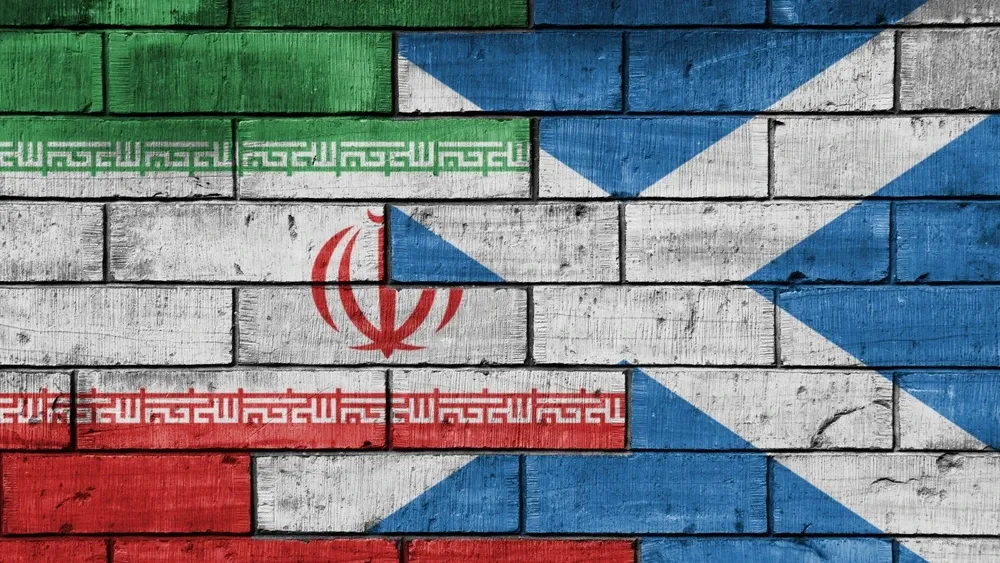 By: Potkin Azarmehr Every few months, the U.K. discovers yet another Iranian-linked community center, charity, or cultural hub promoting Islamism, with The Ark in Govanhill, Glasgow being the latest. Why it matters: These centers serve as conduits for Tehran's agenda, undermining British values and posing threats to national security. -
They are part of Tehran's soft-power strategy. They are instruments of influence. They are outposts of intimidation for Iranian dissidents living here. -
The Ark, twice a polling station for Iran, exemplifies how such venues mask their true purpose behind community service claims. It also houses the Muslim Council of Scotland. Driving the news: Despite the National Security Act and Foreign Influence Registration Scheme, U.K. authorities remain silent as these organizations operate unchecked. What's next: The era of polite neglect must end; the U.K. must employ its existing legal tools to counter this soft power strategy effectively. -
These so-called "community hubs" present themselves as charities, as cultural centers, as harmless places of worship. But the moment they serve as polling stations for a brutal theocracy—or memorial halls for its hardline leaders—they are no longer harmless. The backdrop: The bigger question is how many more of these quietly bob in our neighborhoods—unreported, unmonitored, unnoticed until the next headline exposes them? To read the full article, click here. | | MEF Action Alert: Stop Turkey's F-35 Purchase  Turkey is pushing to rejoin the F-35 program despite owning Russia's S-400 missile system, which threatens U.S. aircraft and risks exposing sensitive F-35 technology to Russian intelligence. In response, member of Congress are circulating a Dear Colleague letter that calls on Secretary of State Marco Rubio to deny an F-35 arms deal with Turkey under the 2017 Countering America's Adversaries Through Sanctions Act (CAATSA), which formally removed Turkey from the F-35 program in 2019. This is a critical moment. Allowing Turkey back without removing its S-400s endangers U.S. national security, undermines our defense industry, and compromises Israel's Qualitative Military Edge. We must not reward Turkey, which continues to host Hamas leadership, attack U.S. allies in Syria, and threaten the territorial integrity of Greece and Armenia. The F-35 is vital for U.S. aerial superiority and global defense partnerships. Act Now! Urge your House Representative to sign the letter to Secretary Rubio demanding the White House reject Turkey's F-35 bid and uphold CAATSA sanctions. Time is short—Turkey's actions threaten U.S. interests and must not be rewarded. Sign up now to protect our military secrets and defense leadership! Click here to sign up for our letter-writing campaign to demand Congress reject Turkey's F-35 bid and uphold CAATSA sanctions. | | Islamist Summer Camp Canceled; Another Iran-Promoting Institution Discovered in U.K. 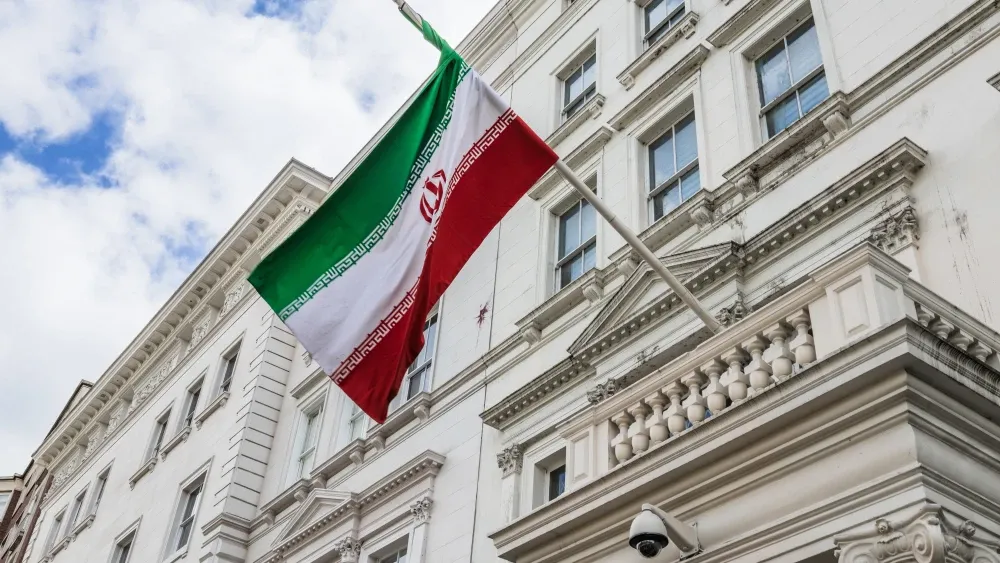 By: Potkin Azarmehr In June, Focus on Western Islamism (FWI) revealed Camp Wilayah as an Islamist camp in the U.K. This news resulted in the cancellation of this year's season. FWI has learned of yet another organization whose leaders promote the Iranian regime, operating openly in the U.K.: the Ikhlas Cultural Center, a direct Iranian operation. Why it matters: The center's director, Ouruba Akhdar, with direct ties to the Iranian regime, uses this facade to further Tehran's hostile objectives. Driving the news: Akhdar's public admiration for Soleimani and Khomeini, figures synonymous with terror, confirms her alignment with Iran's radical agenda. -
Akhdar's brother, a Lebanese sheikh by the name of Nasser Akhdhar (Abu Mustafa), serves as Deputy Secretary General of the Islamic Radio and Television Union (IRTVU), an Iranian-backed and sponsored propaganda entity which operates in Lebanon, Iraq, Yemen and Afghanistan. What's next: Why is a supporter of the Iranian regime who has lamented terrorist leaders—such as Soleimani and Ayatollah Khomeini, the founder of a regime that promotes hostility toward the U.K.—serving as the director of a charitable school outside of London? The backdrop: The Ikhlas Cultural Center's operations are a clear vehicle for Iranian influence, undermining British sovereignty. To read the full article, click here. | | Germany Fails to Protect Iranian Dissidents from Regime Violence  By: Benjamin Weinthal In late July, German-Iranians stood firm against pro-Iran activists demanding the reopening of the Islamic Center of Hamburg, a known hub for Tehran's influence operations. Why it matters: Tehran uses these centers as fronts for spreading radical Shiite Islamism and targeting dissidents on German soil. Driving the news: Former Interior Minister Nancy Faeser closed controversial centers for promoting extremist ideology, yet Iranian influence persists through other means. What's next: Germany's reluctance to designate the IRGC as a terrorist organization highlights a troubling prioritization of economic ties over security concerns. The backdrop: The execution in Iran of German citizen Jamshid Sharmahd under dubious charges and ongoing Iranian propaganda activities emphasize the high stakes for Germany. To read the full article, click here. | | Iran's Opposition Debates New Plan for Post-Islamic Republic Era 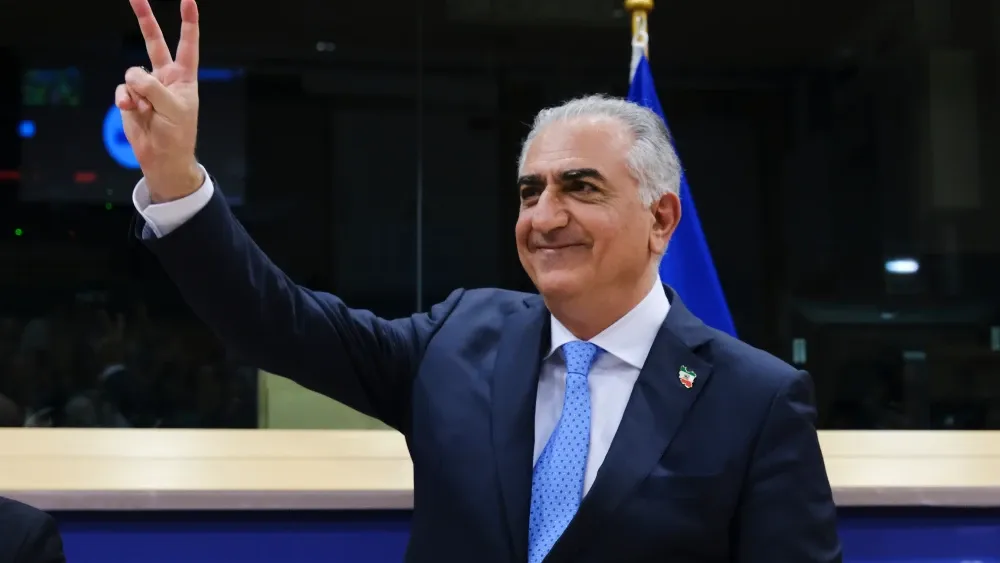 By: Mardo Soghom If a popular uprising ousts the Islamic Republic, what will happen to Iran? The National Union for Democracy in Iran (NUFDI) has issued a roadmap for the critical transition period. Why it matters: This plan is the most detailed proposal addressing Iran's future governance, moving beyond slogans to tackle the realities of post-Islamic Republic challenges. Driving the news: The proposed plan outlines a three-part transitional system involving legislative, executive, and judiciary oversight. What's next: Critics, including monarchists and anti-monarchists, have raised concerns about the temporary use of Islamic Republic laws and Pahlavi's prominent role. The backdrop: Iran's transitional government faces monumental tasks, including economic recovery and social unification amid decades of ideological hostility. -
With the country facing economic disarray, social fragmentation, and the consequences of decades of ideological hostility toward the West and Israel, any future national government inherits a task of monumental scale. To read the full article, click here. | | | | | Thank you for relying on the Middle East Forum for up-to-date analyses of the region. If you enjoyed this issue of the MEF Dispatch, please forward it to a friend. We invite you to use the comments feature to let us know your thoughts on the Dispatch and the issues we cover. Sincerely, Winfield Myers
Managing Editor, Middle East Forum
Director, Campus Watch | | | | Was this edition useful?  

Your email will be recorded and shared with the sender |        MEF, an activist think tank, deals with the Middle East, Islamism, U.S. foreign policy, and related topics, urging bold measures to protect Americans and their allies. Pursuing its goals via intellectual and operational means, the Forum recurrently has policy ideas adopted by the U.S. government.
Copyright © 2024 Middle East Forum, All rights reserved.
Our mailing address is:
Middle East Forum
1650 Market Street, Suite 3600
Philadelphia, PA 19103 | | | | | Powered by 
| | This email was sent by Middle East Forum via Axios HQ | | | |

0 коммент.:
Отправить комментарий