| |  | | | DHS Acts on MEF Research; Israel as 'Leper State'; Slaughter in Syria By Winfield Myers ● Aug 22, 2025 Smart Brevity® count: 8 mins...2141 words The U.S. Department of Homeland Security has terminated $8 million in federal grants to organizations with documented ties to Hamas, Hezbollah, and other terrorist groups following a Middle East Forum (MEF) investigation. DHS officials told Fox News that they "take the results of the MEF report very seriously and are thankful for the work of conservative watchdog groups." The action follows the publication of MEF Action director Benjamin Baird's report, "Homeland Insecurity: Unraveling DHS Funding of Terror-Linked and Extremist Groups." Daniel Pipes analyzes how Israel became a "leper state" (as former Israeli PM Naftali Bennett rightly called it) and concludes with a "heavy heart" that "Israel must defer Hamas' eradication to work first on its rehabilitation." But Hamas has not won: "Israel Victory is delayed, not abandoned. First redemption, then victory." Jonathan Spyer assesses Syria's descent into sectarian slaughter under the Sunni Islamist government of interim President Ahmed al-Sharaa. In the second of two translations with commentary featured below, Aymenn Jawad Al-Tamimi relates the lamentations of a Twelver Shia in Syria, who writes that the new Syrian government, the Lebanese, and the Iraqi Shia have "stood against them." | | Terror-Linked Groups Denied Millions in DHS Funding Thanks to MEF Report  The U.S. Department of Homeland Security (DHS) has terminated $8 million in federal grants to organizations with documented ties to terrorist groups, following a Middle East Forum (MEF) investigation. Why it matters: The sweeping action—canceling 49 projects with alleged affiliations to terrorist activities—came weeks after MEF's July 21 study by MEF Action director Benjamin Baird, "Homeland Insecurity: Unraveling DHS Funding of Terror-Linked and Extremist Groups," exposed more than $25 million in grants to radical nonprofits between 2013 and 2024. -
DHS officials confirmed to Fox News that they "take the results of the MEF report very seriously and are thankful for the work of conservative watchdog groups." -
Among those exposed were the Dar al-Hijrah mosque, linked to 9/11 hijackers, and the Islamic Circle of North America, tied to Jamaat-e-Islami. Impact on MEF initiatives: MEF's findings have strengthened its call for transparency and accountability in federal funding. What's next: MEF continues to advocate for permanent vetting reforms to ensure federal grants do not aid extremist-linked organizations, thus bolstering national security. To read the press release, click here; to read the full report, click here. | | How Israel Became a 'Leper State'—And How It Can Redeem Itself 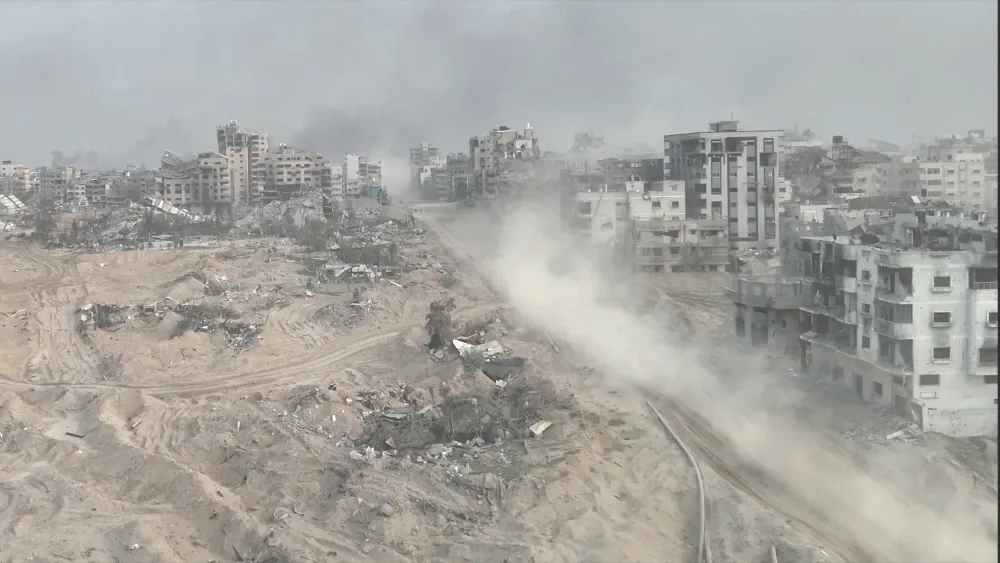 By: Daniel Pipes Israel, once praised for its campaign against Iran, now faces global criticism, as former PM Naftali Bennett labels it a "leper state." Why it matters: Israel's global perception has rapidly shifted due to neglecting key facts, impacting its diplomatic and security strategies. -
Disproportionate attention: Israel's actions, unlike those of similarly sized nations, receive intense global scrutiny, influencing public opinion. -
Palestinian focus: Global opinion focuses very narrowly and specifically on the status of the roughly three and a half million residents of the West Bank, Gaza, and eastern Jerusalem. -
Thus did masterful marketing transform the perceived victimization of a small and weak population into humanity's premier human rights issue, enjoying far more attention than much larger and more harrowing conflicts. Israel's strategic missteps: Recent events reveal Israel's failure to capitalize on favorable global opinion, missing a chance to dismantle Hamas effectively. -
Israel had two flatly contradictory war goals: destroying Hamas and winning the hostages' release through negotiations with that same Hamas. -
Global backlash: Negative media coverage has led to strained international relations, with allies suspending support. What's next: If Israel's post-Oct. 7 campaign in Gaza began with the goal of eradicating Hamas, it has become a mission to salvage its own reputation. -
Translated into policy, this means Israel negotiates to secure the release of all hostages; it sponsors a new Gazan-staffed police force and administration that defies Hamas to collect taxes, provide services, and enforce the law; and Israel prepares for Hamas' next act of aggression, which will newly justify its crushing the jihadists. -
But Hamas has not won, only survived, threatened with future destruction. Israel Victory is delayed, not abandoned. First redemption, then victory. To read the full article, click here. | | An Egyptian Jihadist Cleric's Message to Hamas  By: Aymenn Jawad Al-Tamimi MEF writing fellow Aymenn Jawad Al-Tamimi comments on and translates a message from Yahya al-Farghali, an Egyptian jihadist cleric who used to be a prominent figure in Hay'at Tahrir al-Sham, but subsequently left the group and is still based in northwest Syria. Why it matters: Al-Farghali, arguing that Hamas has no "victory" to speak of, calls for it to abandon non-Islamic concepts and embrace jihad, highlighting a significant ideological rift. -
Al-Farghali writes that "you [Hamas] have tried wearing the clothing of identification with international concepts of democracy and human rights etc., which do not concord with our religion but rather contradict it," and urges a return to pure jihadist values. Strategic insight: Al-Farghali's message emphasizes the need for Hamas to realign its objectives, focusing on jihad rather than nationalism. -
He urges Hamas to fight "as a holy jihad to defeat disbelief because it is disbelief, not because it is colonialism, settlement, or a matter of right to self-determination etc." -
He suggests that only by prioritizing God's laws can Hamas achieve victory, drawing parallels with the Taliban's conquest. What's next: Farghali's essay is a useful reminder of the gap that exists between Hamas and jihadists who uphold ideological purity. To read the full commentary and translation, click here. | | ICYMI – 'Homeland Insecurity: How the DHS Helped Finance Islamist Terror' with Benjamin Baird For years, the Department of Homeland Security has funneled millions in taxpayer funds to organizations tied to foreign terrorists and extremist ideologies, undermining America's safety from within. In "Homeland Insecurity," Benjamin Baird and Anna Stanley expose this chilling betrayal, detailing how over $25 million has flowed to groups linked to Hamas, Hezbollah, and the Muslim Brotherhood. How did this funding scandal persist unchecked? What must be done to stop it? Benjamin Baird is director of MEF Action, the Forum's wing for activism and advocacy. His writing can be found at National Review, New York Post, Jerusalem Post, and other prominent media outlets. Mr. Baird is a U.S. Army infantry veteran with a B.A. from American Military University. To watch the full podcast episode, click here. To read the full report, click here. | | Edwin Black: Israel Strikes Iran: Operation Rising Lion  By: Marilyn Stern Edwin Black, author of Israel Strikes Iran: Operation Rising Lion: The 20-Year Backstory, shared insights on a recent Middle East Forum podcast about Israel's success in neutralizing Iran's nuclear threat. Why it matters: The conceptzia, "the concept," Israel's old worldview that miscalculated the enemy's murderous intent, "died on October 7, 2023." -
The new conceptzia was born October 8, 2023, and "it was held that it was better to be alive than to be loved, and that the manners and mechanisms of midtown Manhattan would simply not work in a volatile Middle East, which had been slitting throats for centuries." -
The operation, in collaboration with the U.S., dismantled Iran's nuclear capabilities, significantly delaying its nuclear ambitions despite Iran retaining some enriched uranium. Strategic insights: Over 20 years of "meticulous planning and practice and practice" in Israel culminated in Operation Rising Lion. -
The hundreds of Israeli air assaults and drone attacks destroyed the Islamic regime's air defenses. Iran's "axis of resistance"—Hezbollah, the Houthis, and Hamas—"fell completely silent during the conflict." -
Iran faced internal chaos, including an internet blackout and a fatwa against President Trump, reflecting the regime's instability. What's next: Israel and the U.S. vow continued pressure on Iran, with potential future interventions if nuclear threats resurface. To read the full summary and watch the podcast, click here. | | Event: Dexter Van Zile in Stoughton, MA – "Defeating the Red-Green Alliance" – August 27, 2025  Where: Ahavath Torah Congregation, Stoughton, MA
When: Wednesday, August 27, 2025 | 7:00p.m. to 9:00p.m. The alliance between far-left radicals and Islamist movements has become a driving force behind antisemitism, anti-Westernism, and social unrest in Europe and North America. Drawing on years of investigative research, Dexter Van Zile exposes how this "Red-Green Alliance" exploits civil rights rhetoric, co-opts academic institutions, and corrodes public discourse—and outlines concrete steps to push back. Dexter Van Zile is managing editor of Focus on Western Islamism and the Violin Family Research Fellow at the Middle East Forum. He has reported on anti-Israel protests, radical mosque networks in the U.K., and the employment of extremists in public offices. His work has appeared in the Jerusalem Post, the Boston Globe, Middle East Quarterly, and The Algemeiner, among other outlets. To register, click here. | | Sharaa's Islamist Army Fuels Syria's Descent into Sectarian Slaughter 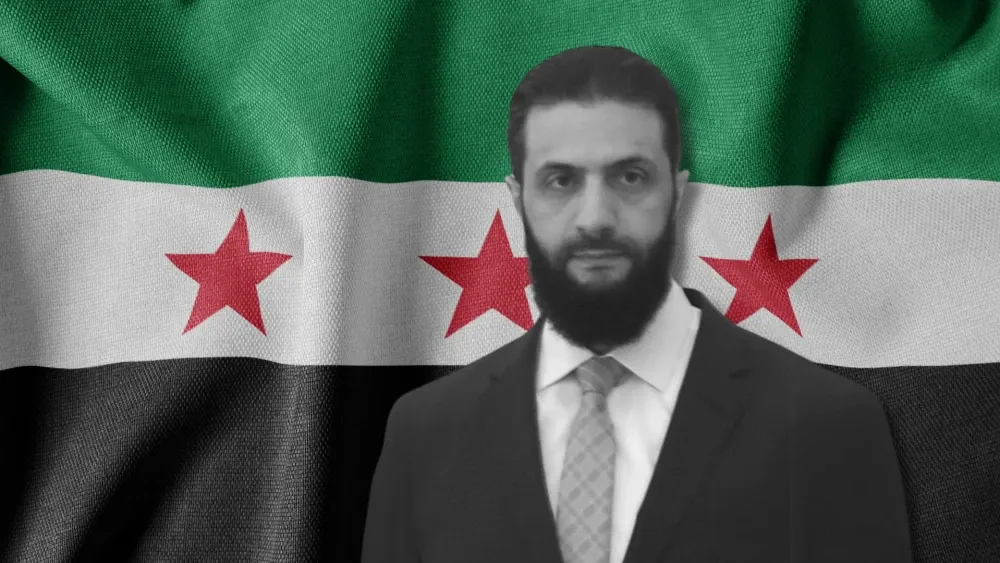 By: Jonathan Spyer Footage has emerged showing the killing of a paramedic in Sweida, Syria, by government-affiliated gunmen, amidst violence between Bedouin tribesmen and Druze Syrians. Why it matters: These incidents highlight ongoing sectarian violence under Sunni Islamist rule, with Hay'at Tahrir al-Sham (HTS) and affiliated forces targeting minority communities. Pattern of violence: The incident marks the third large-scale sectarian conflict since HTS took control, with violence consistently directed against minority groups. -
We can confidently lay to rest the assertion that interim President Ahmed al-Sharaa and Hay'at Tahrir al-Sham (HTS) represented something entirely new in the annals of Sunni political Islam. -
Subsequent evidence suggests that the differences between the HTS regime in Damascus and earlier experiments in Salafi-jihadi governance may be more a matter of tactics than strategy. What's next: If the emergent Sunni Islamist, jihadi army and regime in Damascus continues its practice of rebranding sectarian killers as "division commanders," and engaging in periodic acts of slaughter against non-Muslim or non-Arab populations, it is very likely that a counter-arrangement involving Kurds, Druze, and Alawi will eventually emerge. To read the full article, click here. | | The Twelver Shia in Syria 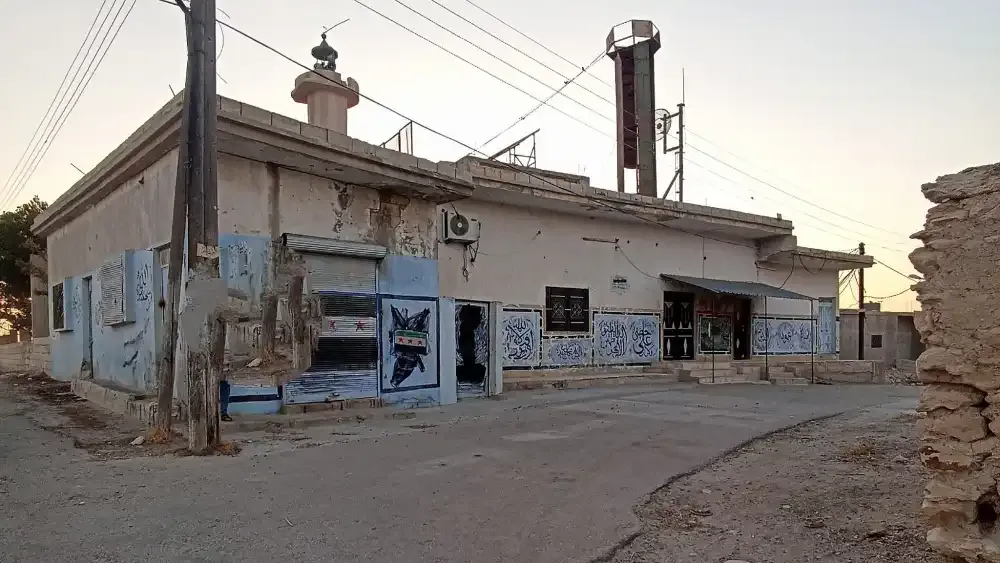 By: Aymenn Jawad Al-Tamimi The Twelver Shia in Syria find themselves in a precarious position since the fall of the Assad regime. Associated heavily with support for the Assad regime as well as the intervention of Iran and Hezbollah on its behalf, Twelver Shia communities have disproportionate numbers of 'martyrs' who died fighting within the ranks of the regime's army and the 'forces of the friends' that were affiliated with Iran and Hezbollah. MEF writing fellow Aymenn Jawad Al-Tamimi translates the commentary of a person from the Twelver Shia village of Tel Aghar in Homs province, who gives an overall view of the Twelver Shia situation in Syria. Why it matters: The writer complains bitterly of how Bashar al-Assad and his allies used the Twelver Shia in a pointless war and essentially abandoned them, while also noting how other Twelver Shia in Lebanon and Iraq have failed to help their brethren in Syria, with the displaced Syrian Twelver Shia in Lebanon facing mistreatment at the hands of the Lebanese. Community's plight: The commenter writes: "Then the day came when the criminal [Bashar al-Assad] fell and his supporters fled, leaving the Shia in Syria to their fate." -
More: "Then the ghoul [interim Syrian President Ahmed al-Sharaa] came out and said the situation is good, no need for worry, only to come back and say: 'Take care of yourselves.'" -
And: "The Shia of Iraq have also stood against us and have not facilitated travel to Iraq for us, and they have not supported us with one piastre [unit of currency] on the inside." What's next: The call for support emphasizes the urgency of addressing these injustices and securing a safer future for the Twelver Shia. To read the full commentary and translation, click here. | | | | | Thank you for relying on the Middle East Forum for up-to-date analyses of the region. If you enjoyed this issue of the MEF Dispatch, please forward it to a friend. We invite you to use the comments feature to let us know your thoughts on the Dispatch and the issues we cover. Sincerely, Winfield Myers
Managing Editor, Middle East Forum
Director, Campus Watch | | | | Was this edition useful?  

Your email will be recorded and shared with the sender |        MEF, an activist think tank, deals with the Middle East, Islamism, U.S. foreign policy, and related topics, urging bold measures to protect Americans and their allies. Pursuing its goals via intellectual and operational means, the Forum recurrently has policy ideas adopted by the U.S. government.
Copyright © 2024 Middle East Forum, All rights reserved.
Our mailing address is:
Middle East Forum
1650 Market Street, Suite 3600
Philadelphia, PA 19103 | | | | | Powered by 
| | This email was sent by Middle East Forum via Axios HQ | | | |

0 коммент.:
Отправить комментарий