| |  | | | Using RICO to Recoup the Costs of Anti-Israel Protests; Ongoing Turkish Aggression; and Calling Out Algeria By Winfield Myers ● Apr 14, 2025 Smart Brevity® count: 6.5 mins...1757 words Today we feature a new MEF Report by Gregg Roman on using civil RICO as a remedy to recover some of the $1.51 billion in economic damages caused by anti-Israel protests across the U.S. Of that total, $1.19 billion is from lost revenue, particularly from Jewish-owned and/or Israel-linked businesses. We provide an assessment and a legal roadmap for businesses seeking recovery through civil RICO claims. Turkey's Islamist President Erdoğan's neo-Ottoman plans put him in conflict with Israel, the U.S., the Kurds, Cyprus, Greece, and others throughout the region and beyond. Most immediately, as Jonathan Spyer reports, his aggression sets up the potential for a clash with Israel in Syria, as Erdoğan seeks to create an Islamist-allied state on the ruins of the defeated Assad regime. Erdoğan is supported by myriad outfits and schemes, including his corrupt, brutal spy organization MIT. Michael Rubin argues it's time to make these thugs an offer they can't refuse. Additional analyses follow, first by dissident Turkish journalist Abdullah Bozkurt, and then by Cypriot reporter Nicoletta Kouroushi, each detailing Turkey's outrages—and weaknesses. We end with Moroccan analyst Amine Ayoub's warning that Algeria's reputation as a regional stabilizer is false and that it must be confronted over its double game. | | MEF Report: Economic Costs of Anti-Israel Protests and the Civil RICO Option 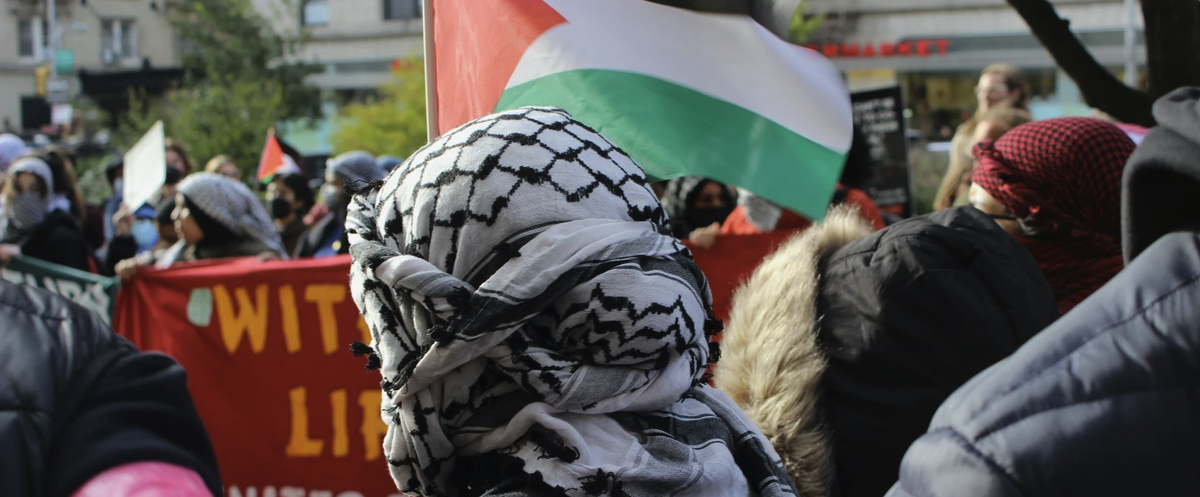 By: Gregg Roman Since October 7, 2023, anti-Israel protests across the U.S. have generated significant economic disruption, totaling $1.51 billion in costs, according to a Middle East Forum analysis. The largest impact stems from $1.19 billion in lost business revenue, particularly affecting Jewish-owned businesses and those linked to Israel, due to prolonged disruptions, including boycotts and blockades. Additional costs include $97.3 million in law enforcement expenses, $178.5 million in lost wages, and $33.1 million in property damage, with smaller contributions from security upgrades, insurance premium hikes, and injury-related expenses. For affected businesses, civil RICO (the Racketeer Influenced and Corrupt Organizations Act) offers a potential legal remedy to recover losses, bolstered by the 2025 Supreme Court ruling in Medical Marijuana, Inc. v. Horn, which broadens RICO's applicability to economic damages. Despite high evidentiary requirements, successful RICO claims could yield treble damages, targeting organizations coordinating disruptive protests. As demonstrations persist, businesses are urged to document incidents thoroughly and explore legal options, while policymakers balance free speech protections with support for affected communities. To read the full report, click here. | | ICYMI: "Islamism in Canada" with Raheel Raza  Islamism today casts a troubling and widening shadow over Canada, sowing division and threatening national cohesion. From university campuses to clandestine gatherings, both homegrown and global Islamist currents are gaining traction. At the University of Quebec in Montreal, a pro-Palestinian group, Solidarité Palestine à l'UQAM, recently screened Gaza Ghetto Uprising, a film glorifying the October 7, 2023, Hamas attacks as "urban guerrilla tactics." Simon Fraser University hosted Othman Hamdan, a figure previously jailed for spreading Islamic State propaganda. Hizb ut-Tahrir, an international Islamist group banned in several countries, planned a conference in Canada to strategize a global caliphate, canceling it only under public pressure. These ideologies are seeping into public life, fueling antisemitism, radicalizing youth, and challenging Canada's stability. How is Islamism reshaping the nation? Can its spread be stopped? What must be done to restore unity and secure Canada's future? Raheel Raza is a journalist, author, public speaker, media consultant, activist, and interfaith discussion leader. She is the author of Their Jihad, Not My Jihad: A Muslim Canadian Woman Speaks Out. She is an honorary associate of the National Secular Society. Raza graduated from Karachi University with degrees in psychology and English.
To watch the full podcast episode, click here. | | Collision Course: Are Israel and Turkey Headed for Confrontation? 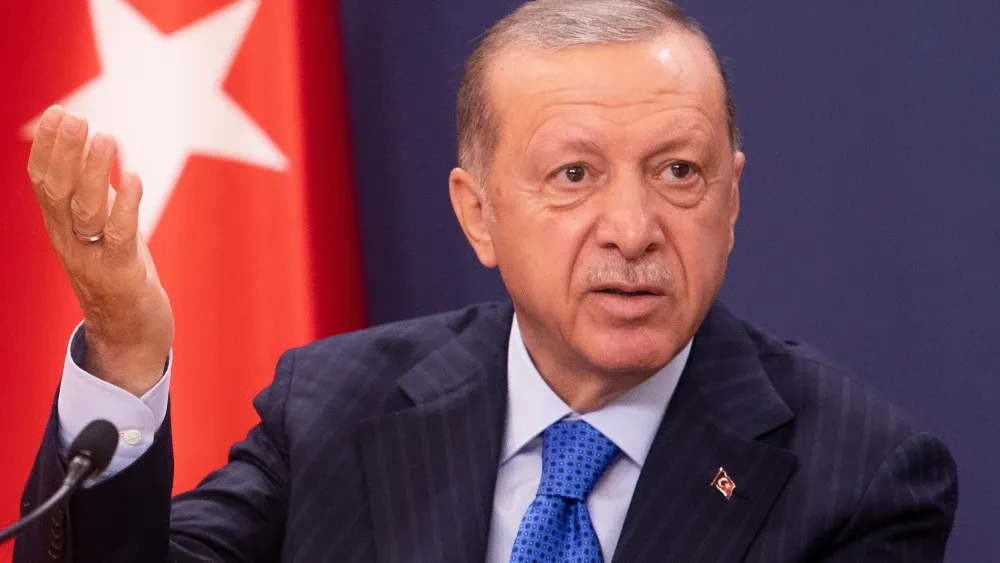 By: Jonathan Spyer Under President Erdoğan, Turkey's aggressive shift towards an Islamist state has changed the dynamics throughout the Middle East. Israel's recent strikes in Syria were intended to frustrate Turkish efforts to install air defenses and radar systems at the targeted sites. The Israeli attack forms part of a larger, looming confrontation between Ankara and Jerusalem. Why it matters: Turkey's interventions abroad are destabilizing regional alliances and escalating conflicts. The backdrop: With military bases across the Middle East and open support for Hamas, Turkey is positioning itself as the dominant Islamist power. -
Turkey has embarked on a path that combines alliance with movements of political Islam with a revanchist, neo-Ottoman outlook, in which Ankara seeks to assert influence unilaterally and then dominate points across a broad swathe of territory stretching from the Gulf to Iraq and the Levant, across the Mediterranean and to Libya. The clash in Syria: The conflict between Israel and Turkey is intensifying on Syrian soil, with both nations vying for influence. -
The interests and strategies of the two countries in Syria appear diametrically opposed, with Turkish-Israeli relations already poisoned because of the emergence of Islamist, Hamas-supporting governance in Ankara, and with Turkey pursuing aggressive and expansionist policies across the region. Further deterioration appears likely. To read the full article, click here. | | It's Time to Make Turkish Intelligence an Offer They Can't Refuse 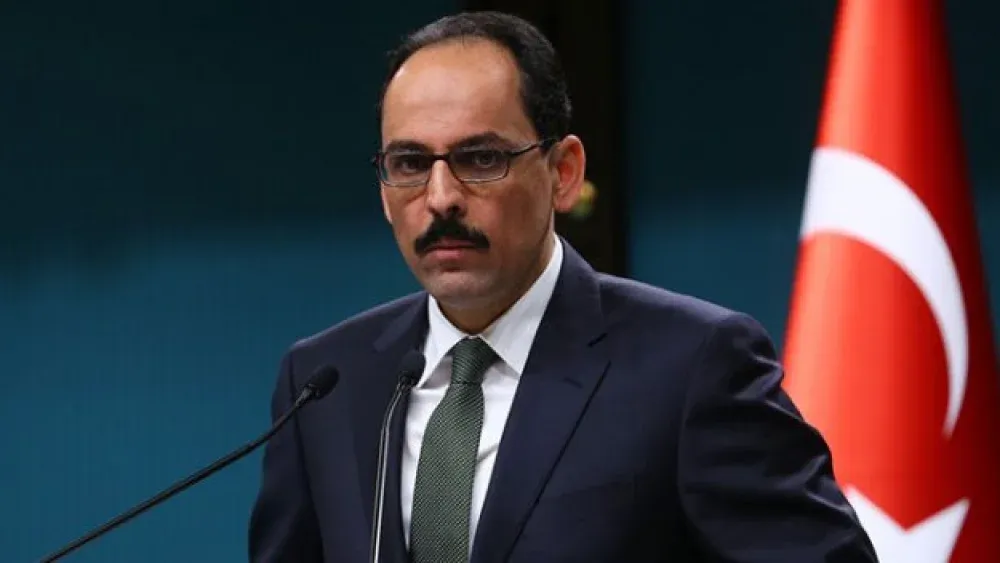 By: Michael Rubin Turkey's National Intelligence Organization, known by its Turkish initials MIT, has become a tool of aggression under President Erdoğan, targeting dissenters and supporting terror groups globally. Why it matters: The world must recognize MIT's role in fostering terrorism and be prepared for a post-Erdoğan reckoning; every dictatorship comes to an end. -
Erdoğan's regime has empowered MIT to support Islamist terrorists, from Al Qaeda affiliates in Syria to Boko Haram in Nigeria. -
MIT today allows Hamas to plot terror against Israelis and other Jews from Istanbul safe houses. The backdrop: Behind Erdoğan's pro-Islamist policies, MIT has facilitated terrorism under the guise of intelligence operations. Erdogan's fall and MIT's reckoning: As Erdoğan's regime faces inevitable decline, MIT must confront its history of terror support. -
Turkey's next leader and much of his cabinet are likely today in prison, as are tens of thousands of others who will demand justice as a precondition for reconciliation. -
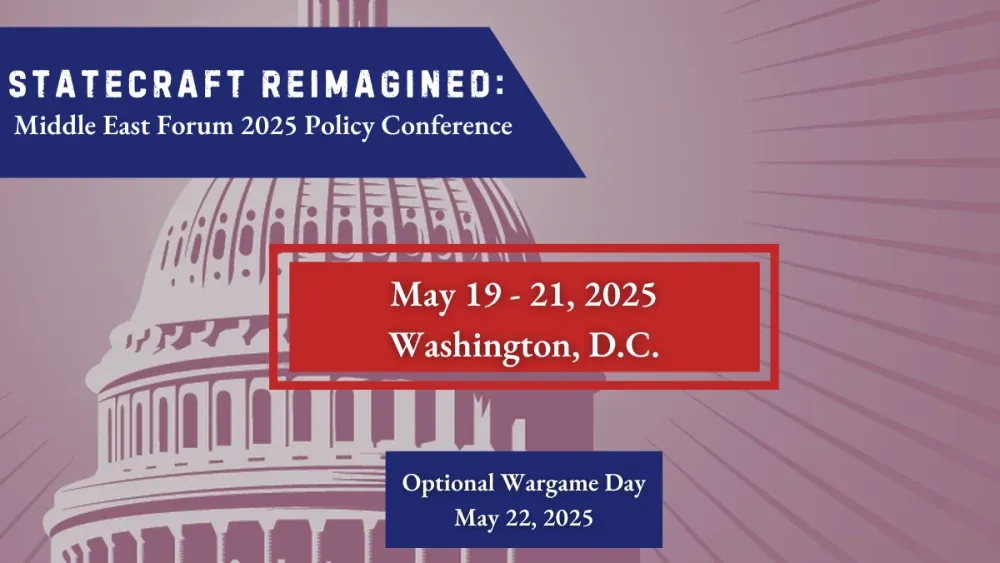
Advice to MIT: Defect now and help undo the damage of the Erdoğan years, or follow Erdoğan into prison or the grave. To read the full article, click here. | | New Speakers Announced! – Register Now for Our 2025 Policy Conference Register now for our 2025 policy conference, "Statecraft Reimagined" in Washington, D.C. – space is limited!
This conference will gather leading experts and policymakers to discuss the most urgent and complex issues shaping the future of the Middle East. This extraordinary event is poised to be the premier Middle East policy gathering in D.C. this year, offering unparalleled insights, networking, and strategic guidance. To register, click here. | | U.S. Crackdown on Hamas Virtual Currency Sheds Light on Turkey's Role in Terrorism Financing  By: Abdullah Bozkurt A newly filed FBI affidavit reveals Hamas's use of virtual currency to fund operations through Turkey's financial networks. Why it matters: This exposes a critical channel through which Hamas funnels resources, challenging global counterterrorism efforts. -
The funds, totaling over $1 million, were directed to Hamas's military wing, the al-Qassam Brigades, via cryptocurrency exchanges in Turkey. The backdrop: Turkey has long been a haven for Hamas operatives, providing them access to financial systems. Erdogan's role: Erdoğan branded Israel as the top national security threat for the first time in modern republican history and claimed that Hamas also protects Turkey's territorial integrity against alleged Israeli plans to annex parts of Turkey as part of a greater Israel conspiracy. To read the full article, click here. | | Can the Cyprus-Kazakhstan Strategic Alignment Bypass Turkey? 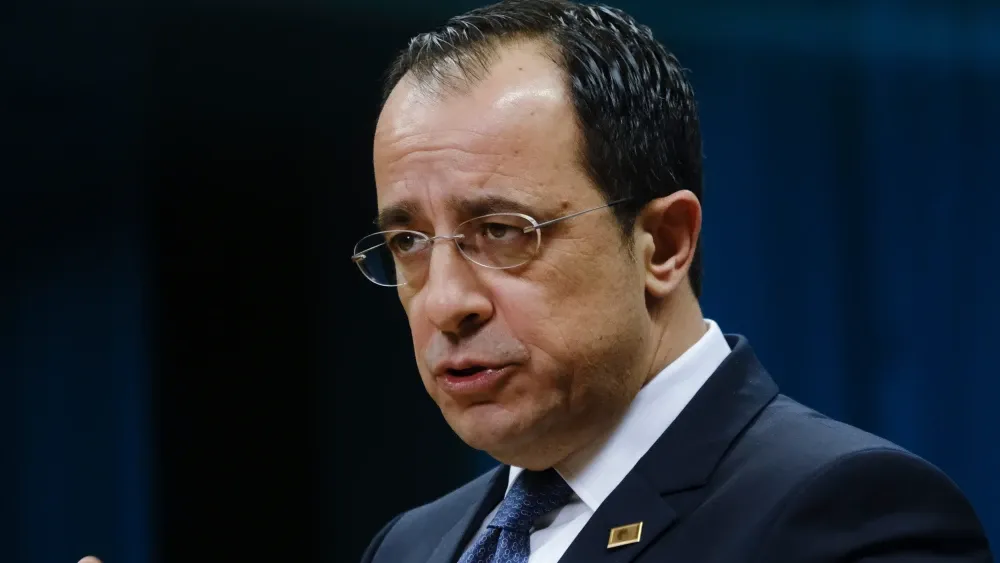 By: Nicoletta Kouroushi The Eastern Mediterranean is emerging as a crucial link between Europe and Central Asia, with Cyprus strengthening ties with Kazakhstan, despite tensions with Turkey, and playing a significant role in Europe's geopolitical security. Why it matters: This partnership signals a shift in regional alliances, challenging Turkey's influence over the Turkic states. The backdrop: Cyprus has become a top investment partner for Kazakhstan since 2005, facilitating economic exchanges worth billions. Kazakhstan's bold move: By advancing ties with Cyprus, Kazakhstan signals a willingness to assert its own foreign policy priorities, independent of Turkey's influence. To read the full article, click here. | | Algeria's Shadow War: How It Funds and Arms Africa's Deadliest Terror Groups  By: Amine Ayoub Algeria, often depicted as a stabilizing force, hides its covert operations behind diplomatic facades. While it presents itself as a regional stabilizer, its secret hand in fueling conflicts, arming militias, and financing extremist networks is becoming impossible to ignore. Why it matters: Algeria's support for militias and extremist networks is destabilizing the continent, while the world remains largely unaware. The backdrop: Algeria's military-industrial complex, closely tied to Russia and Iran, channels arms to proxy groups, influencing conflicts without direct engagement. Global response: Calls in Washington for scrutiny of Algeria's arms deals with Russia are growing, with potential sanctions under the Countering America's Adversaries Through Sanctions Act looming. -
Western nations, particularly the U.S. and France, have been hesitant to confront Algeria's role in fueling instability. -
Why? Because Algeria is a major gas supplier to Europe and in a world reeling from the Russia-Ukraine war, energy security trumps geopolitical accountability. The time has come to expose the truth, hold Algeria accountable, and break the cycle of destabilization before it spirals out of control. To read the full article, click here. | | Thank you for your support and for subscribing to the Dispatch. If you enjoyed it, please forward it to a friend, and please let us know what you thought of this issue. You'll hear from us again soon. Sincerely, Winfield Myers
Managing Editor, Middle East Forum
Director, Campus Watch | | | | Was this edition useful?  

Your email will be recorded and shared with the sender |        MEF, an activist think tank, deals with the Middle East, Islamism, U.S. foreign policy, and related topics, urging bold measures to protect Americans and their allies. Pursuing its goals via intellectual and operational means, the Forum recurrently has policy ideas adopted by the U.S. government.
Copyright © 2024 Middle East Forum, All rights reserved.
Our mailing address is:
Middle East Forum
1650 Market Street, Suite 3600
Philadelphia, PA 19103 | | | | | Powered by 
| | This email was sent by Middle East Forum via Axios HQ | | | |

0 коммент.:
Отправить комментарий