| |  | | | Destroying Hamas, Erdoğan's Overreach, Behind the Iran Talks, & an Academic Home for Israel-Haters By Ahnaf Kalam ● Apr 21, 2025 Smart Brevity® count: 5.5 mins...1483 words We begin with Jonathan Spyer's first-hand report from Israel's newly established Morag Corridor in the southern Gaza Strip, where the IDF works to root out Hamas fighters and destroy its infrastructure. Meanwhile, Turkey's aggressive maritime and economic expansion continues to cause trouble with its neighbors. As Michael Rubin notes, Turkey now follows China's overfishing strategy for both economic and imperial gain in the Aegean Sea. Turkey also happens to be a cesspool of corruption, as Abdullah Bozkurt shows in his latest analysis of President Erdoğan's efforts to turn the country into a vehicle for personal enrichment and regional hegemony. U.S.-Iran nuclear talks continue—facilitated, says a new report, by the Iranian regime's outreach to Trump's team two years ago during Joe Biden's term. A.J. Caschetta analyzes a large collection of Israel-haters who hang their hats at a pro-Islamist center at Rutgers University. British prisons, reports Anna Stanley, are endangering the lives of guards in order to avoid offending the prisoners they guard. And in Bangladesh, violent Islamists rush in to fill the vacuum created by the ousting of the former prime minister; they continue to wreak havoc across the country. | | ICYMI: "Islamism's Tightening Grip on Bangladesh" with Ahnaf Kalam 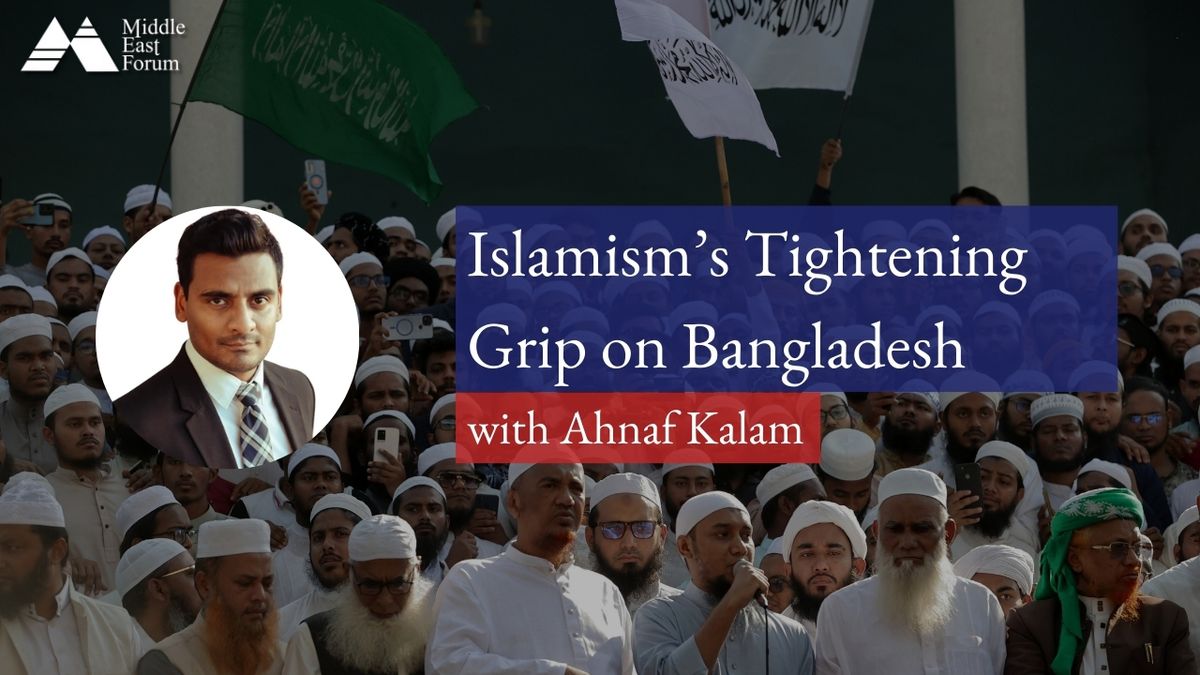 Bangladesh's political landscape is unraveling after the fall of Sheikh Hasina's regime in August 2024, with rising Islamism threatening the nation's secular fabric. Interim leader Muhammad Yunus, once celebrated as a global icon for microfinance, has faced criticism for enabling extremist parties like Jamaat-e-Islami and Hefazat-e-Islam, whose growing influence—marked by attacks on Hindus, Ahmadis, and secular traditions—has shattered initial optimism about his leadership. Yunus's decision to lift bans on these groups, alongside moves to erode secularism from the constitution, has fueled fears of Sharia-driven governance, while his foreign policy has tilted toward China and Pakistan. How did Bangladesh's democratic hopes spiral into extremist resurgence? Can Yunus curb the Islamist tide? What are the implications for Western interests in South Asia? Ahnaf Kalam is the digital media specialist and podcast producer at the Middle East Forum, where he has been a writer and researcher since 2017. He writes regularly on issues of national security, counter-Islamist extremism, and politics. His work has appeared in the American Spectator, The Gazette, Daily Wire, the Daily Caller, and other publications. He holds a B.A. in political science and international studies from the University of Colorado, Denver. To watch the full podcast episode, click here. | | Cutting off Hamas: 'Post' Visits IDF's 'Morag Corridor' in Gaza 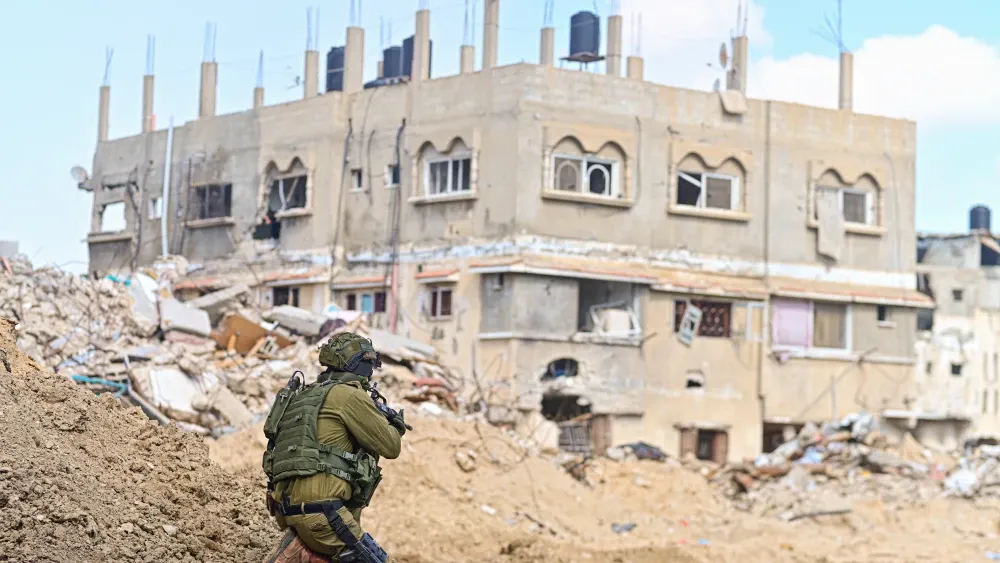 By: Jonathan Spyer The IDF's Morag Corridor in Gaza aims to sever and dismantle Hamas's Rafah and Khan Yunis brigades, even as militants in Gaza continue to regroup and reassemble. Why it matters: The corridor is an aggressive strategy to pressure Hamas into releasing hostages and dismantling its military structure. -
Its effectiveness remains questionable as Hamas quickly rebuilds, recruiting even teenagers into its ranks. -
On the other hand, a senior IDF source in Gaza discerned signs of what he described as growing popular discontent against Hamas. A Sisyphean effort: The IDF's daily operations reveal a difficult and persistent fight against a resilient adversary. Voices of hope: A source says "there are demonstrations and indications of a breaking point on the other side. It won't happen tomorrow morning, but it's coming." To read the full article, click here. | | Is Turkey Following China's Overfishing Model?  By: Michael Rubin Turkey is emulating China's overfishing model in the Aegean Sea, destabilizing the region both economically and politically. Why it matters: The unchecked expansion of Turkey's fishing industry poses a significant threat to the economic sustainability of Greece and Cyprus. Economic imperialism: Turkey has been manipulating and leveraging its position to dominate U.S. and EU markets. Regional tensions: The aggressive expansion is part of Turkey's "Blue Homeland" strategy, posing a direct threat Greek and Cypriot territories. To read the full article, click here. | | Turkey's Deepening Crisis of Corruption Threatens Stability in the Country, OECD Warns 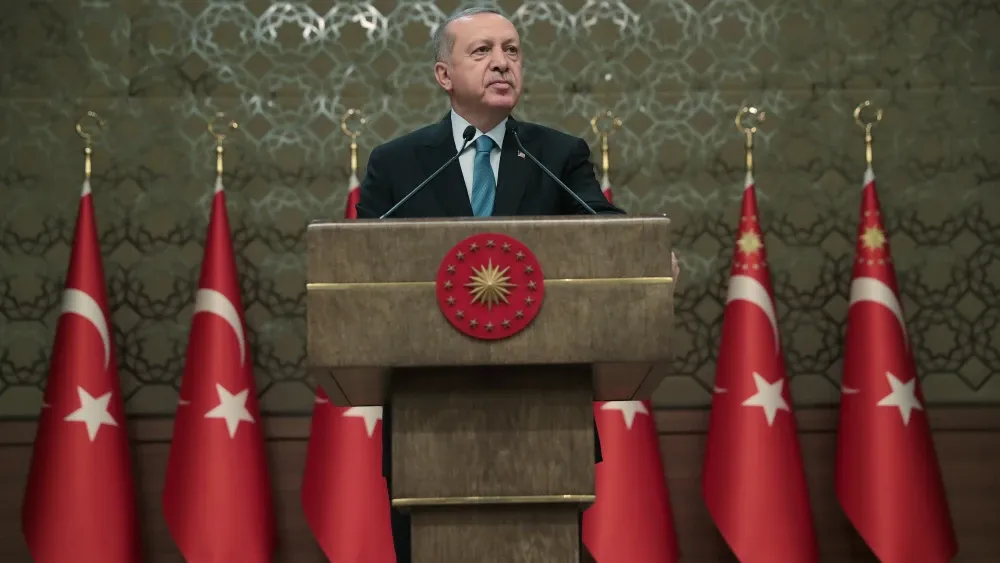 By: Abdullah Bozkurt The Organization for Economic Cooperation and Development (OECD) warns that corruption and cronyism under Erdoğan's regime are threatening Turkey's stability and investor confidence. Why it matters: Turkey's governance issues are not just political; they are economic time bombs. Institutional decay: The absence of an independent anti-corruption body exacerbates the crisis. Judicial erosion: The compromised Turkish judiciary has also been an instrumental tool for political suppression. Call to action: The OECD calls for urgent reforms, including an independent anti-corruption agency and transparency in political financing. To read the full article, click here. | | Space Is Limited! Register Now for MEF's 2025 Policy Conference! Register now for our 2025 policy conference, "Statecraft Reimagined" in Washington, D.C. – space is limited!
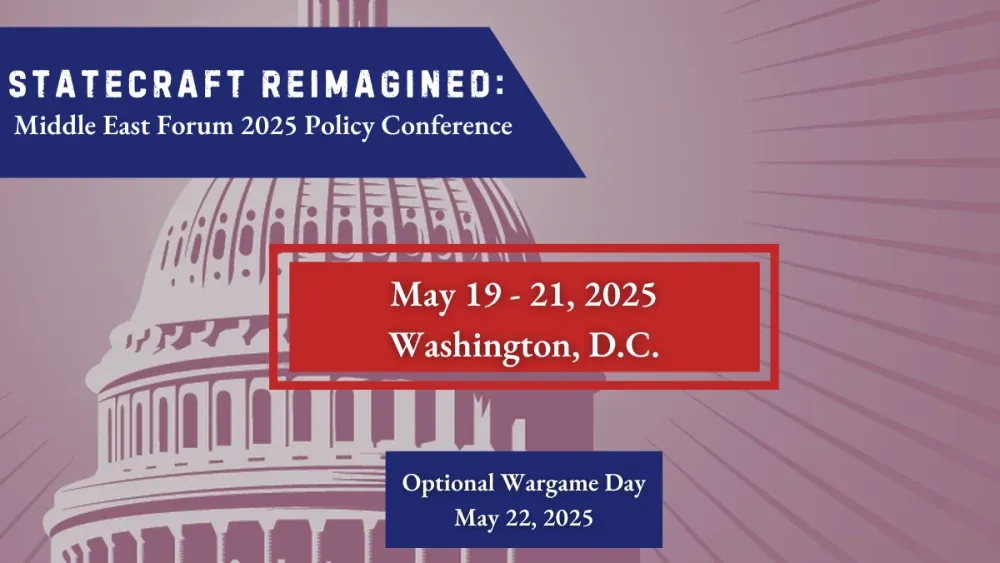
This conference will gather leading experts and policymakers to discuss the most urgent and complex issues shaping the future of the Middle East. This extraordinary event is poised to be the premier Middle East policy gathering in D.C. this year, offering unparalleled insights, networking, and strategic guidance. To register, click here. | | What Is Behind the Quick Progress in U.S.-Iran Talks? 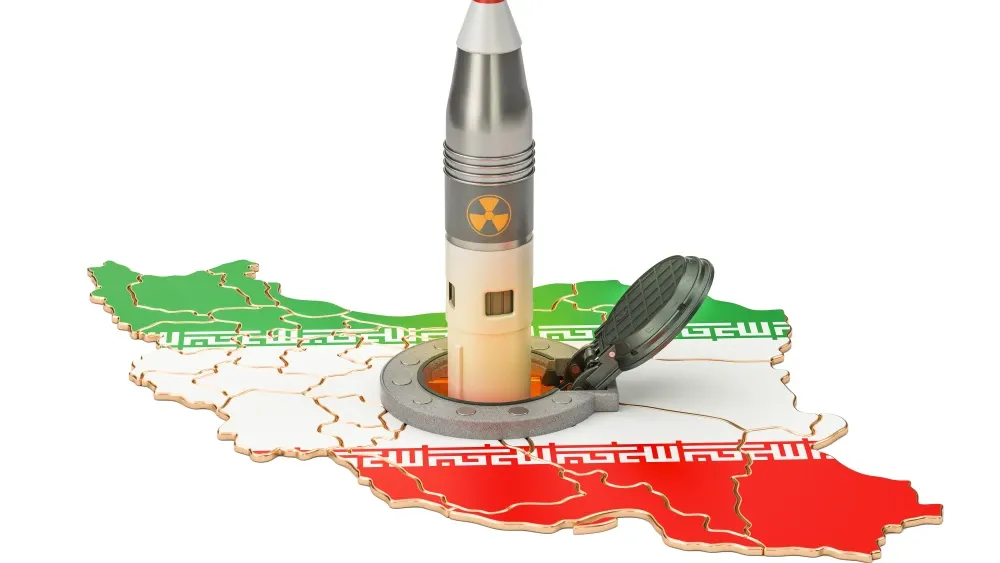 By: Mardo Soghom An Iranian lawmaker reveals contacts with the Trump team over the past two years, potentially explaining the swift progress in U.S.-Iran nuclear talks. Why it matters: These revelations suggest that groundwork laid since before the current Trump administration could be driving current negotiations. Strategic foresight: Iran's early outreach to Trump's team was focused solely on nuclear issues. Emerging deal: The negotiations hint at a framework similar to the 2015 JCPOA, allowing limited uranium enrichment. To read the full article, click here. | | Rutgers University's Anti-Israel Bunch 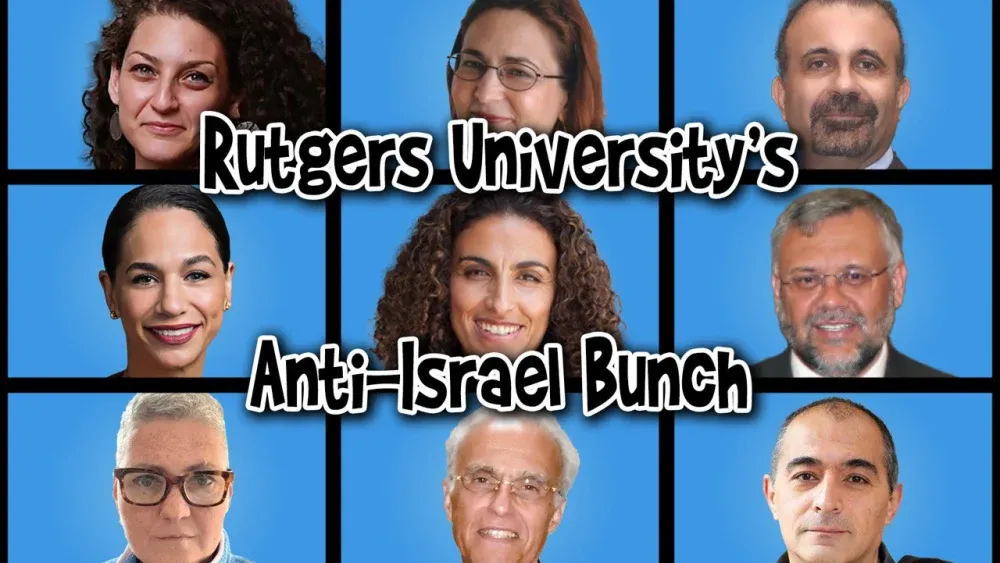 By: A.J. Caschetta Rutgers University's Center for Security, Race and Rights (CSRR) is amassing a lamentable collection of anti-Israel academics. Why it matters: The CSRR's activities spotlight the increasing boldness of anti-Israel sentiment across academia. Notable figures: The center is directed by Sahar Aziz and includes problematic pro-Islamist apologists like John Esposito, Nader Hashemi, and Joseph Massad. Political backlash: The center has drawn scrutiny from U.S. lawmakers due to its radical ties. To read the full article, click here. | | Dark Ironies: How Fear of Offense Has Undermined British Security  By: Anna Stanley In shocking events, fear of offending violent inmates, including notorious terrorists, has taken precedence over the legitimate concerns of British citizens, and has compromised British security. Why it matters: Institutions prioritize avoiding offense among Muslims over confronting the real dangers of Islamism in the U.K. -
Safety measures like stab vests, for instance, are dismissed to avoid "militaristic" appearances, leaving officers vulnerable to violent attacks. Systemic failures: The Manchester Arena bombing and other attacks highlight the institutional paralysis that has overtaken British society. Dark ironies: Counterterrorism efforts are hindered by the British authorities' obsession with political correctness and their reluctance to confront the threat of Islamist extremism. Call for change: Institutions must act decisively to ensure public safety first and ahead of their collective fear of offending the sensitivities of British Islamists. To read the full article, click here. | | The world's crises don't pause, and neither does the MEF Dispatch. From Gaza's grinding conflict to Turkey's economic imperialism, Iran's nuclear gambits, academic radicalism, and Britain's security failures, these issues demand attention and action. Stay informed, stay sharp, and stay tuned for the next edition of this newsletter. Sincerely,
Ahnaf Kalam
Digital Media Specialist
Middle East Forum | | | | Was this edition useful?  

Your email will be recorded and shared with the sender |        MEF, an activist think tank, deals with the Middle East, Islamism, U.S. foreign policy, and related topics, urging bold measures to protect Americans and their allies. Pursuing its goals via intellectual and operational means, the Forum recurrently has policy ideas adopted by the U.S. government.
Copyright © 2024 Middle East Forum, All rights reserved.
Our mailing address is:
Middle East Forum
1650 Market Street, Suite 3600
Philadelphia, PA 19103 | | | | | Powered by 
| | This email was sent by Middle East Forum via Axios HQ | | | |

0 коммент.:
Отправить комментарий